Photographing the National Museum of Qatar: Light, Memory and the Desert Rose
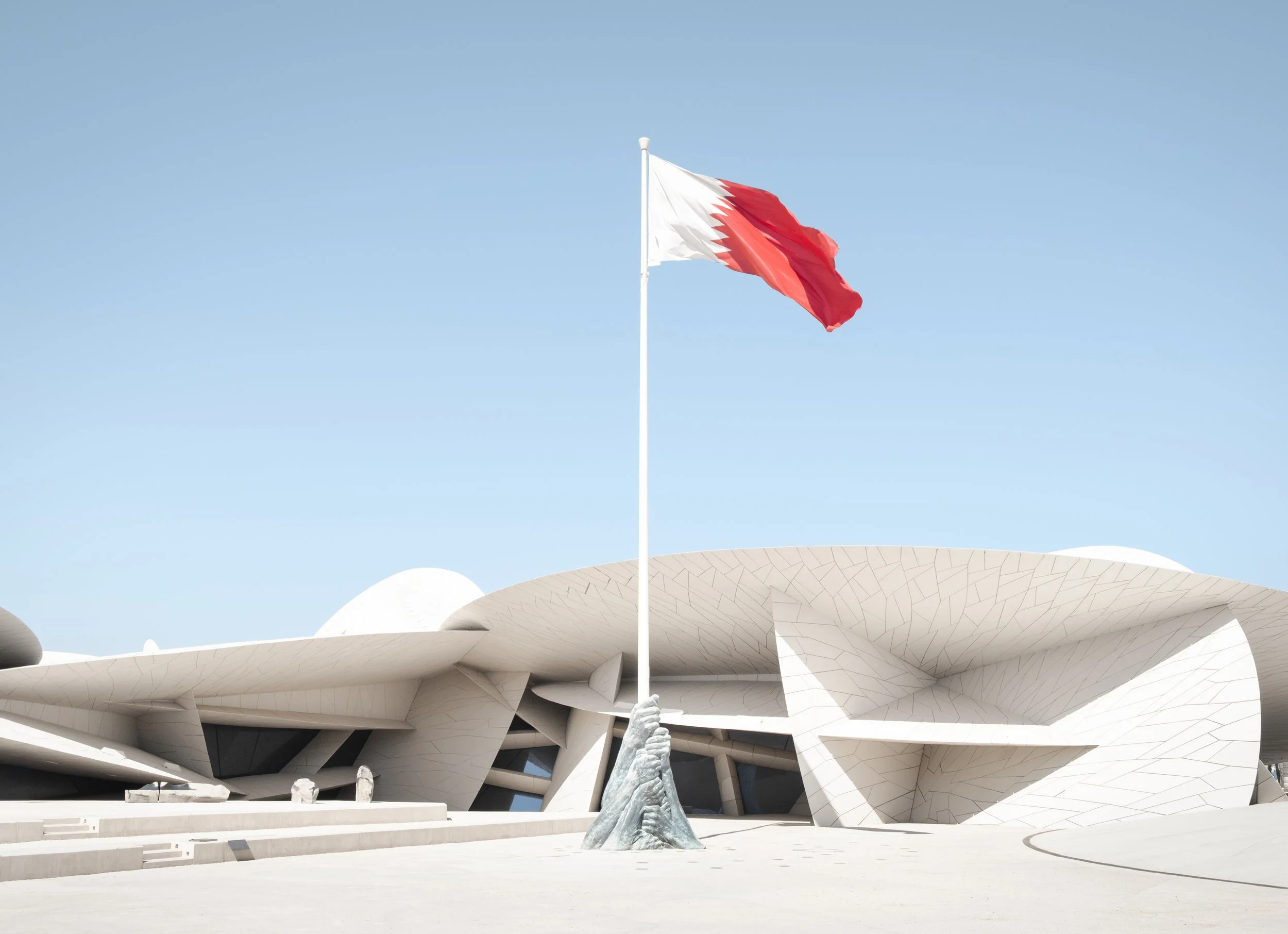
What makes the National Museum of Qatar unique?
It isn’t just a museum, it’s a dialogue between heritage and innovation.
See my full Doha Architecture Portfolio.
Between the silence of old architecture and the rhythm of modern geometry.
The National Museum of Qatar connects two eras: the restored palace of Sheikh Abdullah bin Jassim Al Thani, one of the country’s most important heritage sites, and Jean Nouvel’s contemporary Desert Rose design, completed in 2019.
Learn more about photographing Doha’s heritage architecture.
See how I photograph Doha at nigh.
Both speak of Qatar’s identity: one built with hand-shaped materials and shadowed courtyards; the other sculpted in light and sand-colored concrete.
To photograph it is to stand between past and future.
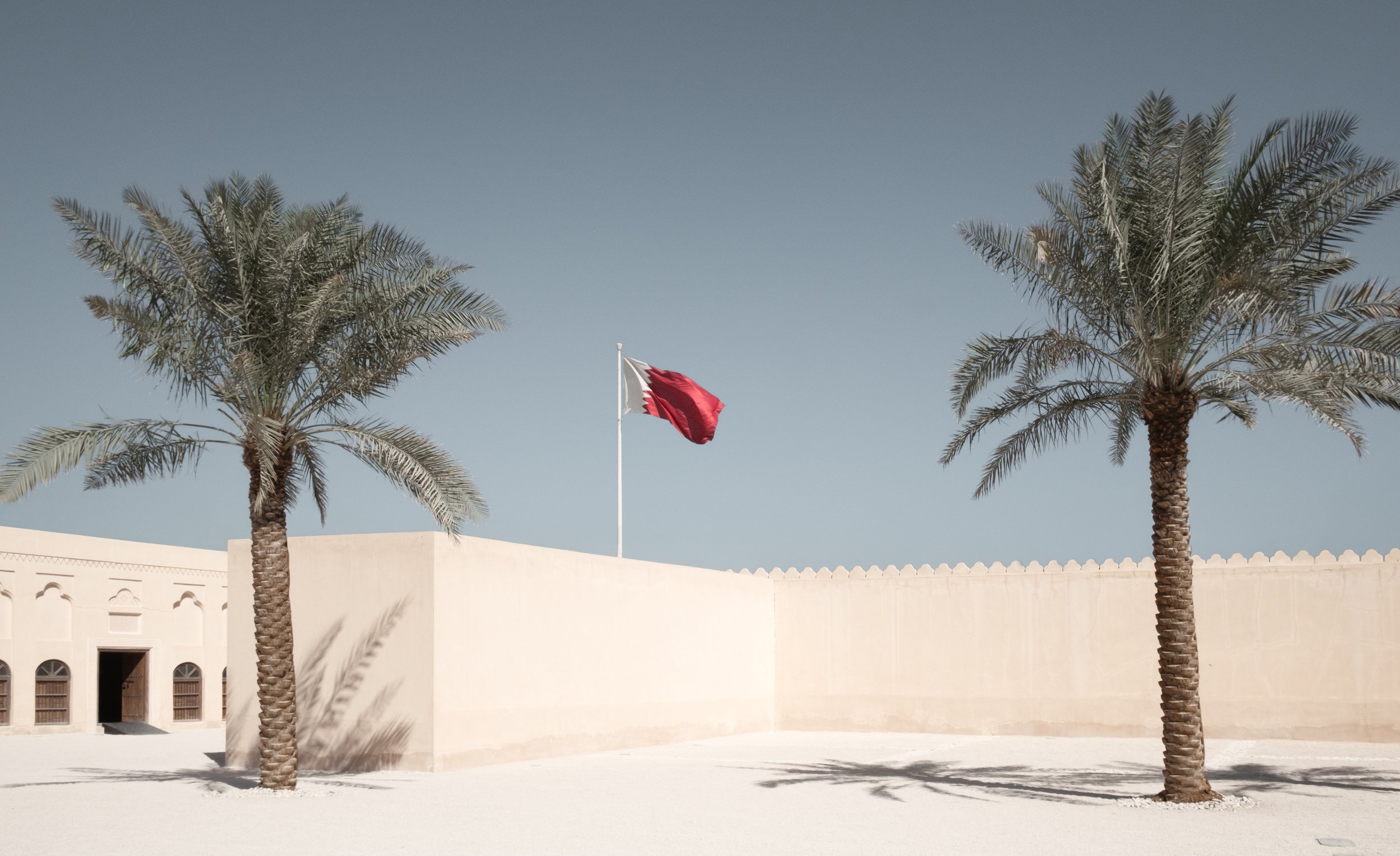
What is the story behind the old palace?
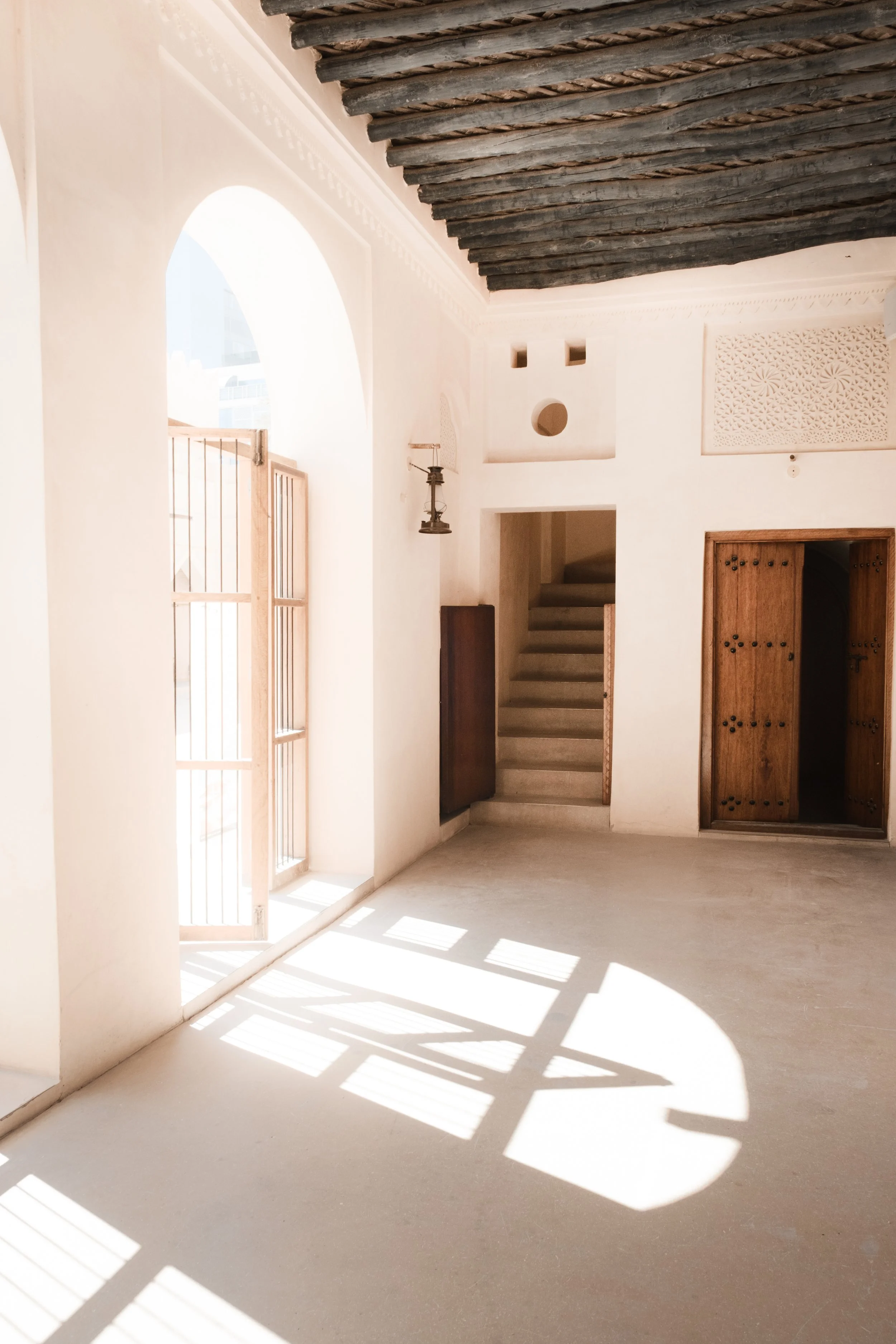
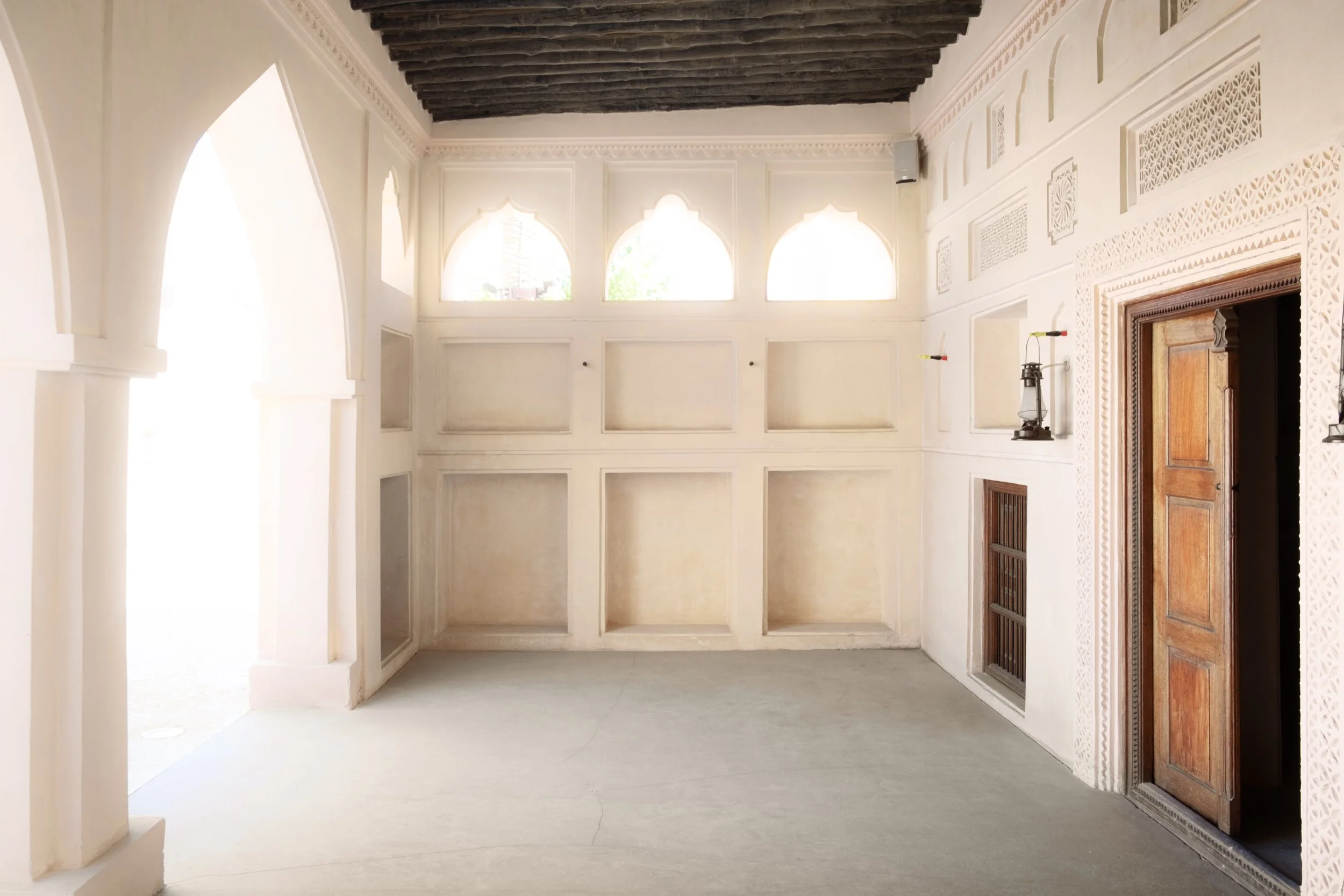
At the museum’s center stands the former royal residence - the palace that once housed generations of the Al Thani family.
It’s made of coral stone, gypsum, and limestone.
Walls are thick to cool the air; ceilings woven from wood and palm.
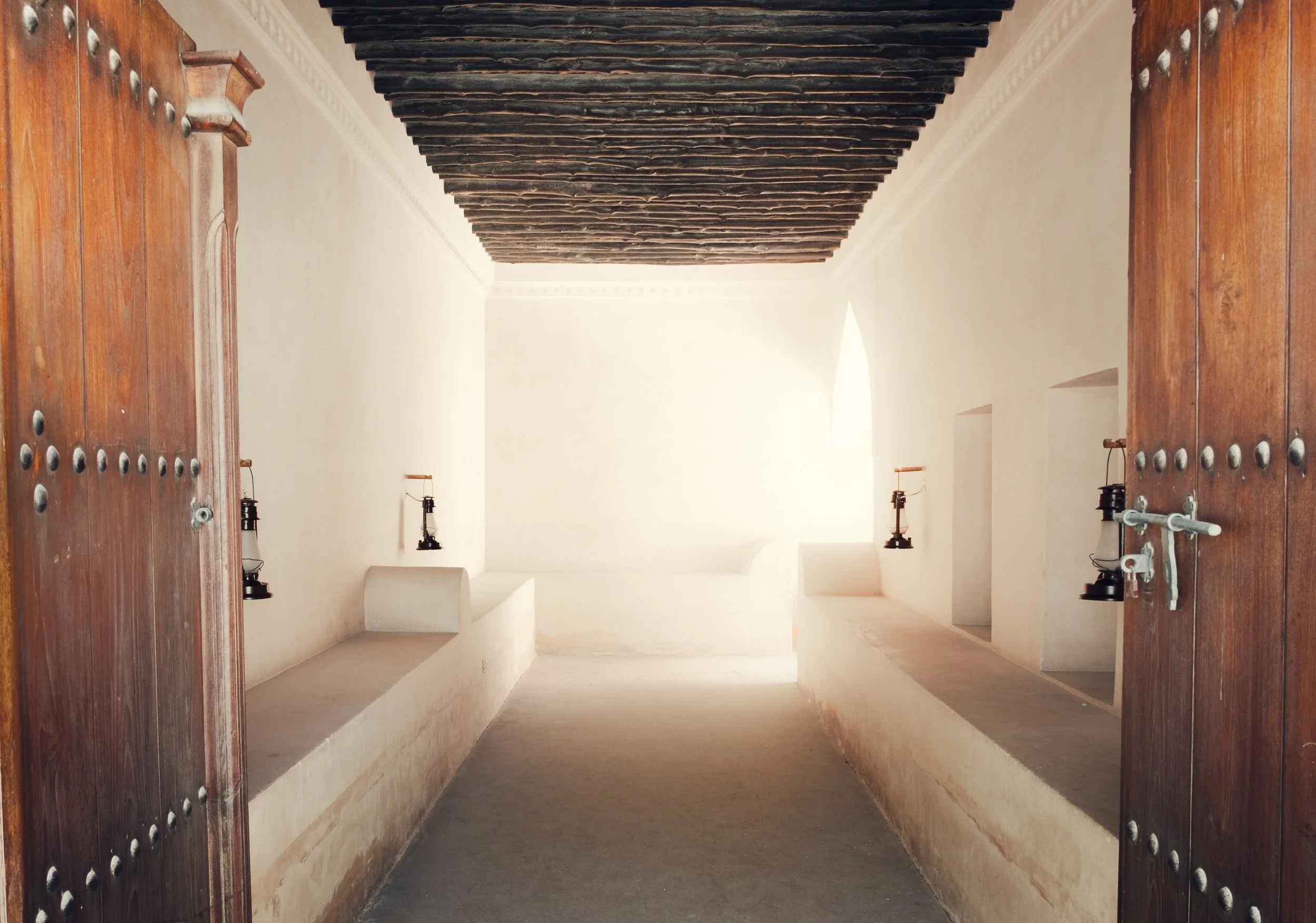
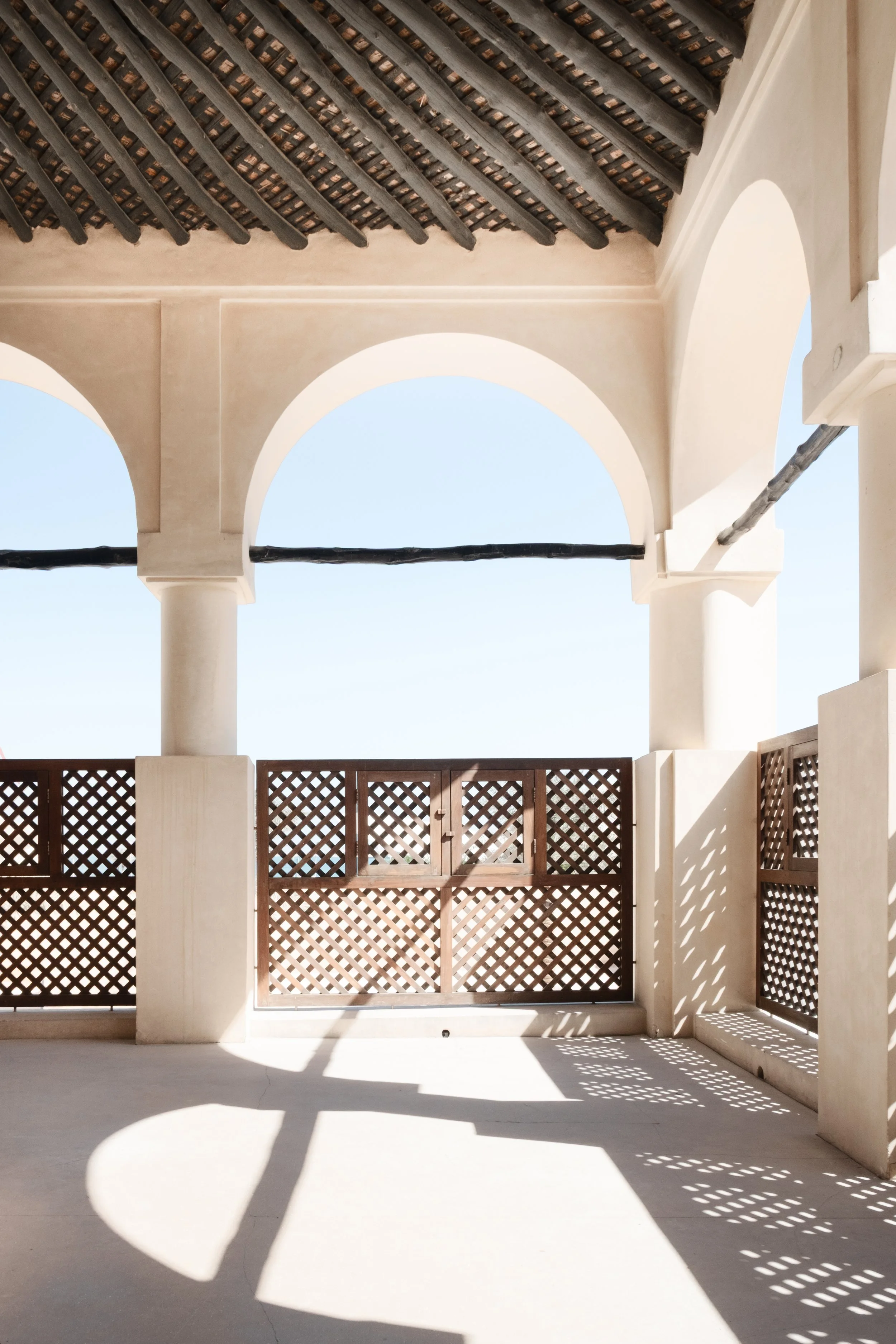
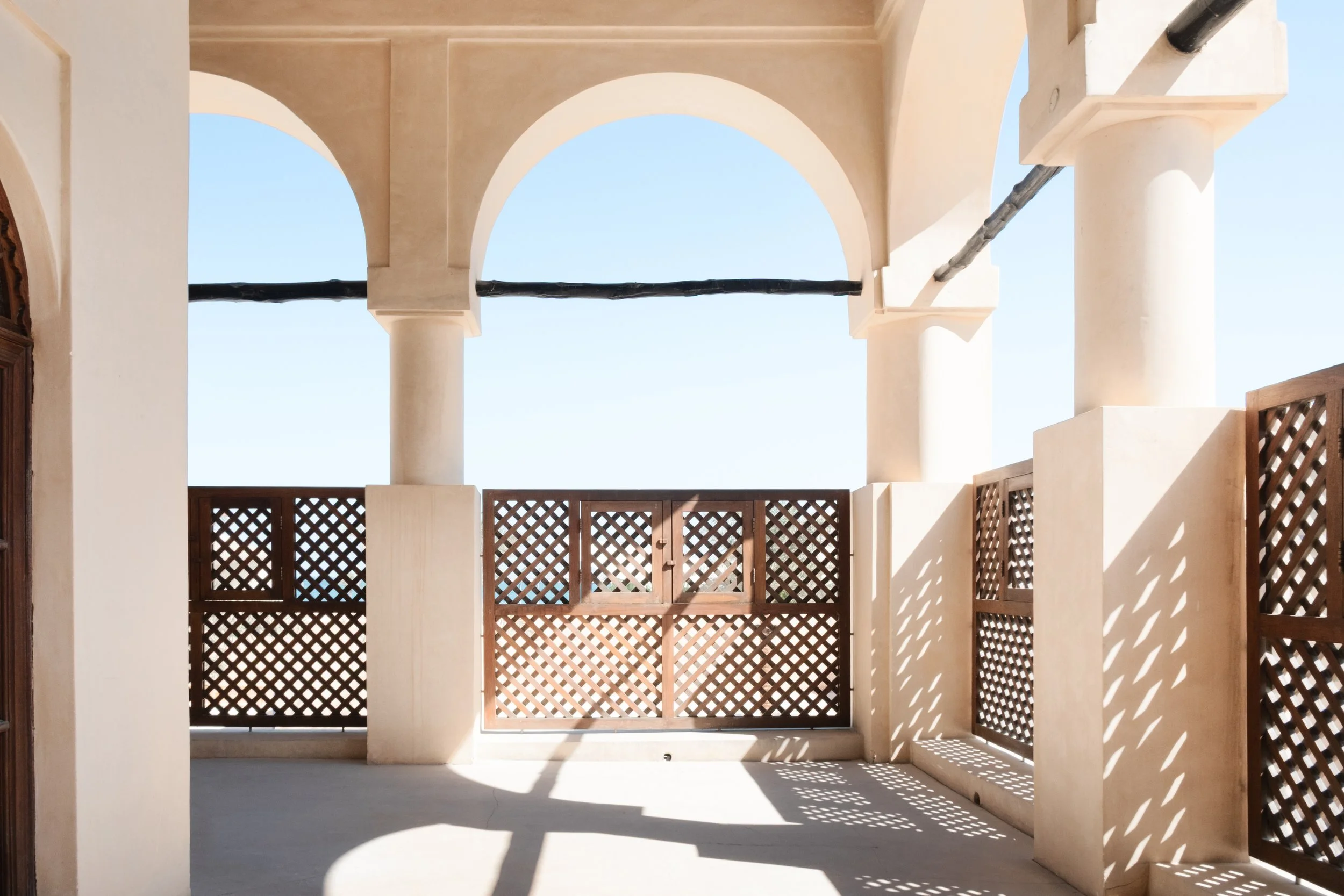
Light filters gently through carved openings, creating layers of shadow that move through the day.
Every texture carries a trace of history: a story of craft before modern Doha existed.
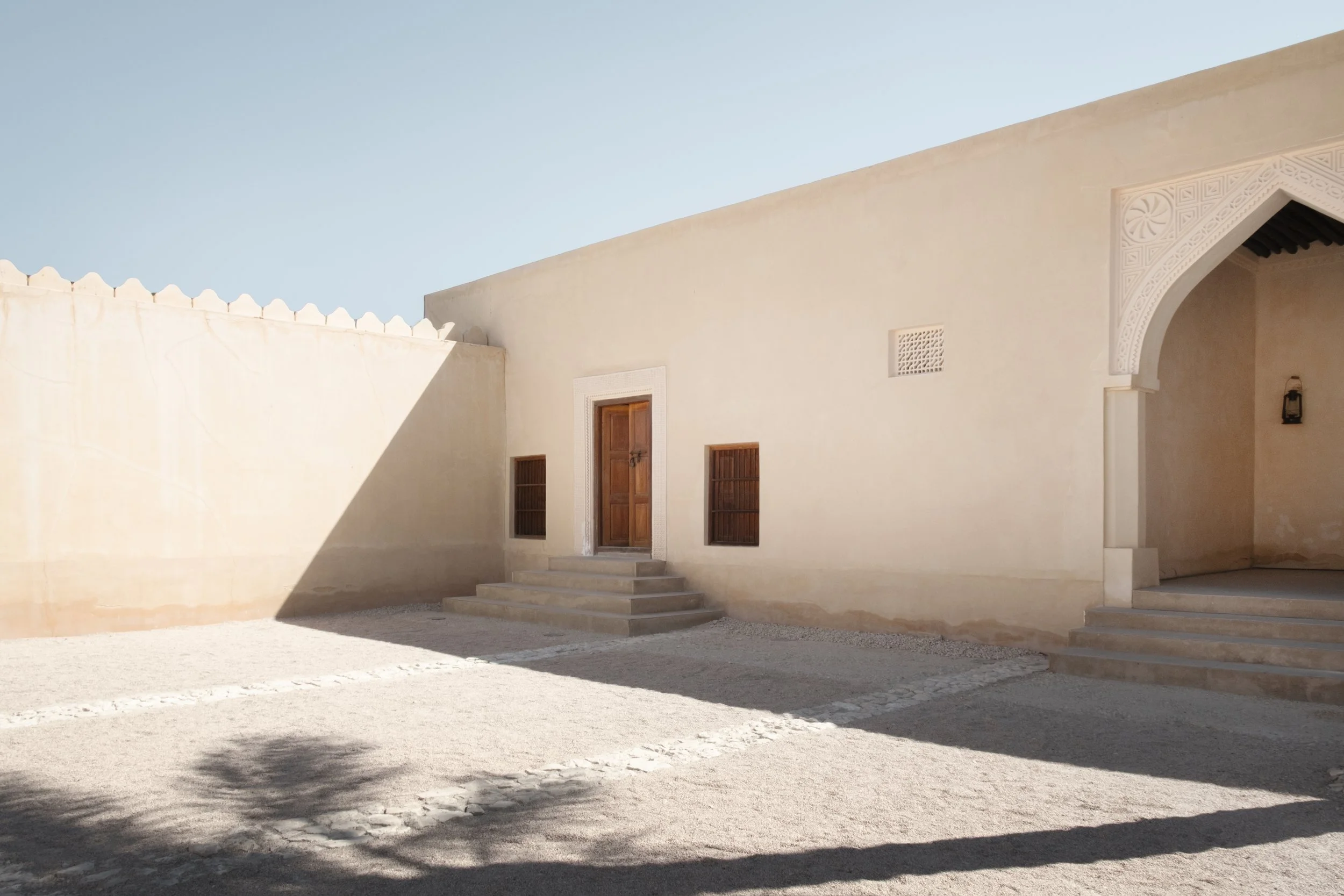
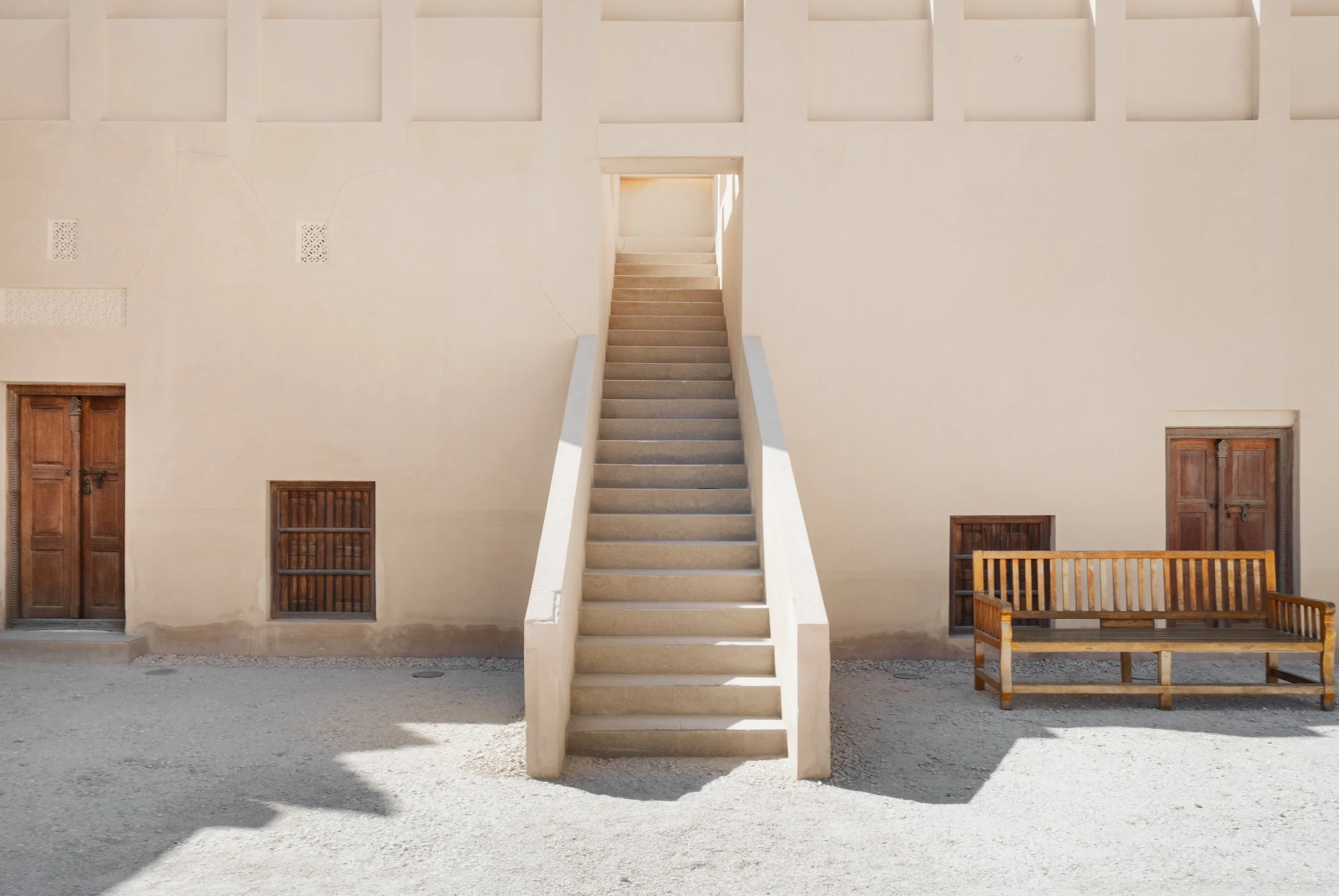
I walked through courtyards where air felt still and time felt close.
The building invites silence.
Evidence:
The palace was restored as part of the NMoQ masterplan, preserving traditional Gulf architecture techniques used in early 20th-century Qatar.
Who designed the modern structure, and what inspired it?
The outer structure was designed by Jean Nouvel, the French architect behind the Louvre Abu Dhabi.
His concept came from the desert rose, a crystal formation that naturally occurs beneath Qatari sand.
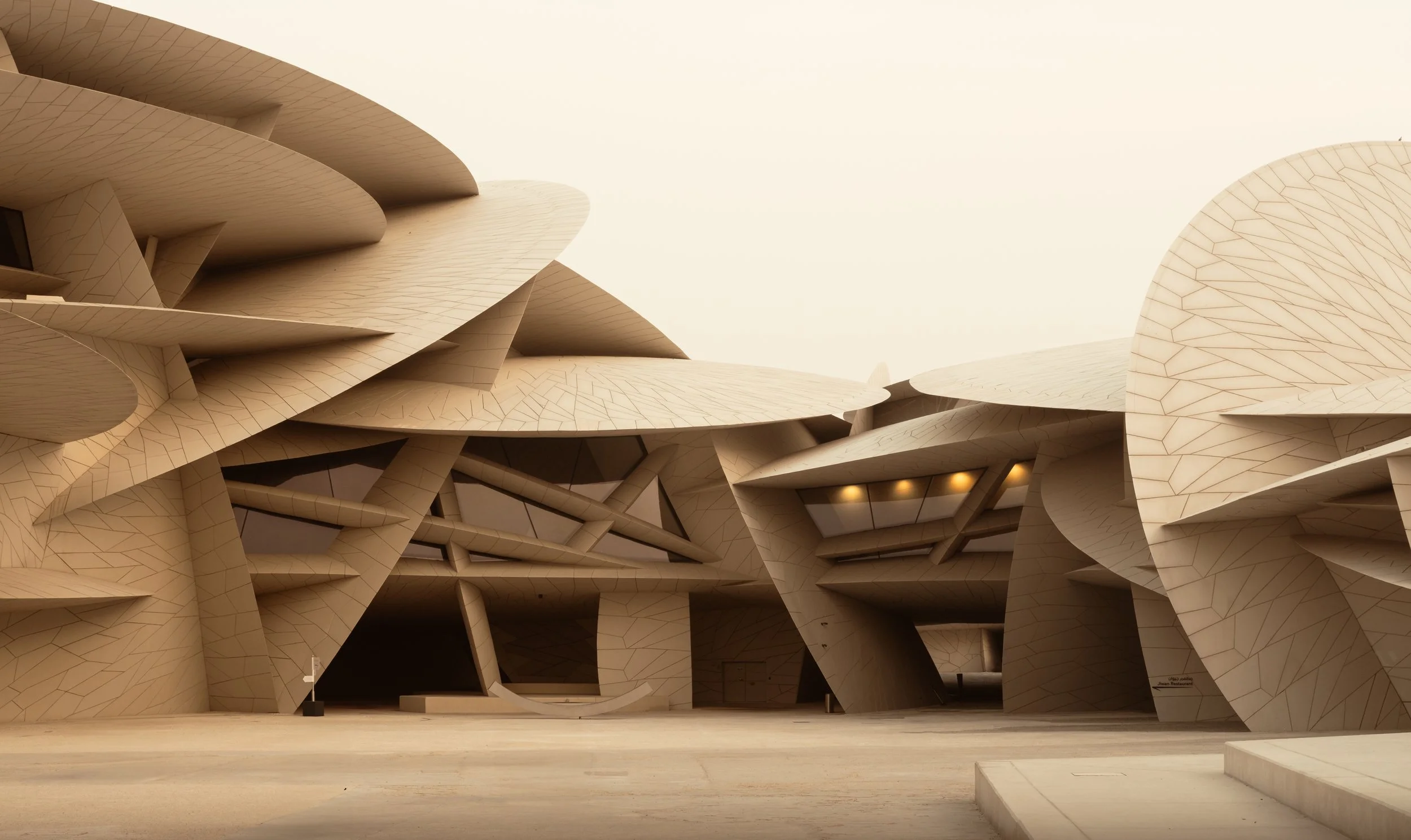
Nouvel transformed that idea into architecture: overlapping discs that grow outward like petals.
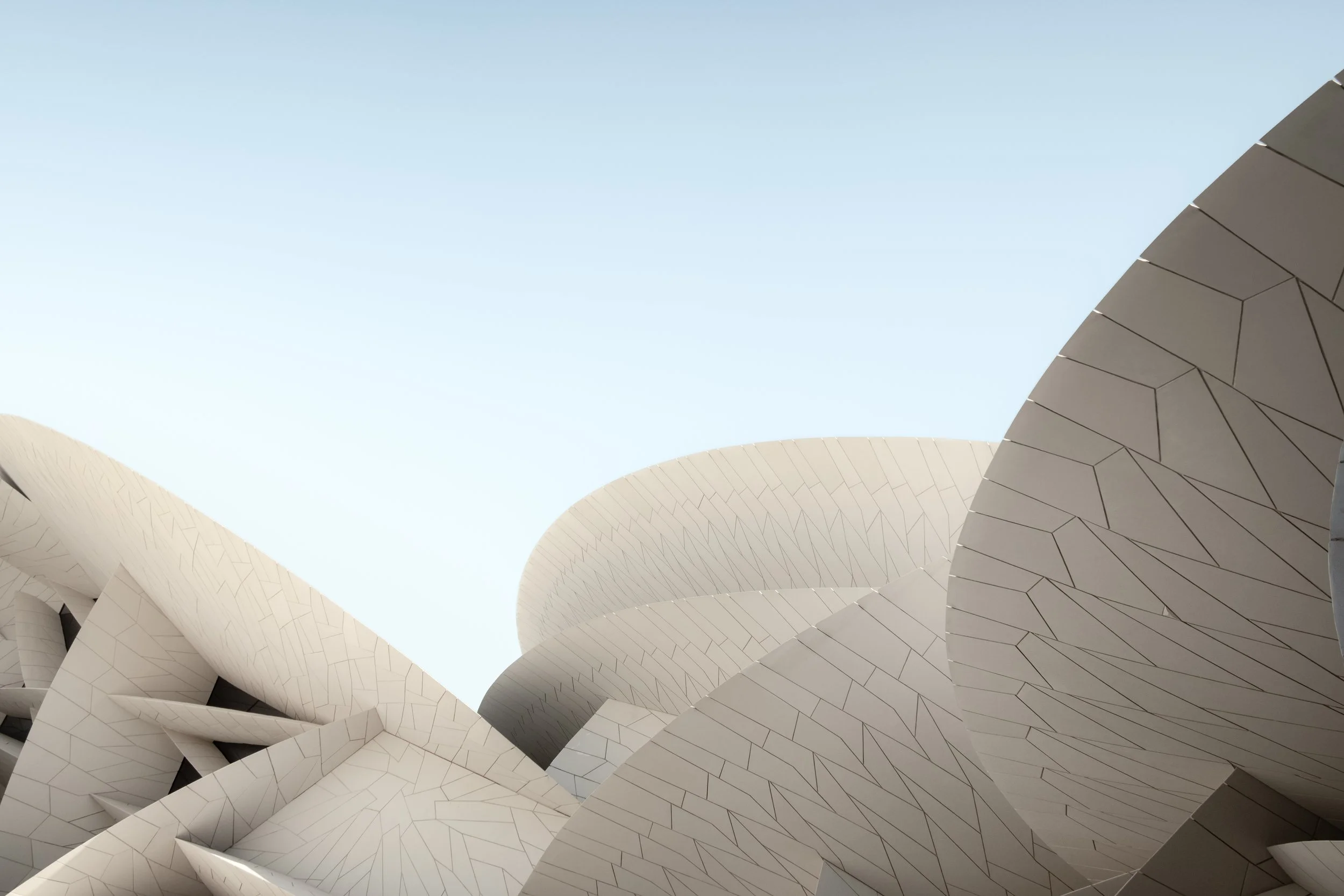
Each disc reflects and absorbs light differently through the day, creating a building that changes with the sun.
From afar, it feels monumental.
Up close, it feels alive: bending light, sand and silence.
Evidence:
The building’s complex geometry required over 500 interlocking discs.
Construction began in 2011 and the museum officially opened in March 2019.
How does the museum represent Qatar’s identity?
The museum’s form mirrors Qatar’s transformation: from desert heritage to modern design.

Inside, you feel the intimacy of traditional spaces.
Outside, you stand before a symbol of innovation and ambition.
That duality is the essence of the country: memory and progress sharing the same space.
The architecture doesn’t separate old from new, it lets them coexist.
The past is not behind; it’s within.
More examples of Doha’s modern design language.
Evidence:
The museum’s curatorial narrative was developed around three chapters: Beginnings, Life in Qatar, and The Modern History of Qatar - echoing the nation’s journey.

How does light shape the experience of this building?
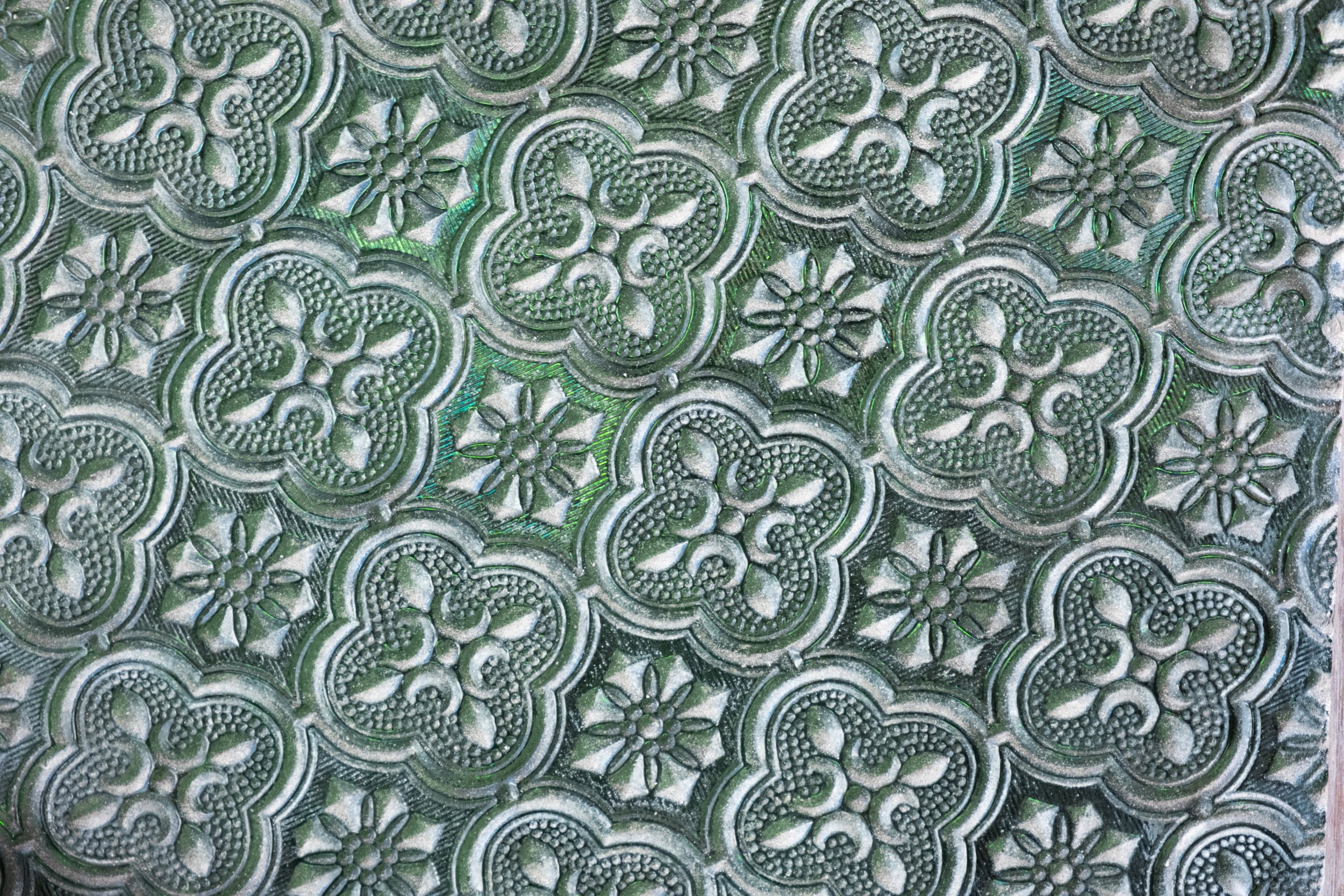
Doha’s light is strong and unforgiving, yet here it softens.
Between the discs, light filters in thin lines, bouncing off sand-colored surfaces.
Inside the old palace, it becomes diffused and intimate.
Every transition between brightness and shadow reveals another mood.
Light is not just an element, but the architecture’s main material.
Frequently Asked Questions
When was the National Museum of Qatar built?
Construction began in 2011 and the museum officially opened in March 2019.
Who designed the National Museum of Qatar?
The museum was designed by Jean Nouvel, inspired by Qatar’s desert rose formations.
What does the museum symbolize?
It represents the dialogue between Qatar’s heritage and its modern identity: combining the historic palace with a futuristic shell.
Can photographers shoot inside the museum?
Photography is permitted in most exterior and courtyard areas. Tripods and lighting equipment may require permission.
Reflection
Every city has its light.
Doha’s light is pure, almost too strong, but here it finds harmony.
Between rough walls and curved concrete, between shadow and reflection, it creates balance.
That’s what I wanted to capture:
the coexistence of tradition and modernity,
of architecture and emotion,
of stillness and motion.
For more case studies on Doha’s architecture, visit the Case Studies index.
Because the National Museum of Qatar is not just about architecture.
It’s about identity: how a nation remembers, and how it looks forward.
Looking for a quick factual overview?
Read the condensed version.
If you’re an architect or designer in Doha and want your space photographed, get in touch here → /contact
See more of my architecture work in Doha
For Architects →
Read more stories →
See all Doha Architecture Portfolio images.
Sources and References
– National Museum of Qatar official site
– Ateliers Jean Nouvel project page
– Photography and firsthand observations by Pedro Ferr (2025)