Doha at night
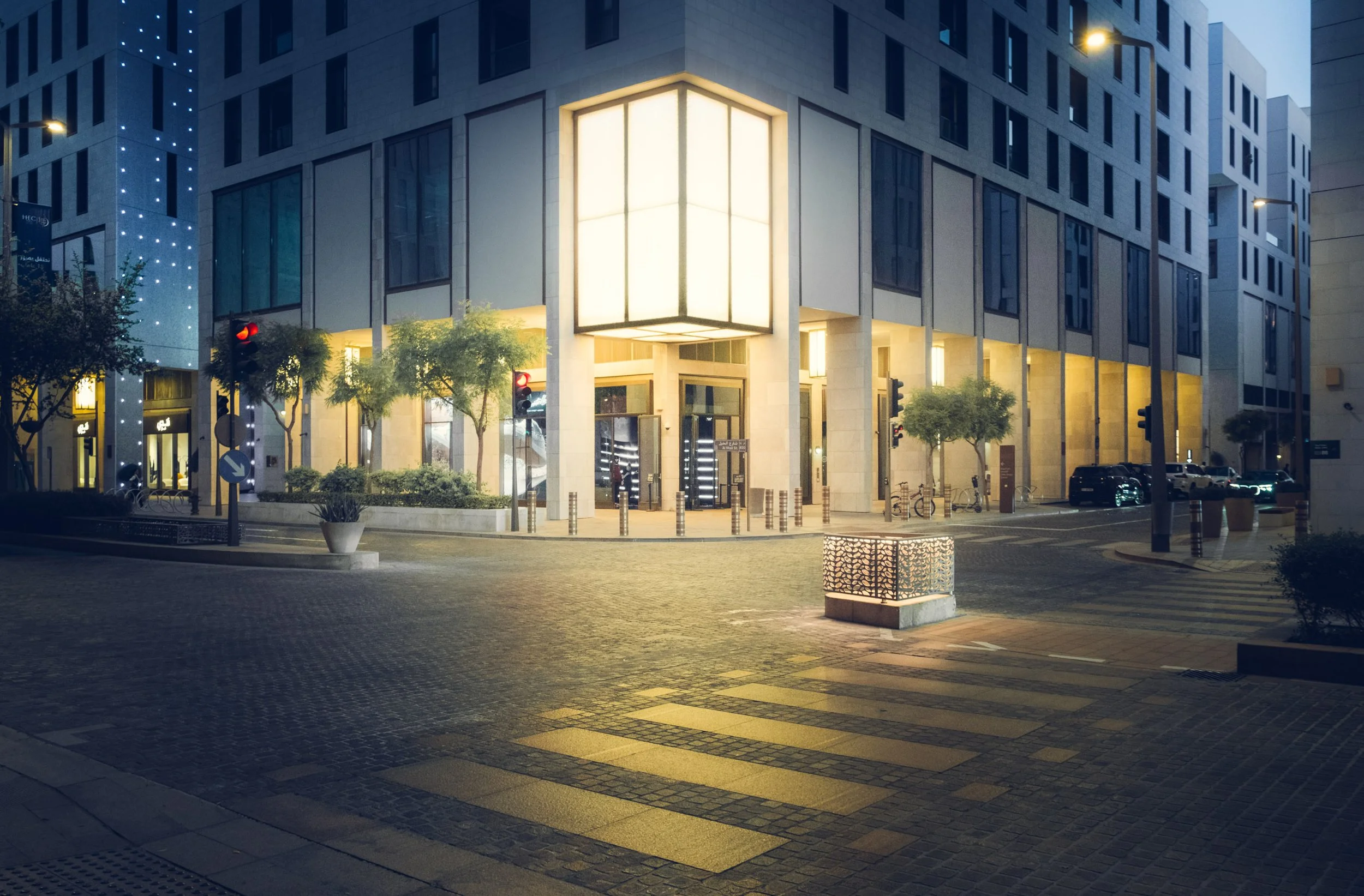
Doha changes when the sun goes down.
The city becomes quieter.
The architecture becomes more defined.
Lines, materials and light work with more intention.
Night reveals structure without noise.
Why night matters
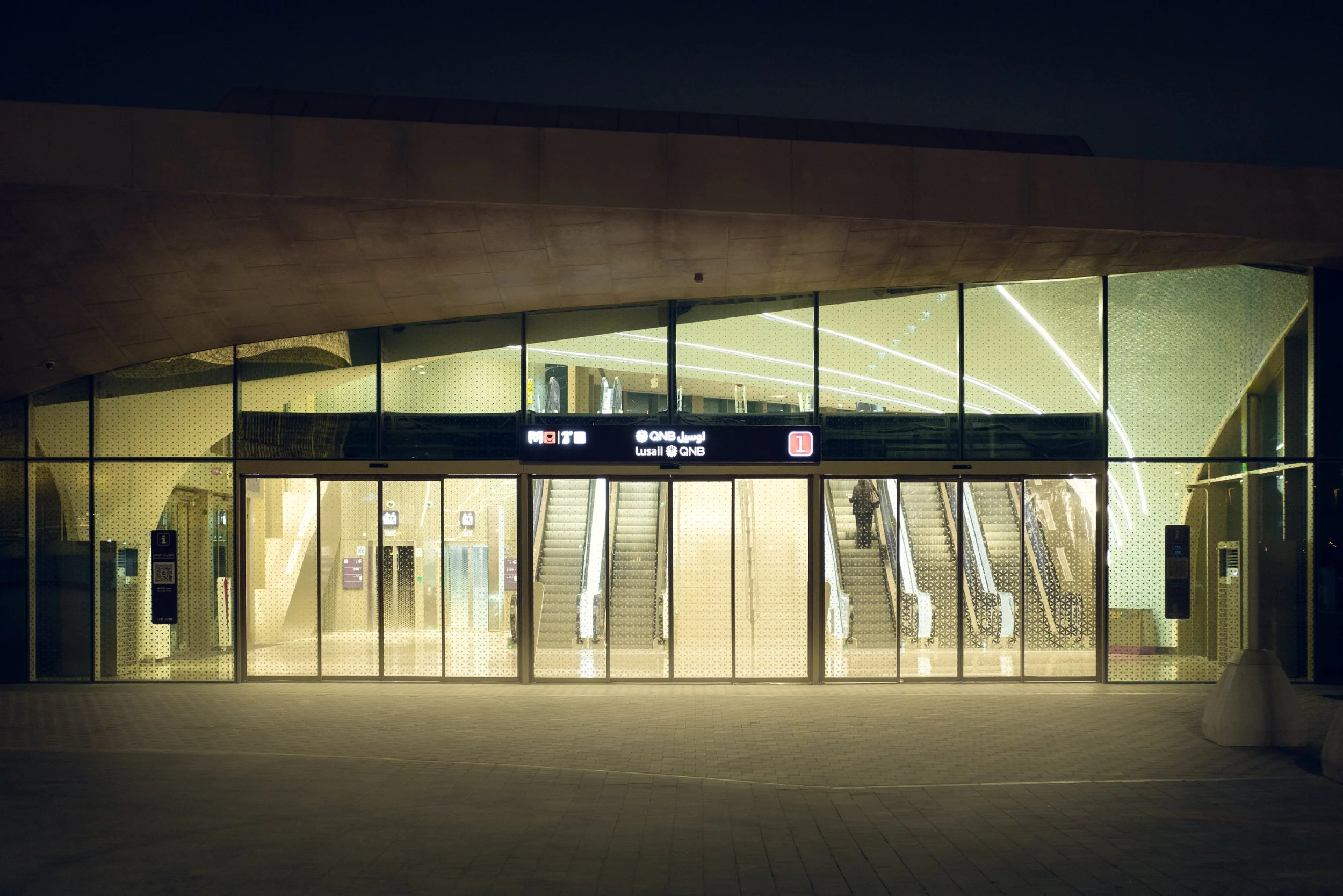
Artificial light shapes the city in a different way.
Buildings gain depth.
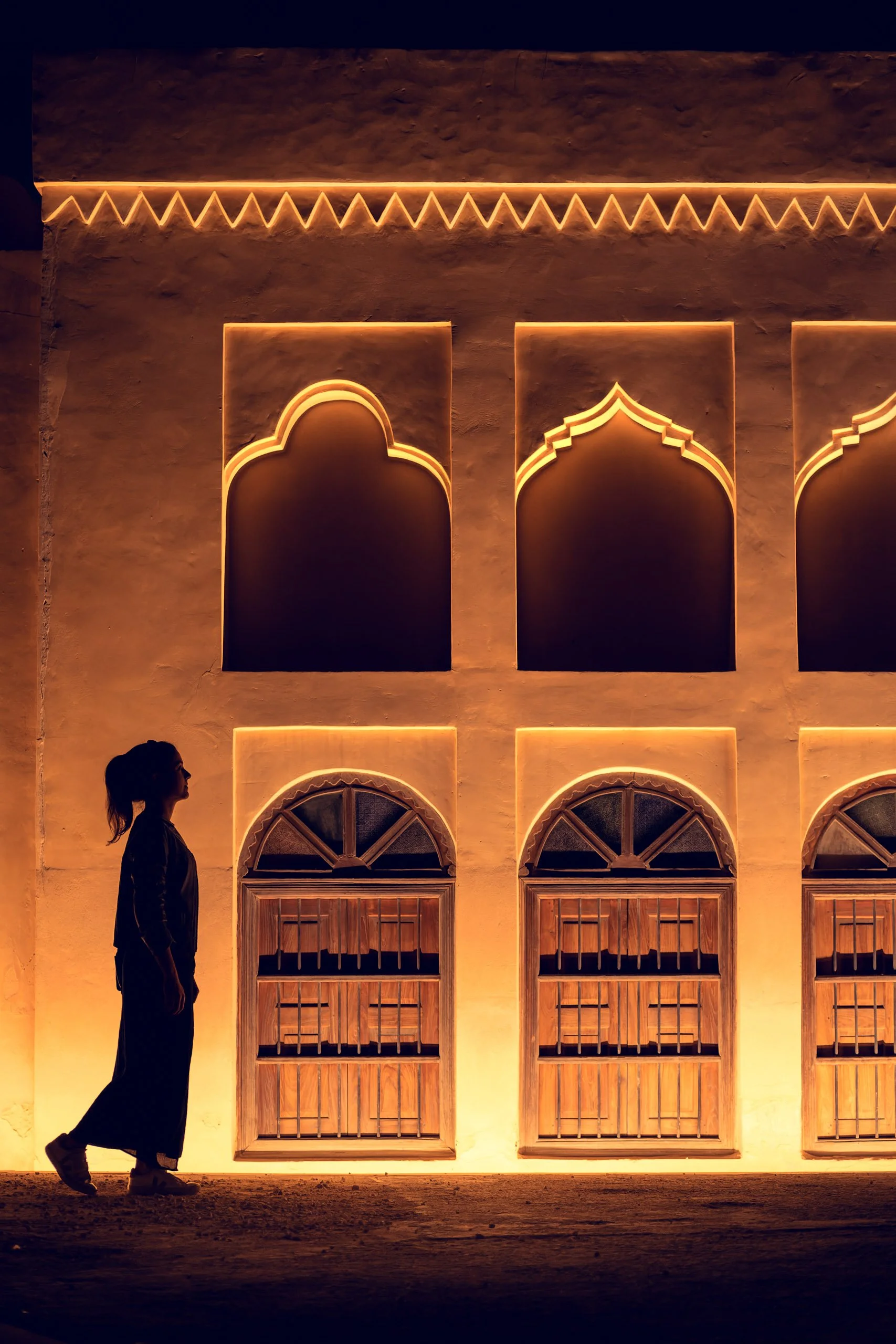
Textures respond with precision.
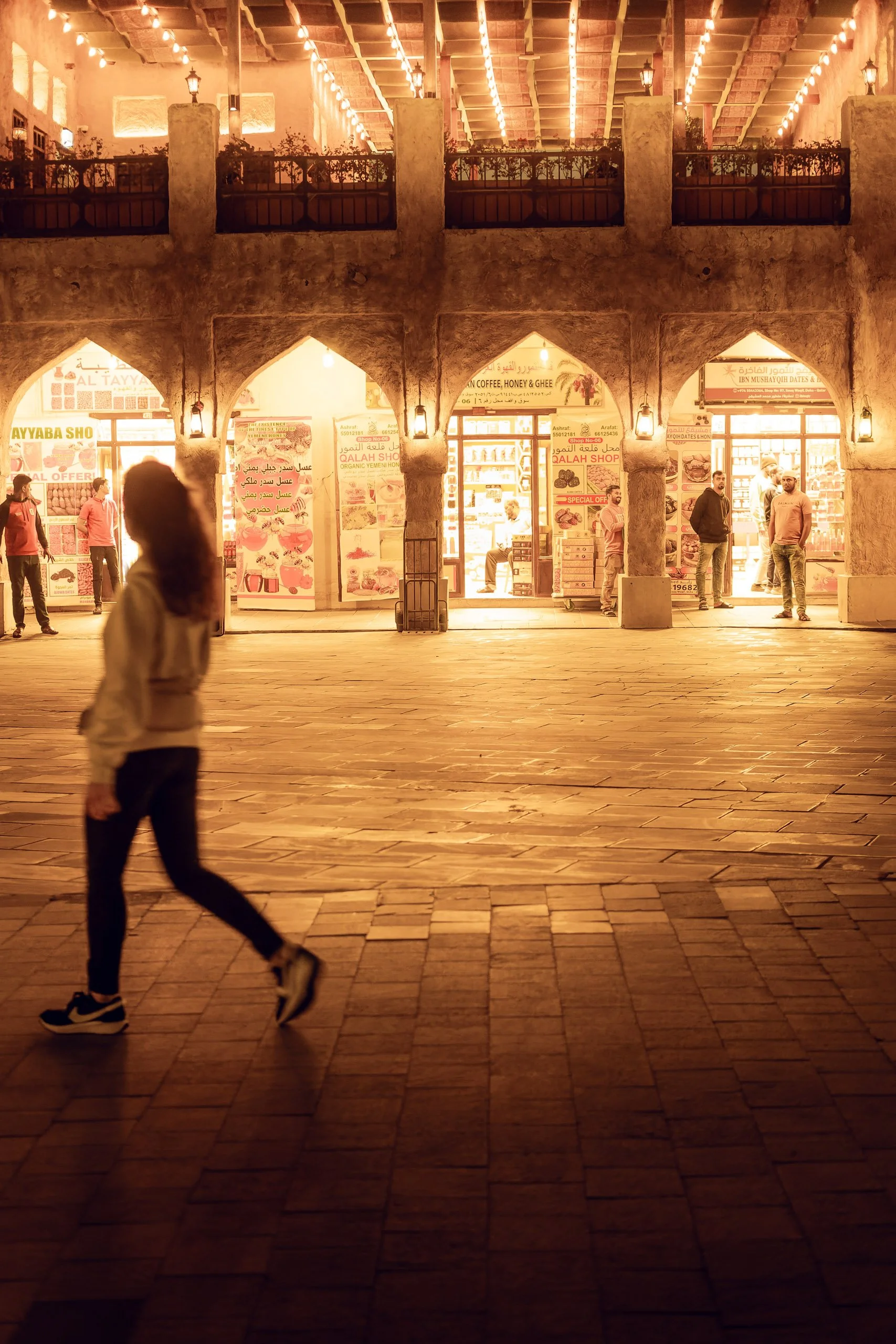
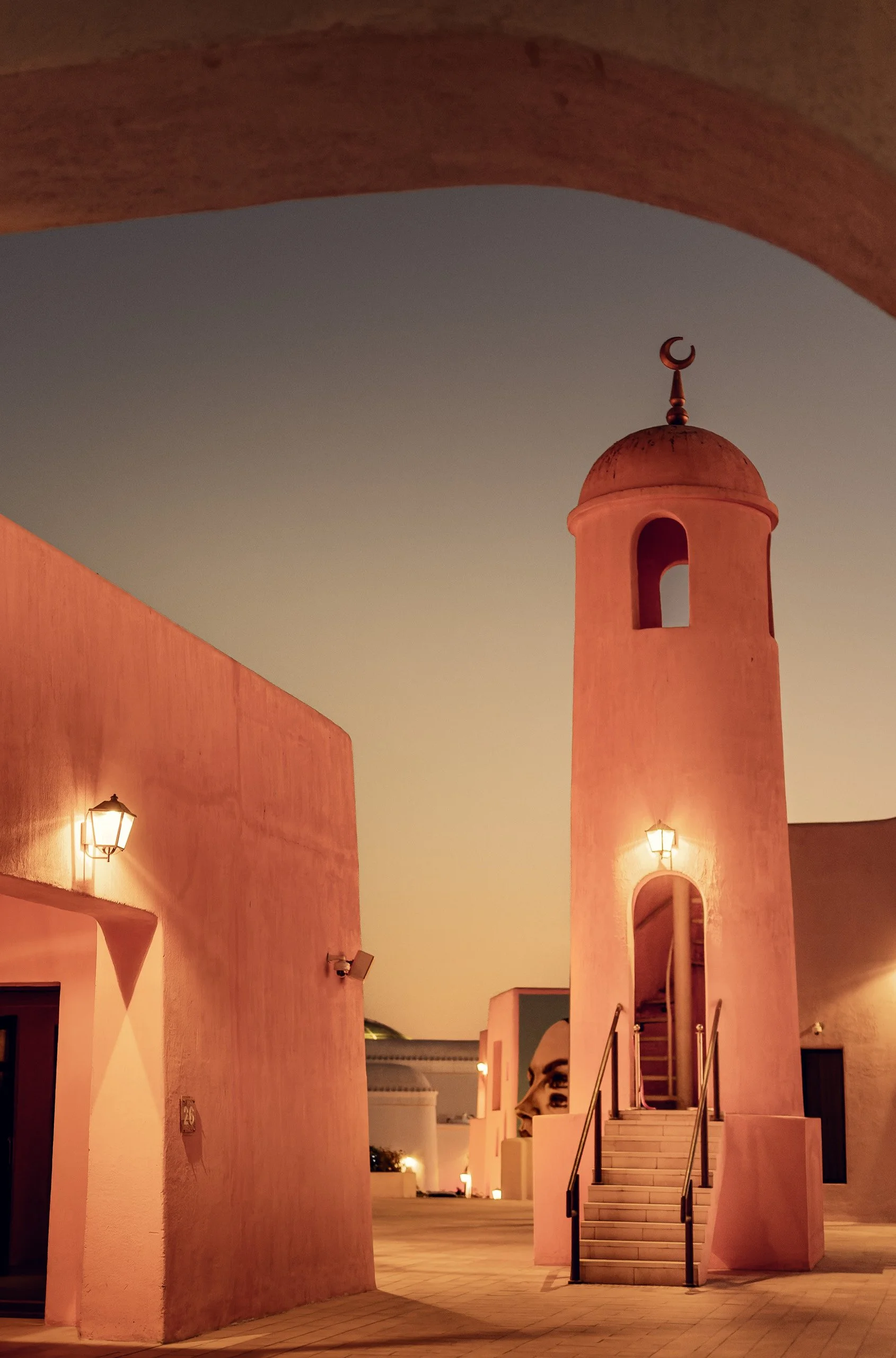
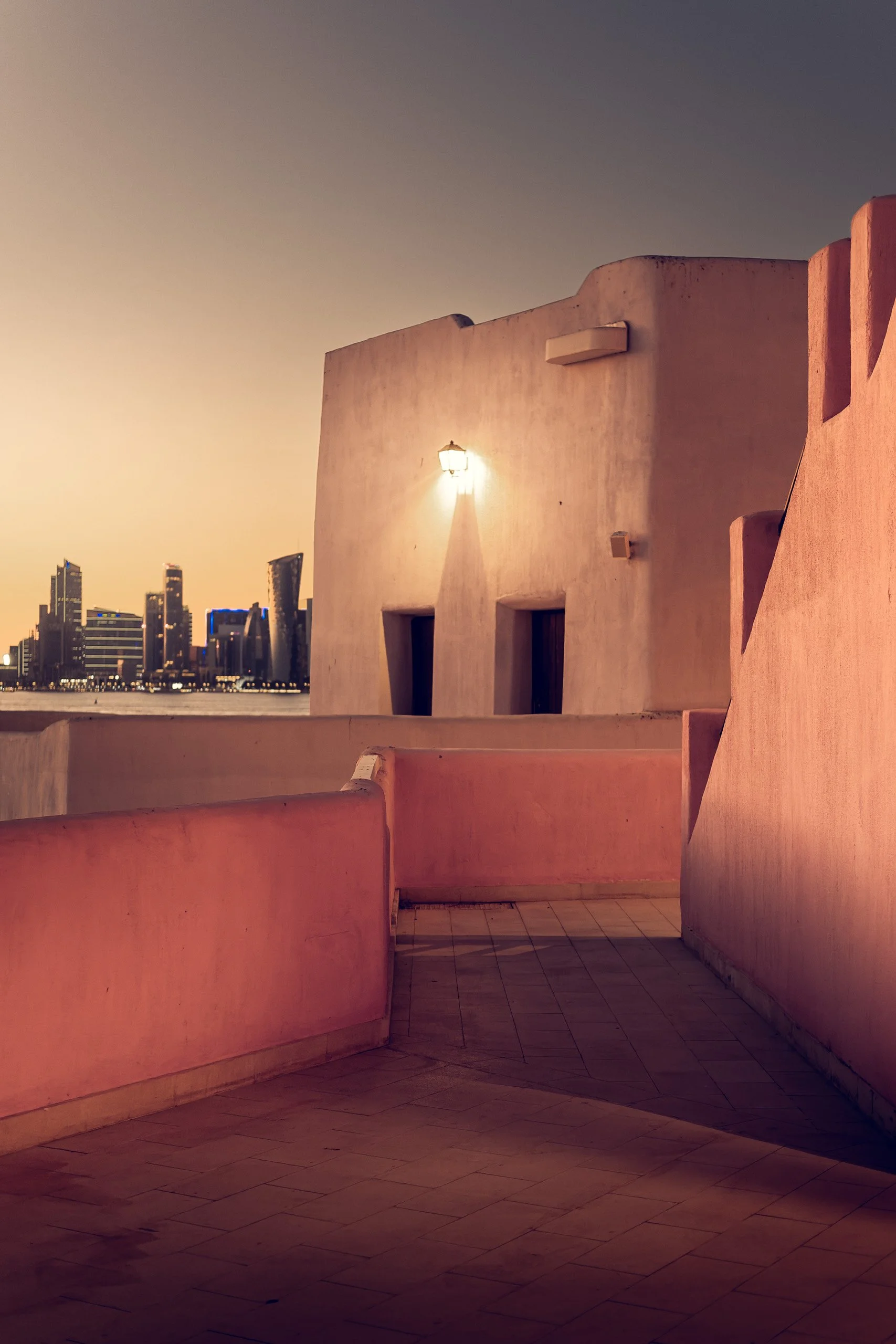
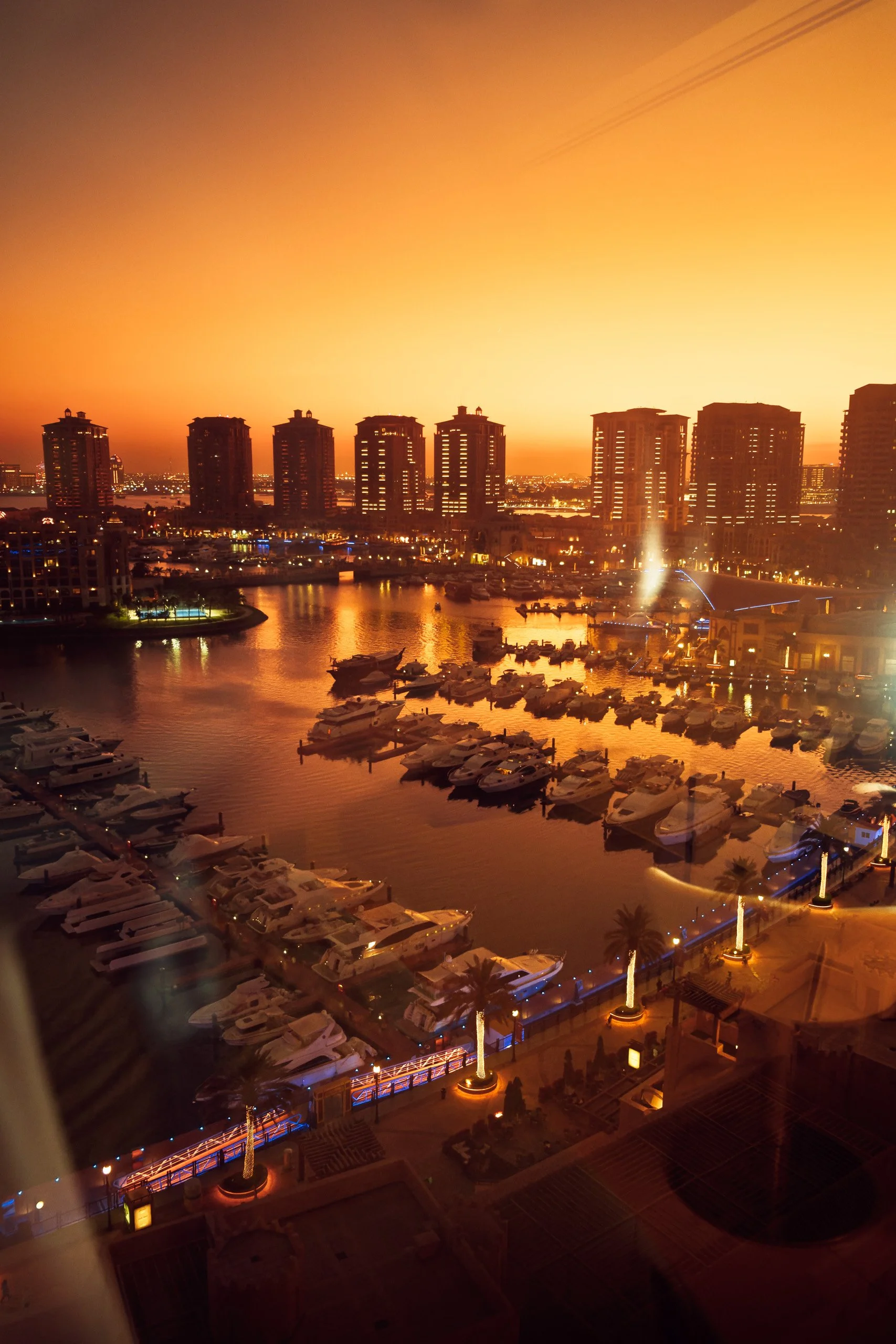
Warm tones from inside spaces contrast with the cooler sky.
Doha’s design language becomes direct and controlled after dark.
How the images were made
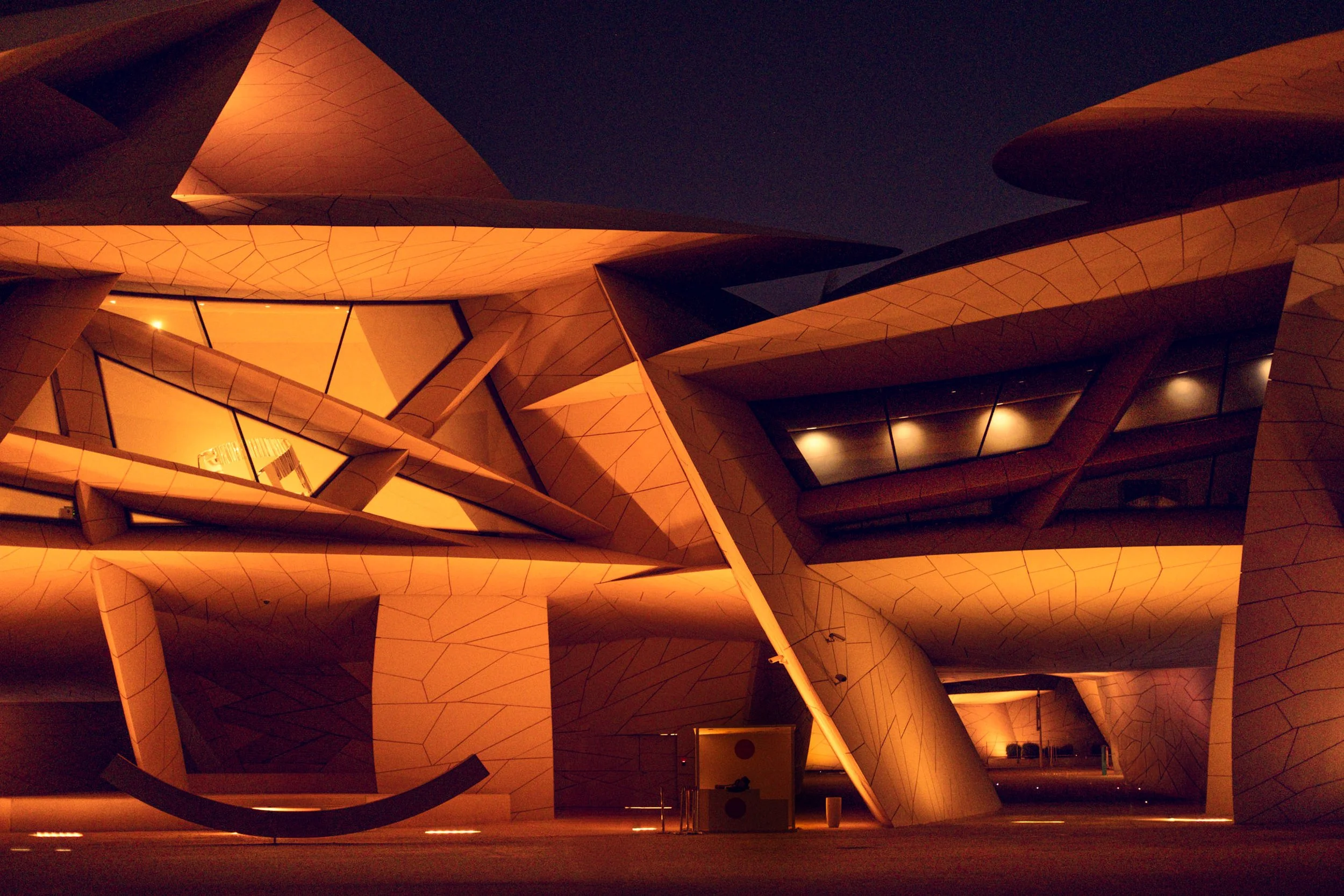
I walked through museums, mosques, cultural districts and contemporary developments.
See how I approach heritage light in Al Zubarah Fort.
I focused on how each space uses light to guide people.
I looked for low reflectors, narrow beams, shadow pockets and transitions between warm and cool zones.
The goal was to show Doha through contrast, geometry and silence.
Reading the architecture
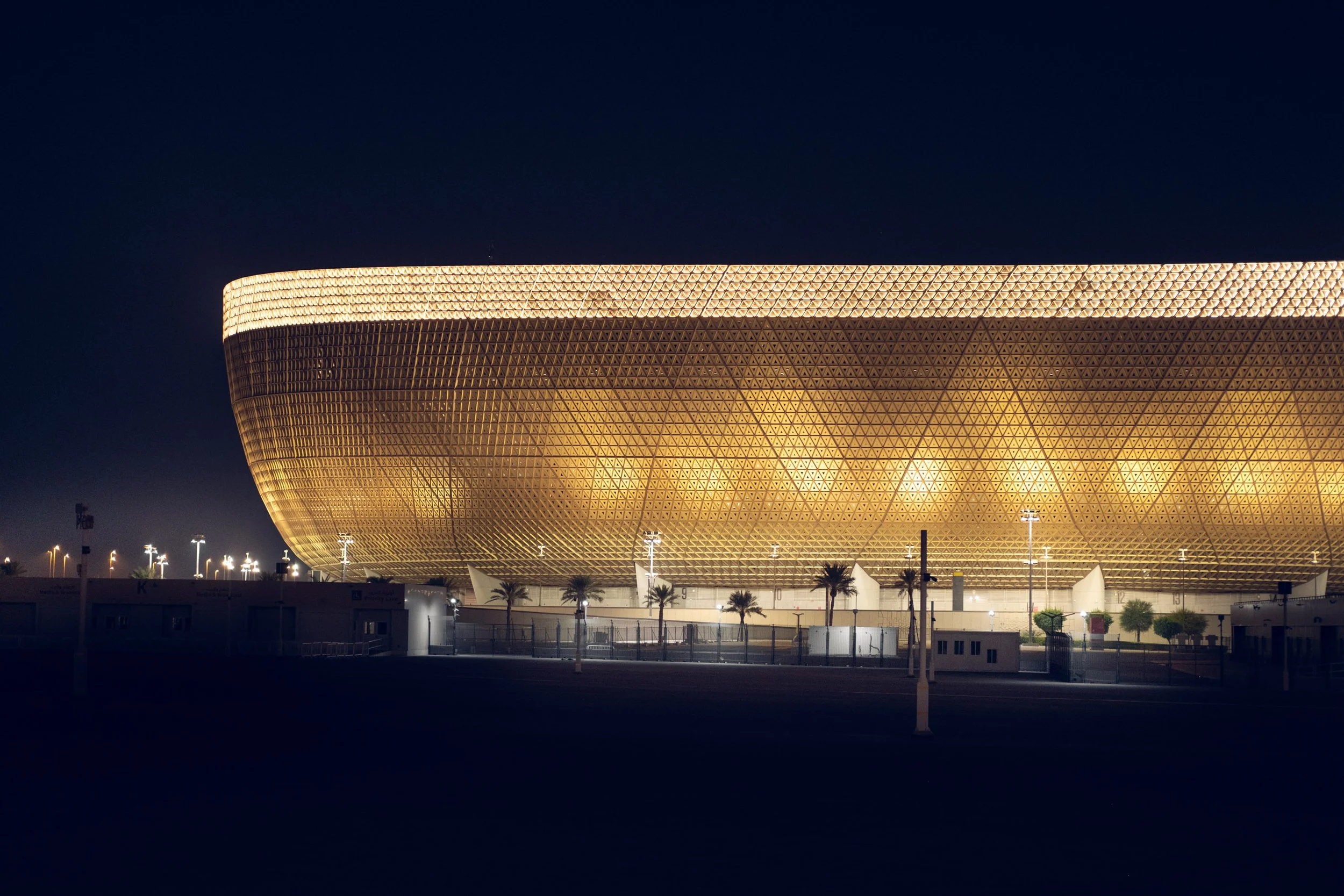
Night removes distractions.
You read the volume first.
Then the surfaces.
Then the rhythm of the structure.
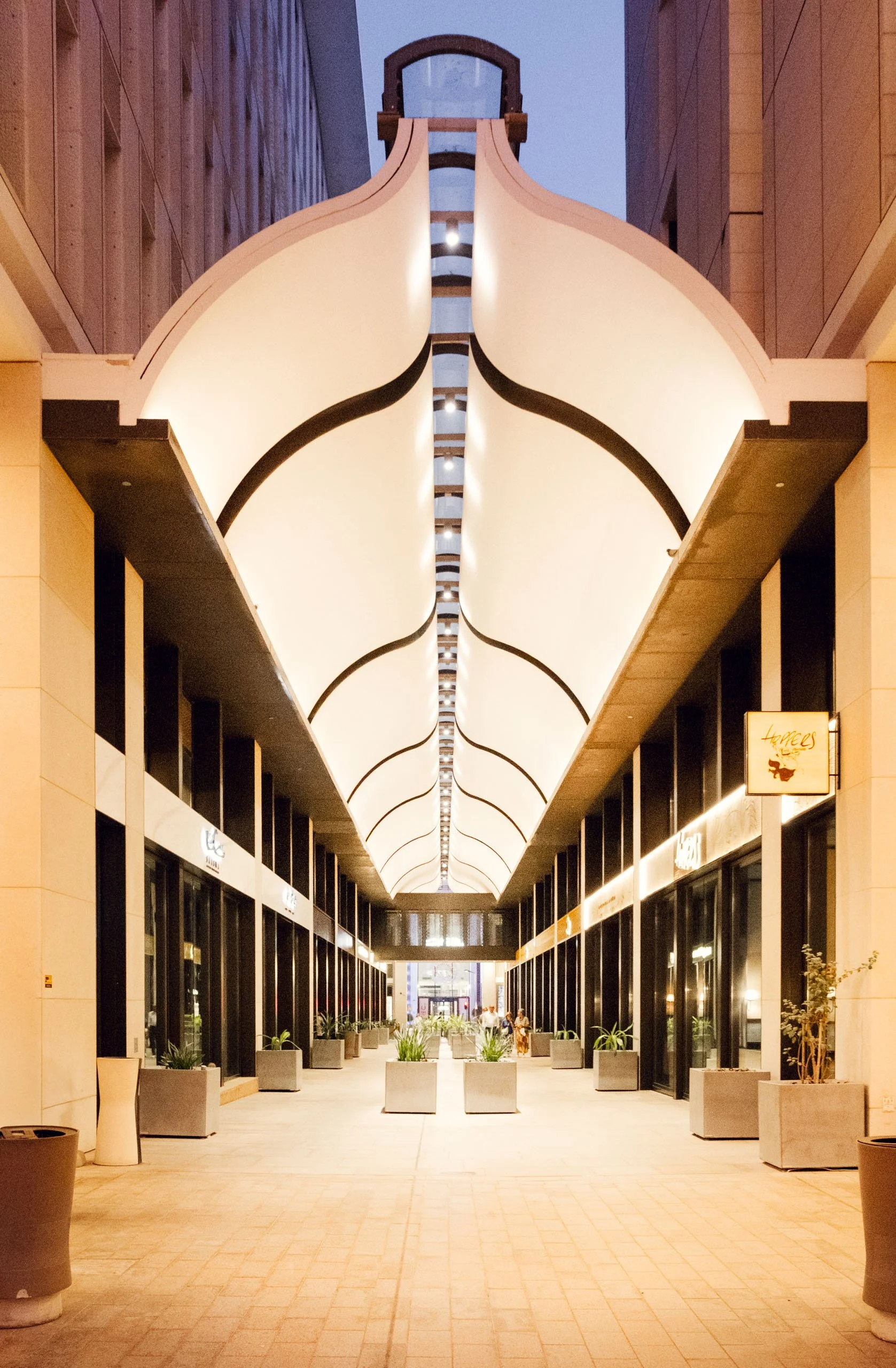
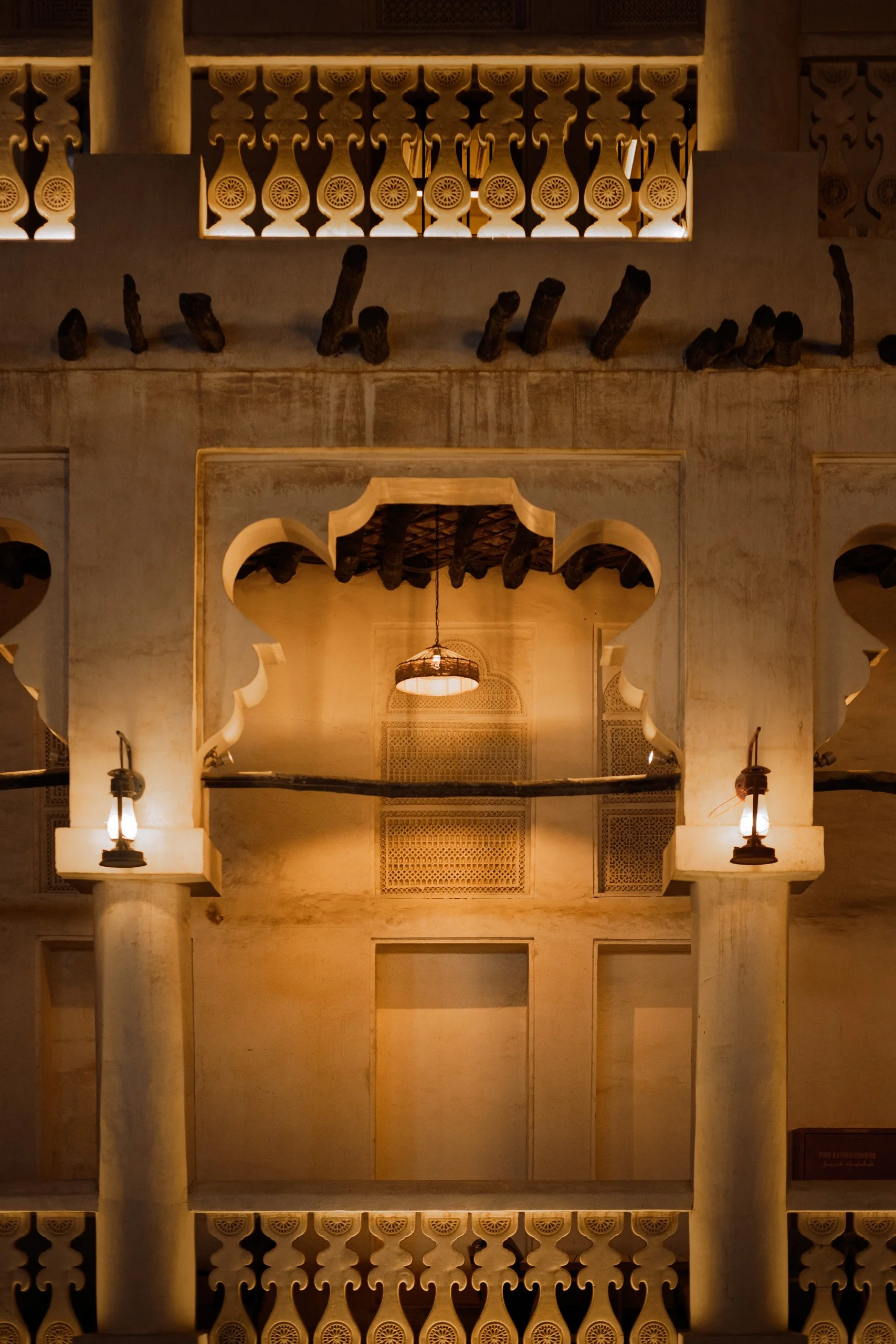
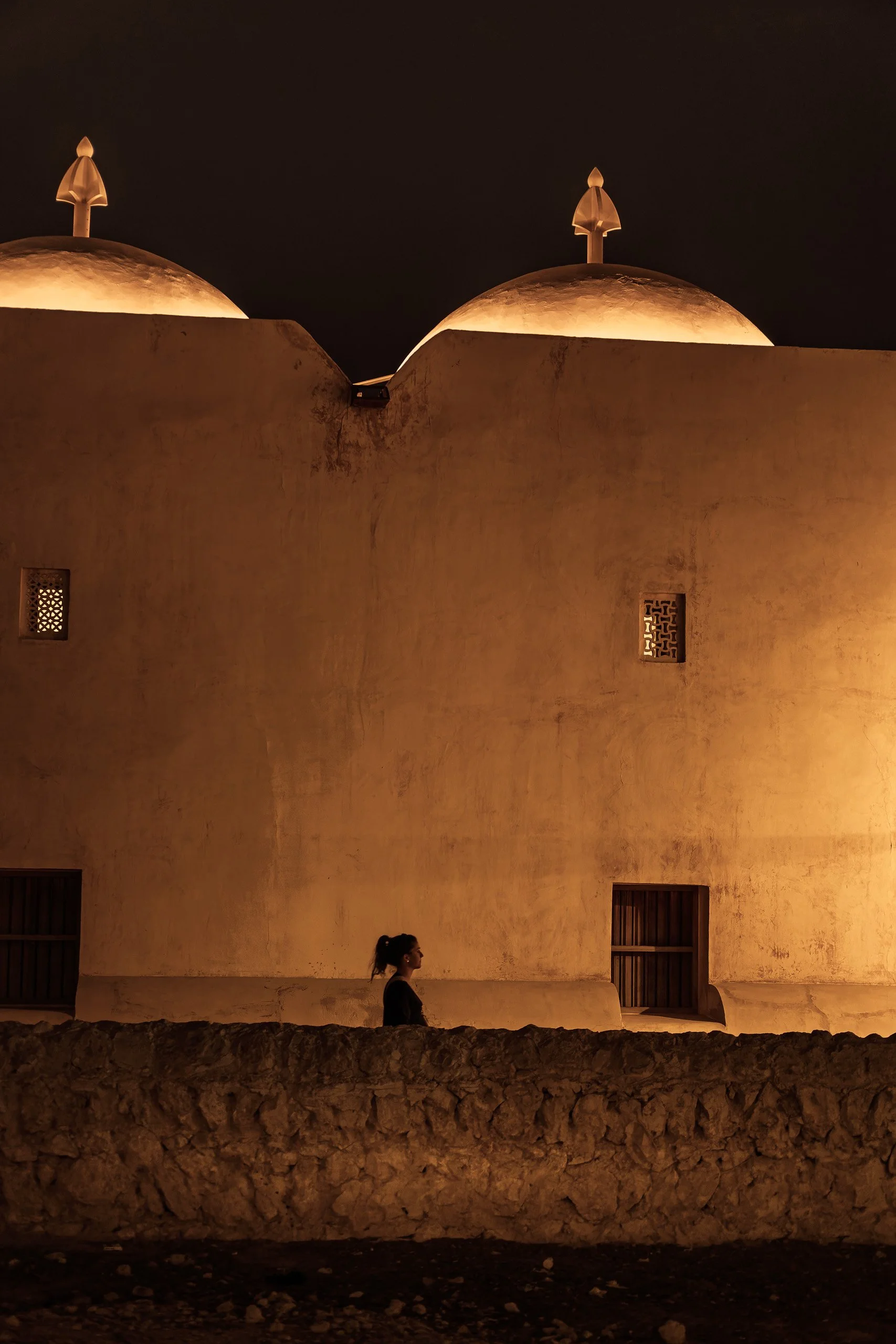
Doha’s architecture uses light to define edges, shape circulation and anchor focal points.
I photographed each location with attention to vertical alignment, color temperature and how the environment responds to the absence of daylight.
See my full Doha architecture portfolio →
The selection

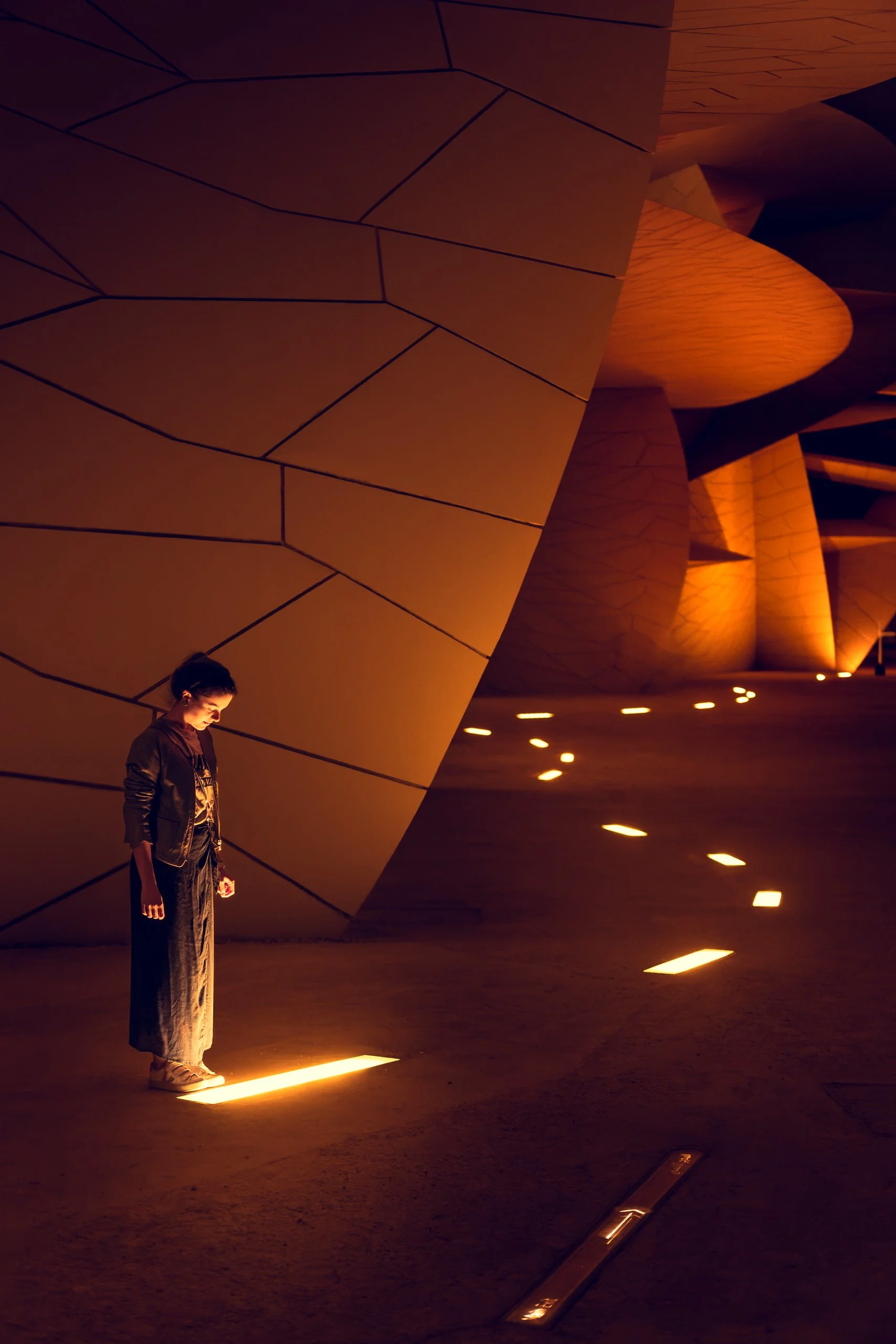
The images include spaces from Msheireb, National Museum of Qatar, Mina District, Souq Waqif, Lusail, The Pearl and West Bay.
Each place uses a distinct lighting strategy.
Some depend on soft ambient glow.
Others use sharp directional beams that carve the façade.
Together, they show how Doha builds atmosphere at night.
What this study shows
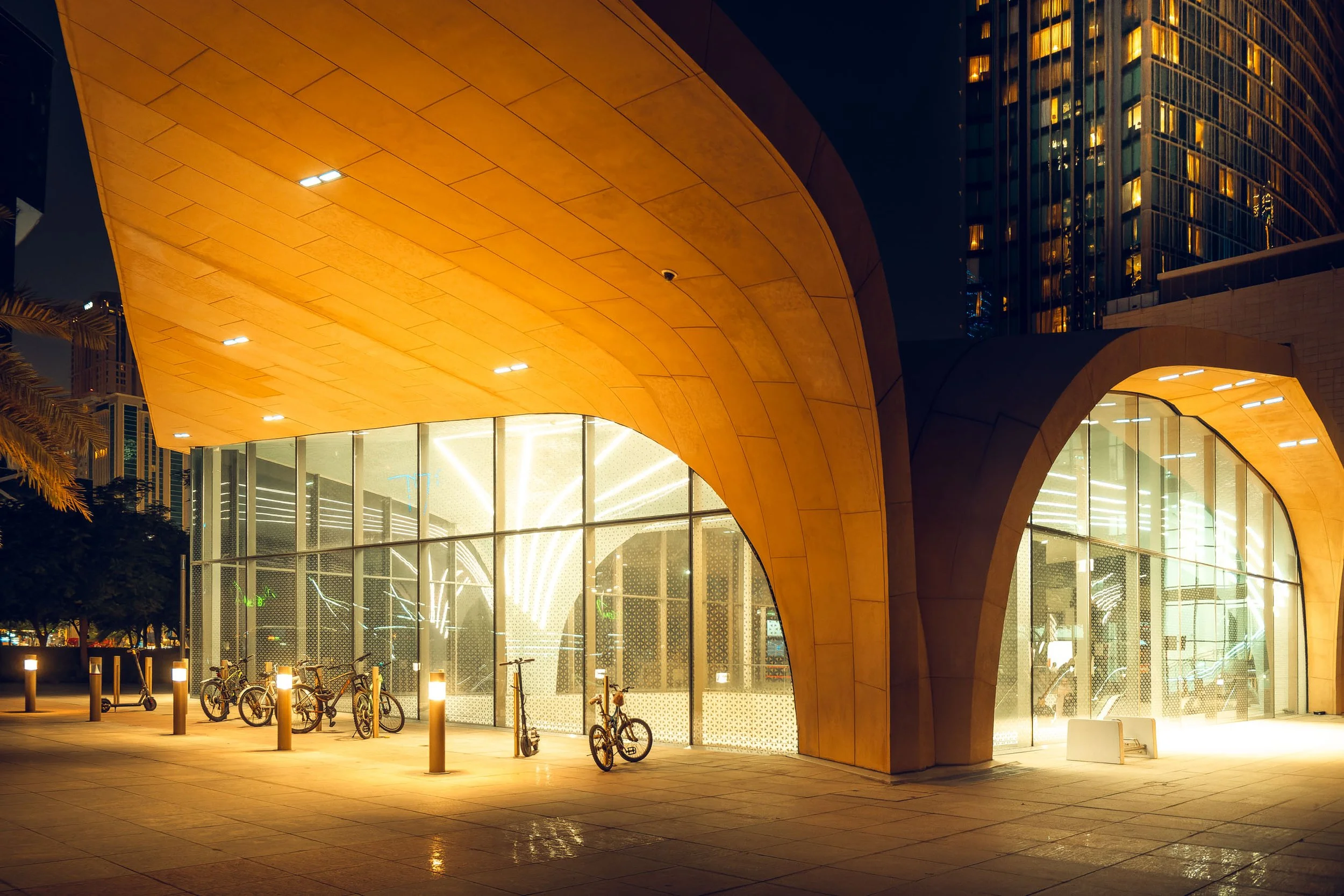
Doha at night is precise.
The city relies on clean geometry, strong shadows and intentional lighting.
This series focuses on how architecture, public space and night color create a single visual language.
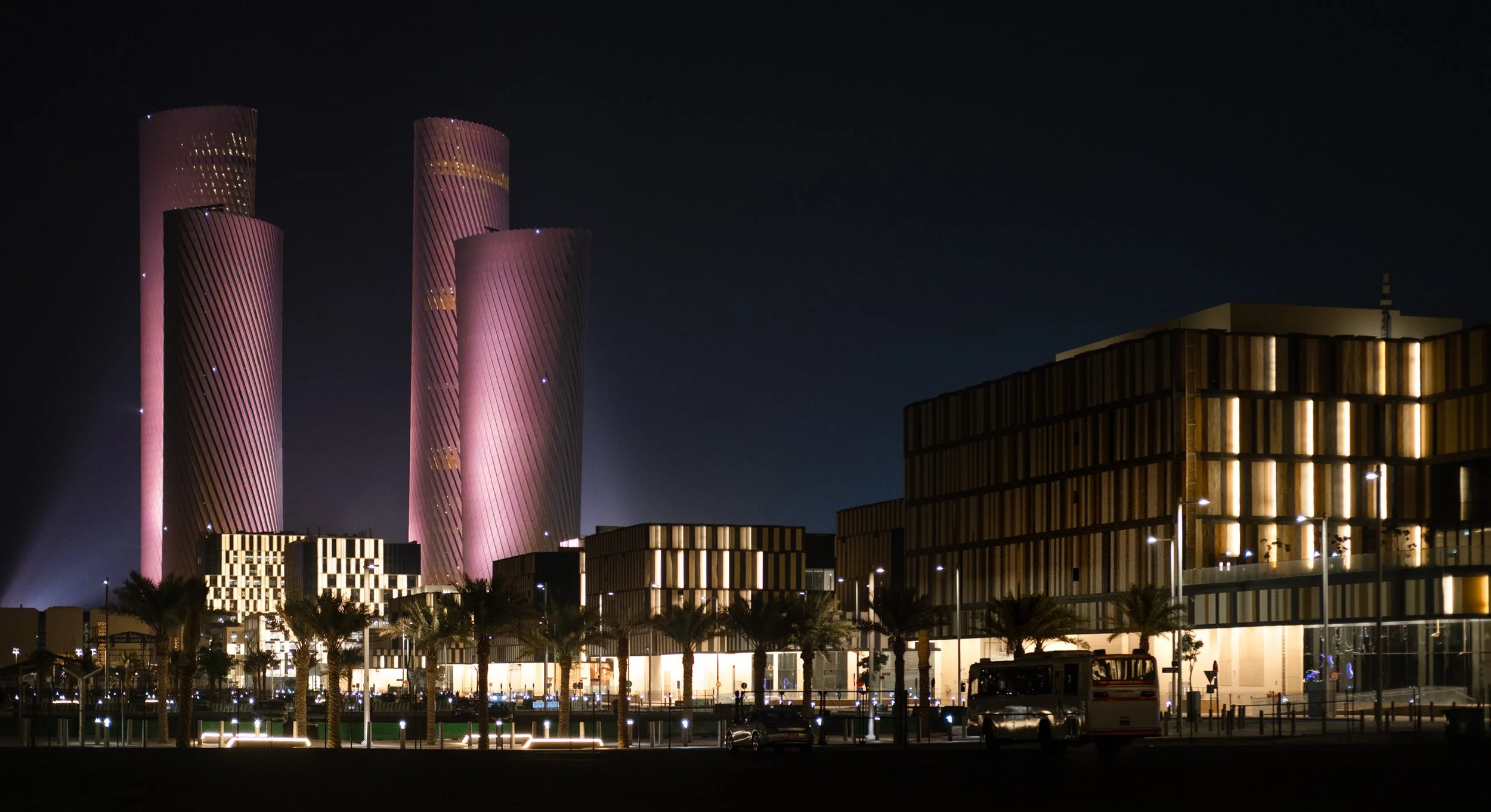
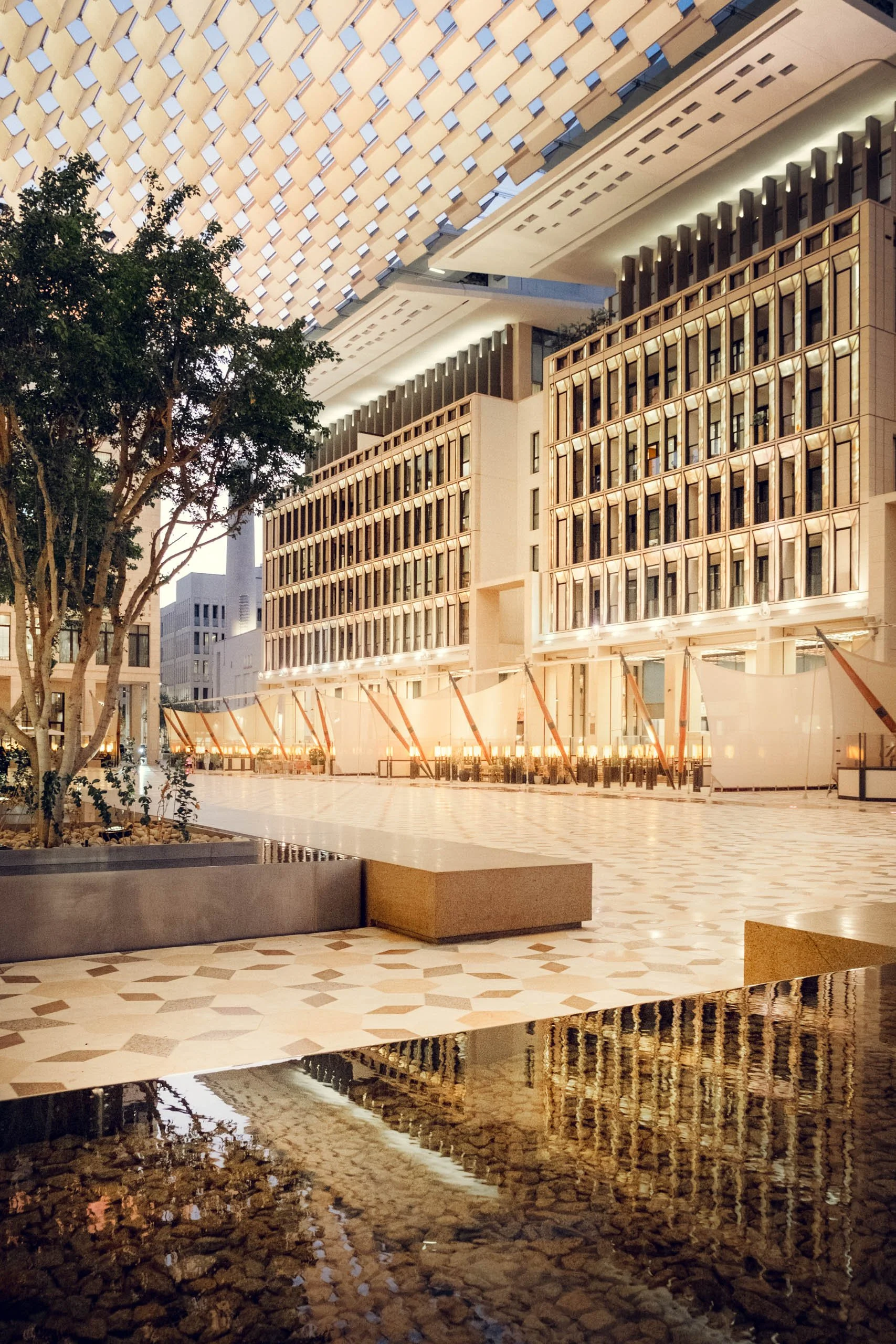
For more Doha architecture case studies, see the Museum of Islamic Art and the Katara Mosque.
If you’re an architect or designer in Doha and want your space photographed, get in touch here →/contact
See my full Doha architecture portfolio →
For Architects →
Read more stories →
FAQ about photographing Doha at night
Why does night photography work for architectural documentation?
Artificial light removes ambient noise and isolates the building's own lighting strategy. You see how the architect designed light to define edges, guide circulation, and anchor focal points — which is harder to read in daylight when natural light flattens those decisions.
What does this kind of work show that a standard portfolio shoot doesn't?
It shows how a space performs under the conditions it was designed for. Many of Doha's cultural and commercial buildings are conceived with night lighting as part of the spatial experience. Documenting that is part of documenting the project.
Can these images be used for award submissions, editorial publications, or client presentations?
Yes. Images are delivered at full resolution and licensed for professional use including publications, award submissions, and marketing materials. Multi-party licensing — for projects involving architects, interior designers, and developers — is standard practice and worth clarifying before the shoot.
Do you work with project teams on scheduled night shoots in Doha?
Yes. Night shoots are planned around the project's specific conditions — building type, lighting systems, access requirements, and the season. Most exterior work in Doha happens in the cooler months when the air is clear and conditions are stable.
What locations does this study include?
Msheireb Downtown Doha, the National Museum of Qatar, Mina District, Souq Waqif, Lusail, The Pearl, and West Bay. Each uses a different lighting approach, from warm ambient interiors against a cool sky to directional beams that carve facades.