CaixaForum Madrid: A Photographer's Reading of Herzog & de Meuron's Urban Intervention
Architectural photography at one of Madrid's most significant cultural spaces, on the Paseo del Prado.
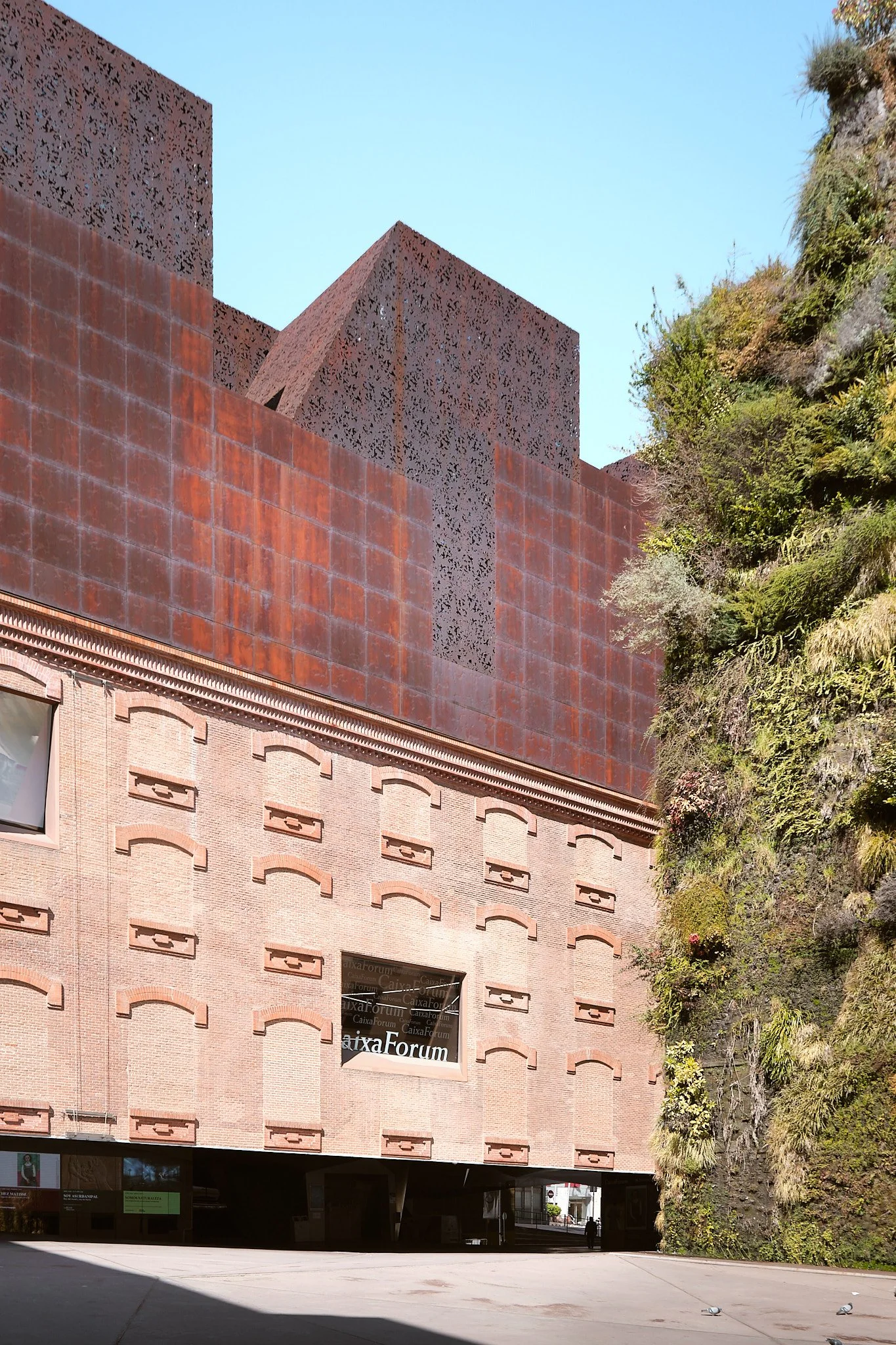
The CaixaForum Madrid sits on the Paseo del Prado, steps away from the Prado, the Reina Sofía, and the Thyssen-Bornemisza.
It opened in 2008, designed by Herzog & de Meuron, built inside the shell of a former power station from the early 1900s.
The vertical garden by Patrick Blanc covers the adjacent wall.
Most people walking past know it immediately.
What I wanted to understand, as a photographer, was how a building this well-documented could still offer something new to look at.
The answer, I found, was to stop looking for a definitive image and start reading the building as a sequence.
This post documents that sequence.
1. Reading the Building Through Fragments
My first instinct at CaixaForum was not to step back and find the widest frame.
It was the opposite: to move closer, isolate, and let the fragments speak.
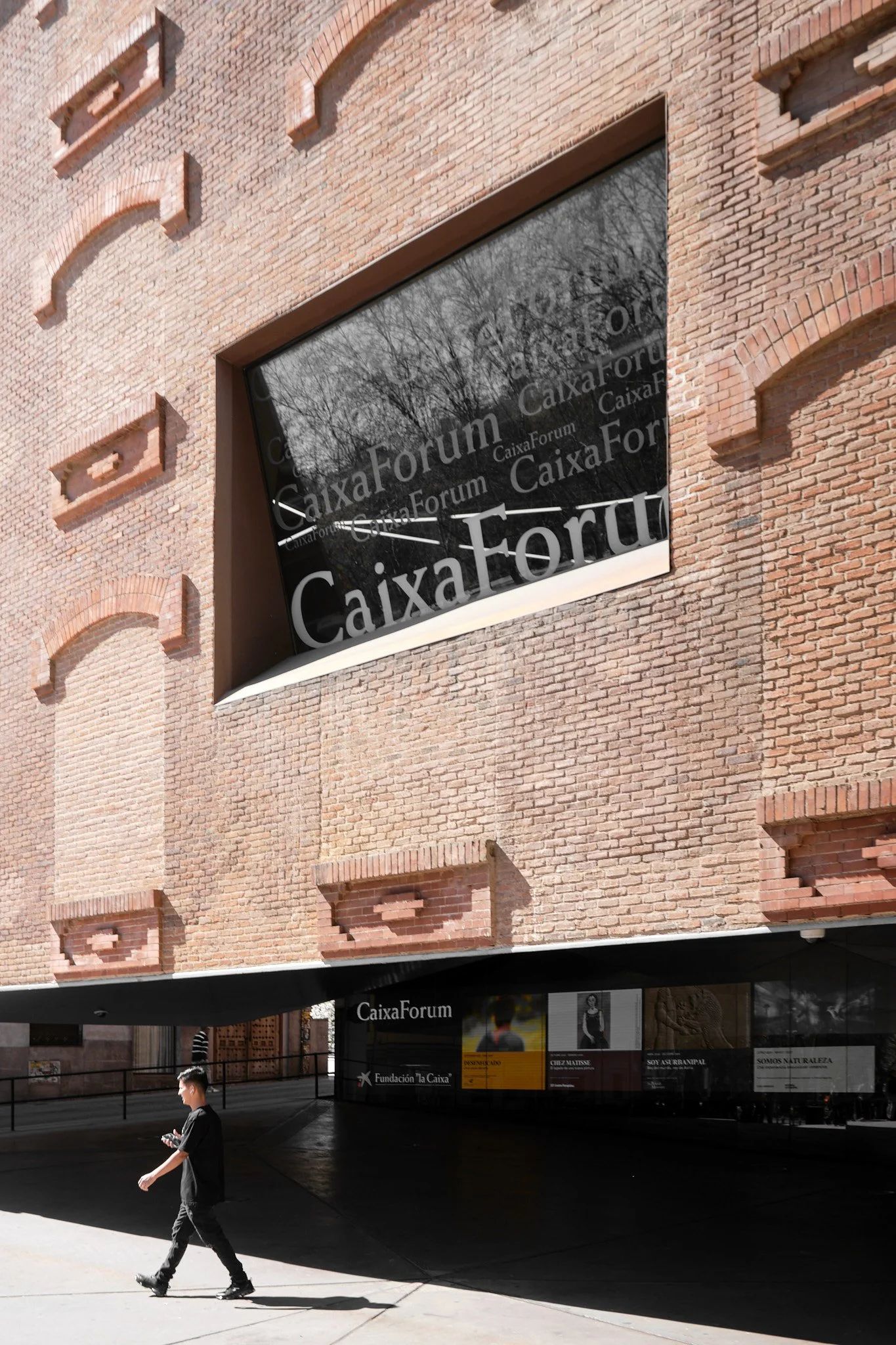
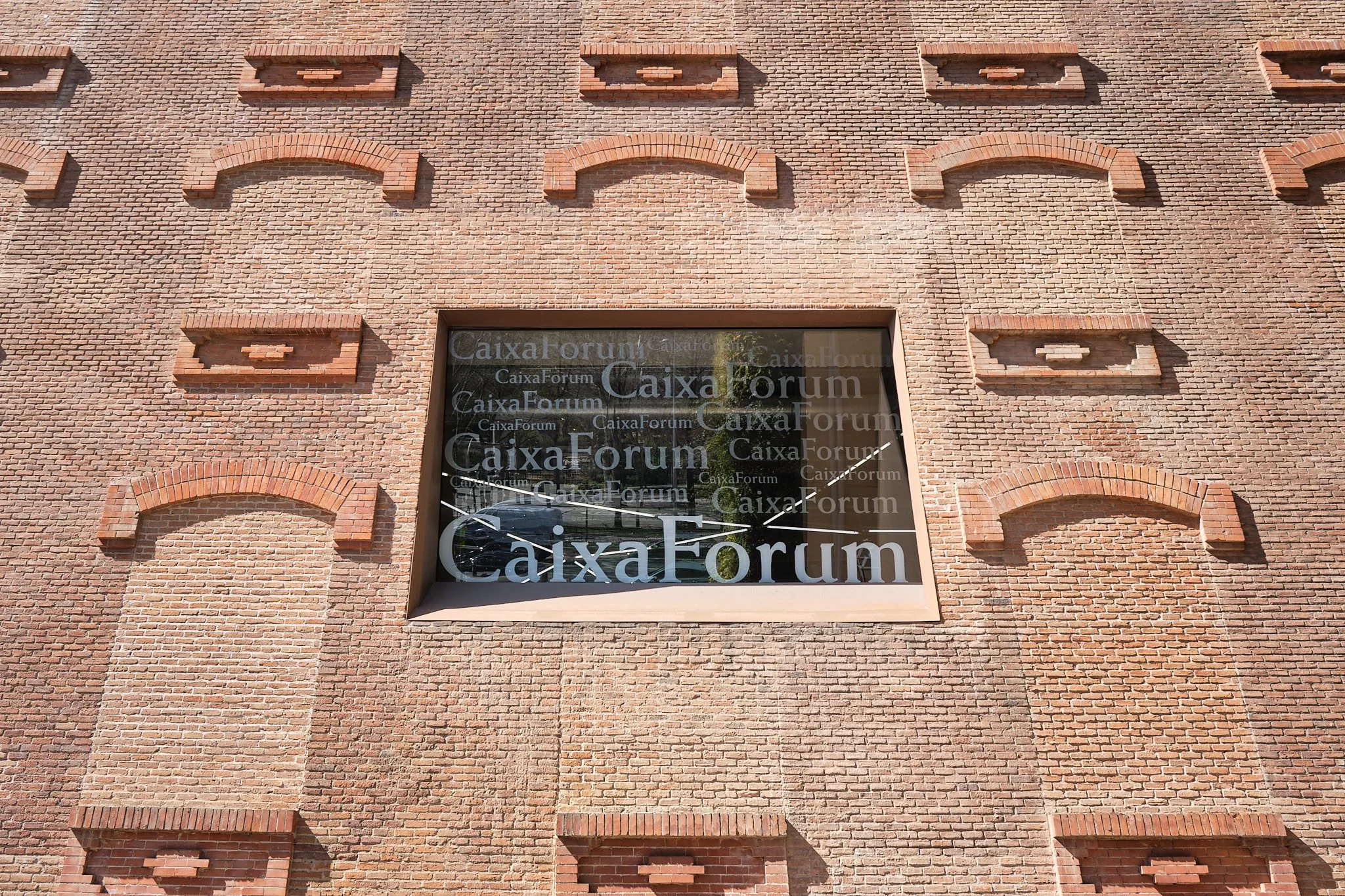
The historic brick facade is the building's most immediate material presence.
Up close, it reads as texture, as weight and as age.
2. The Void That Holds Everything Up
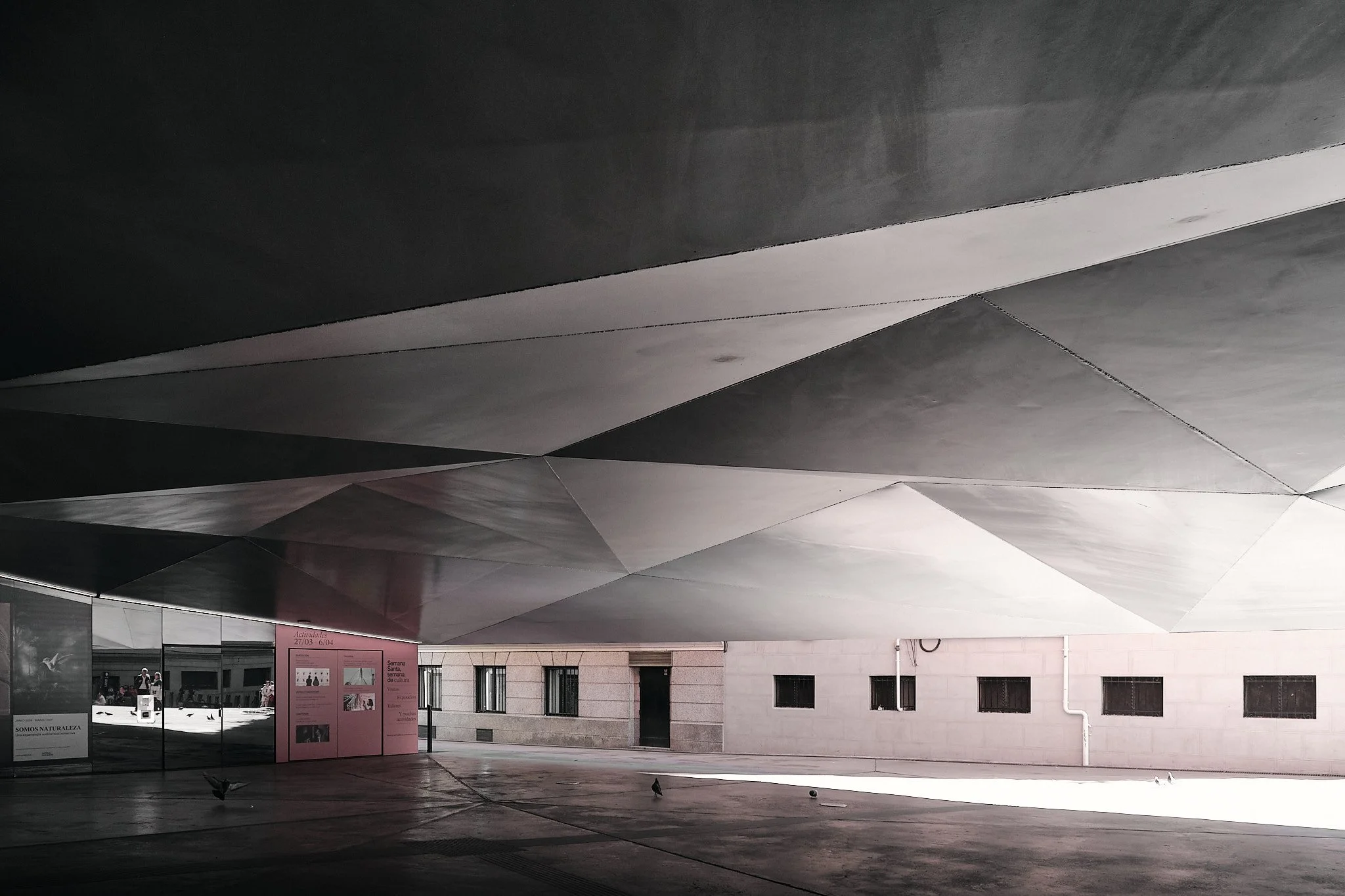
The most radical spatial decision at CaixaForum is one that most visitors walk through without stopping to consider: the building has no base.
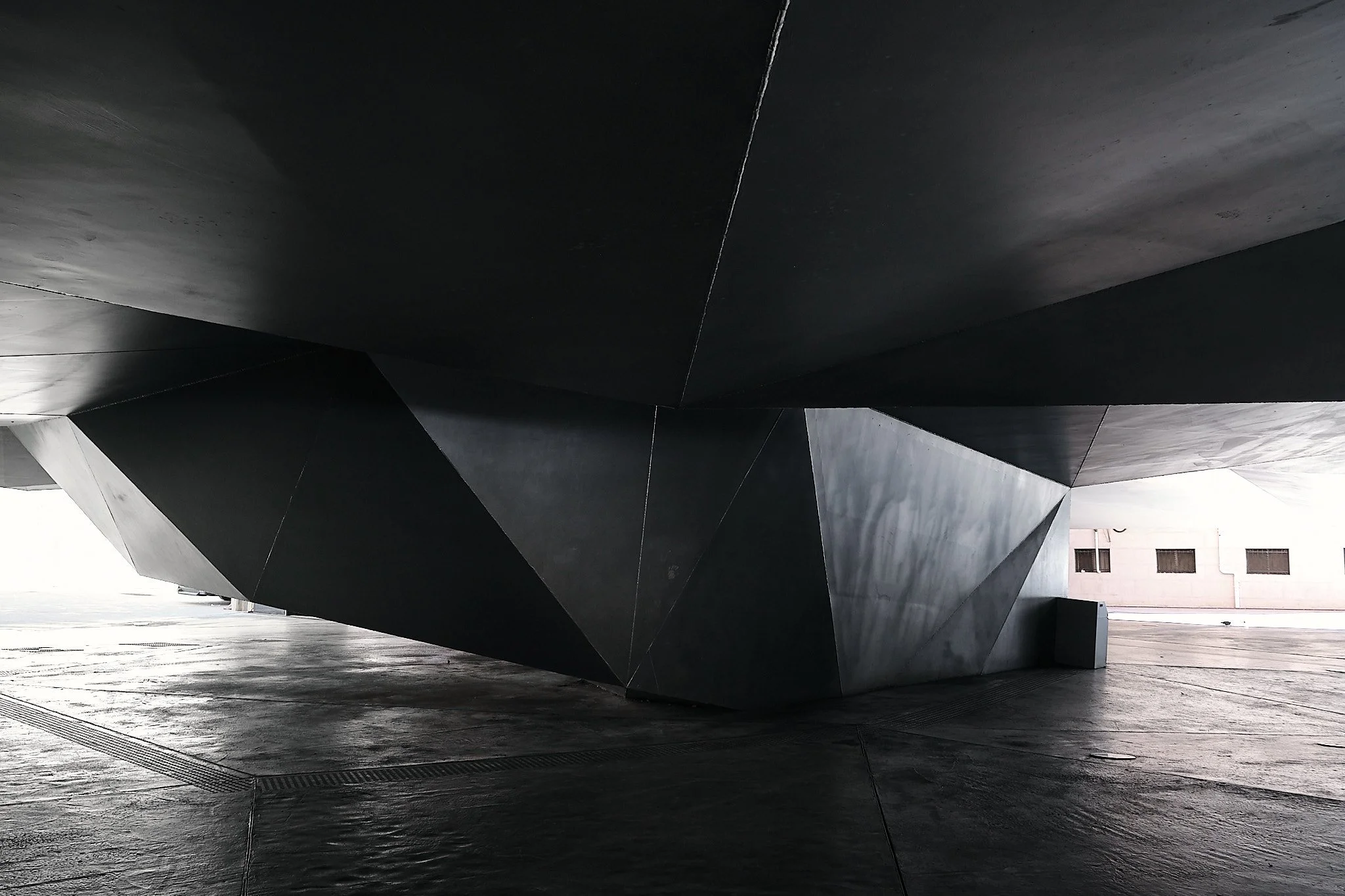
Herzog & de Meuron removed the original plinth of the power station, lifting the entire brick shell off the ground and creating a covered public space underneath.
The result is a volume that appears to float, its weight held in apparent defiance of gravity.
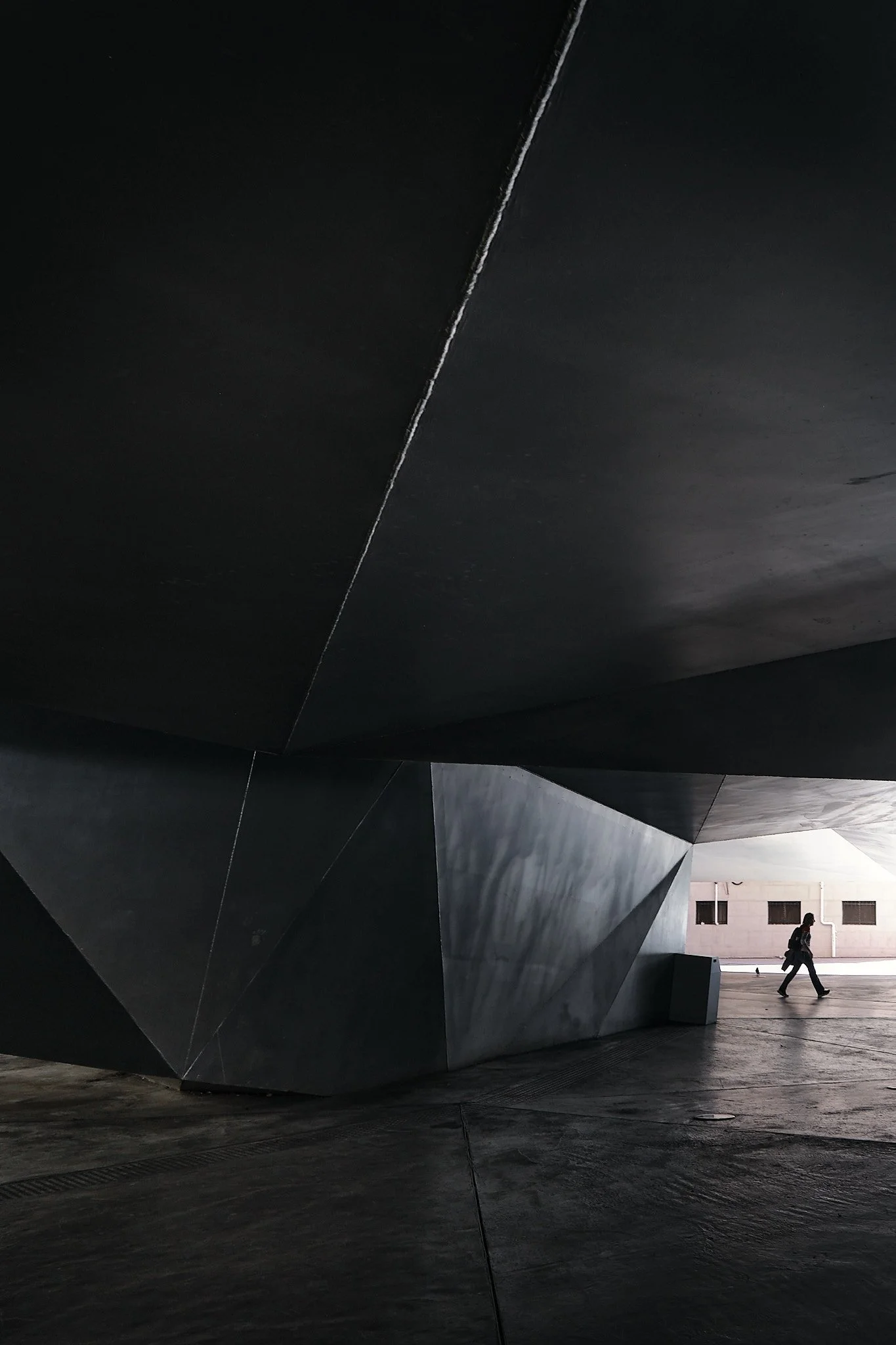
The geometry of the underside is angular and sharp, and the light that enters from the sides creates deep contrasts that change depending on where you stand.
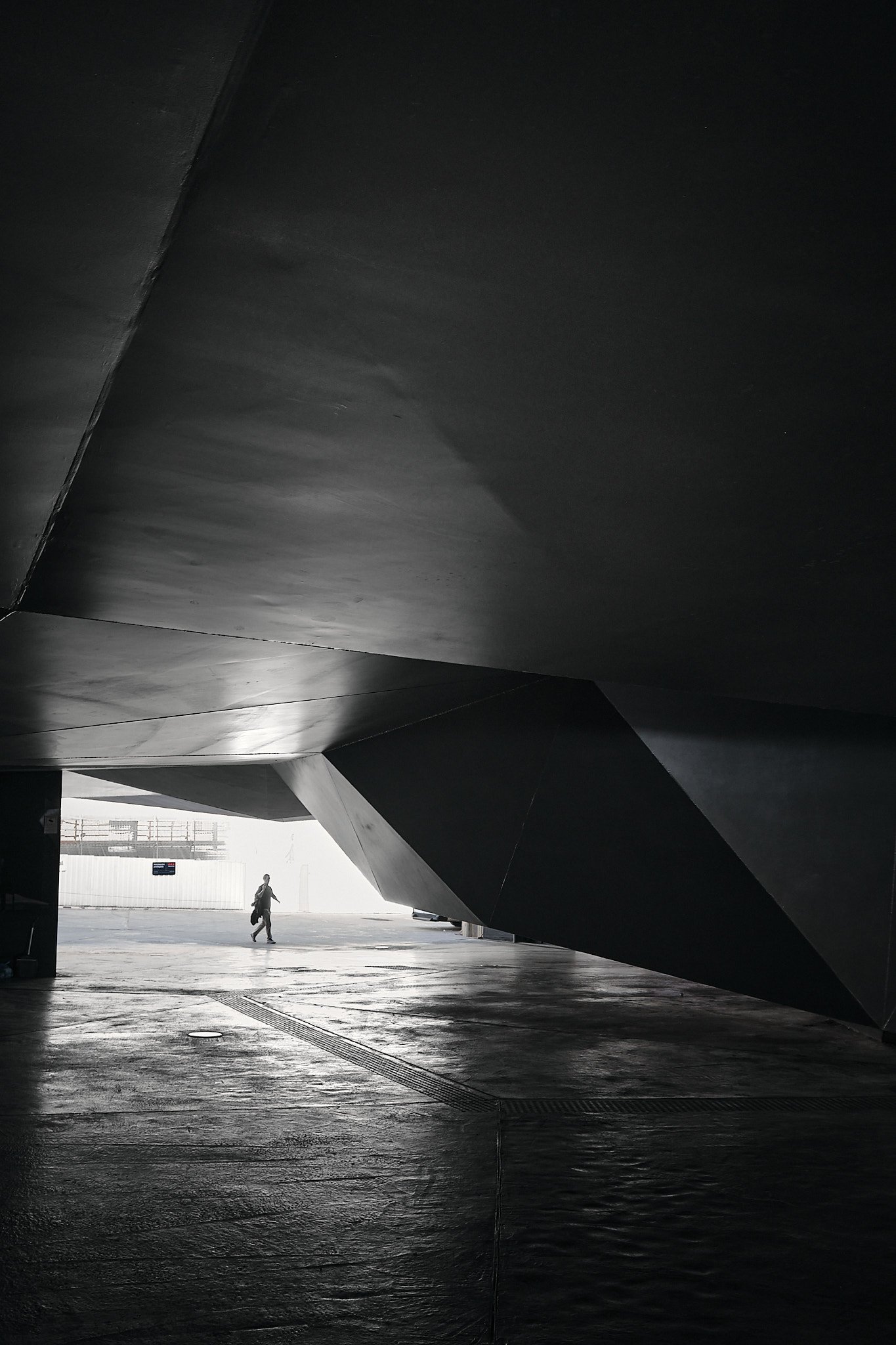
I chose to remove most of the color from these images.
The space has a quality that is almost monochromatic in reality, and the color that remained in the original files was competing with the geometry rather than reinforcing it.
The dessaturation was a reading, not a treatment.
The human figures in some of these frames are not incidental.
They are the scale reference that makes the spatial drama legible.
3. Circulation as Architecture
Inside CaixaForum, moving through the building is not a neutral act.
The staircases, ramps, and corridors are designed with the same intention as the gallery spaces themselves.
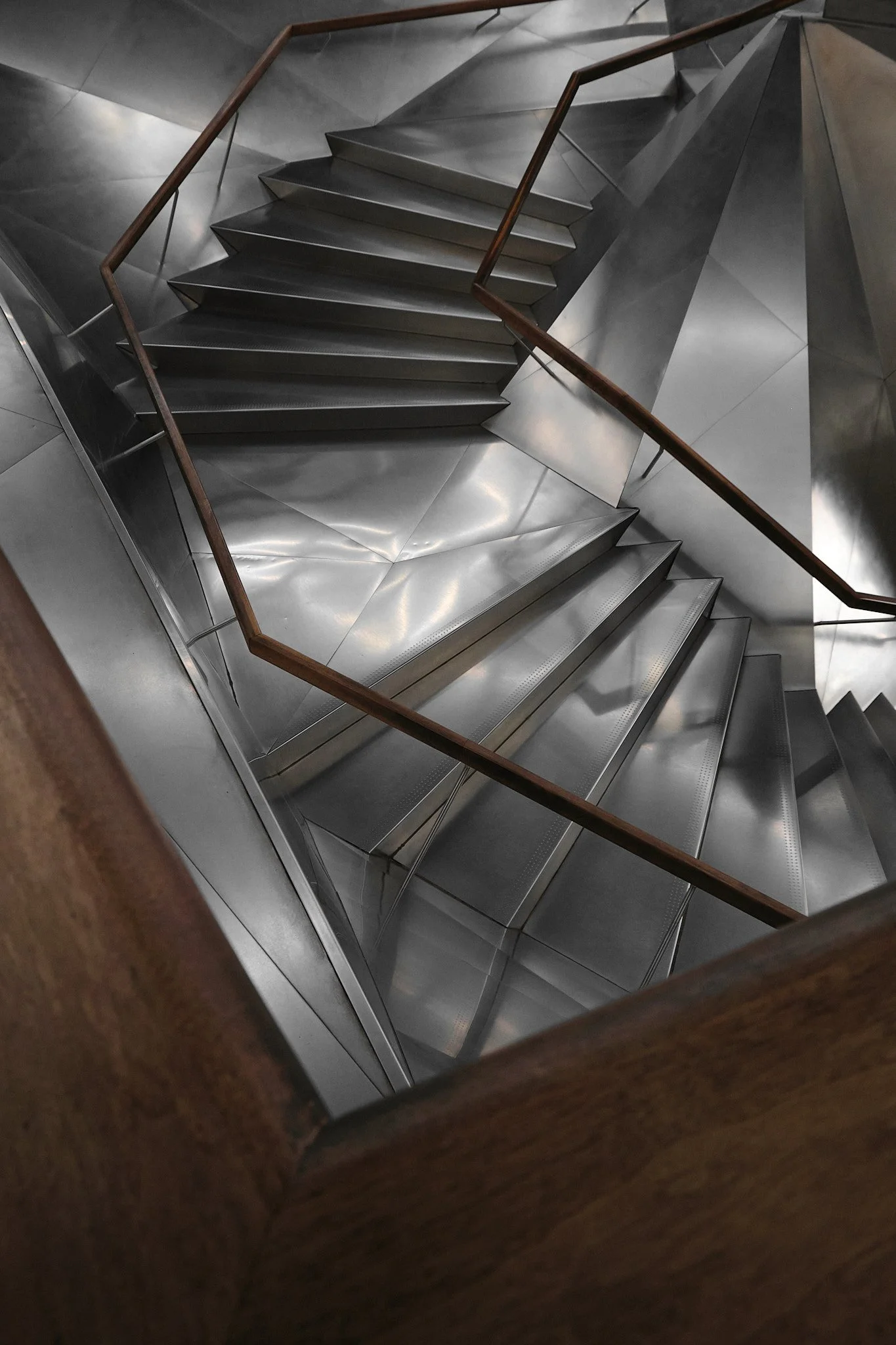
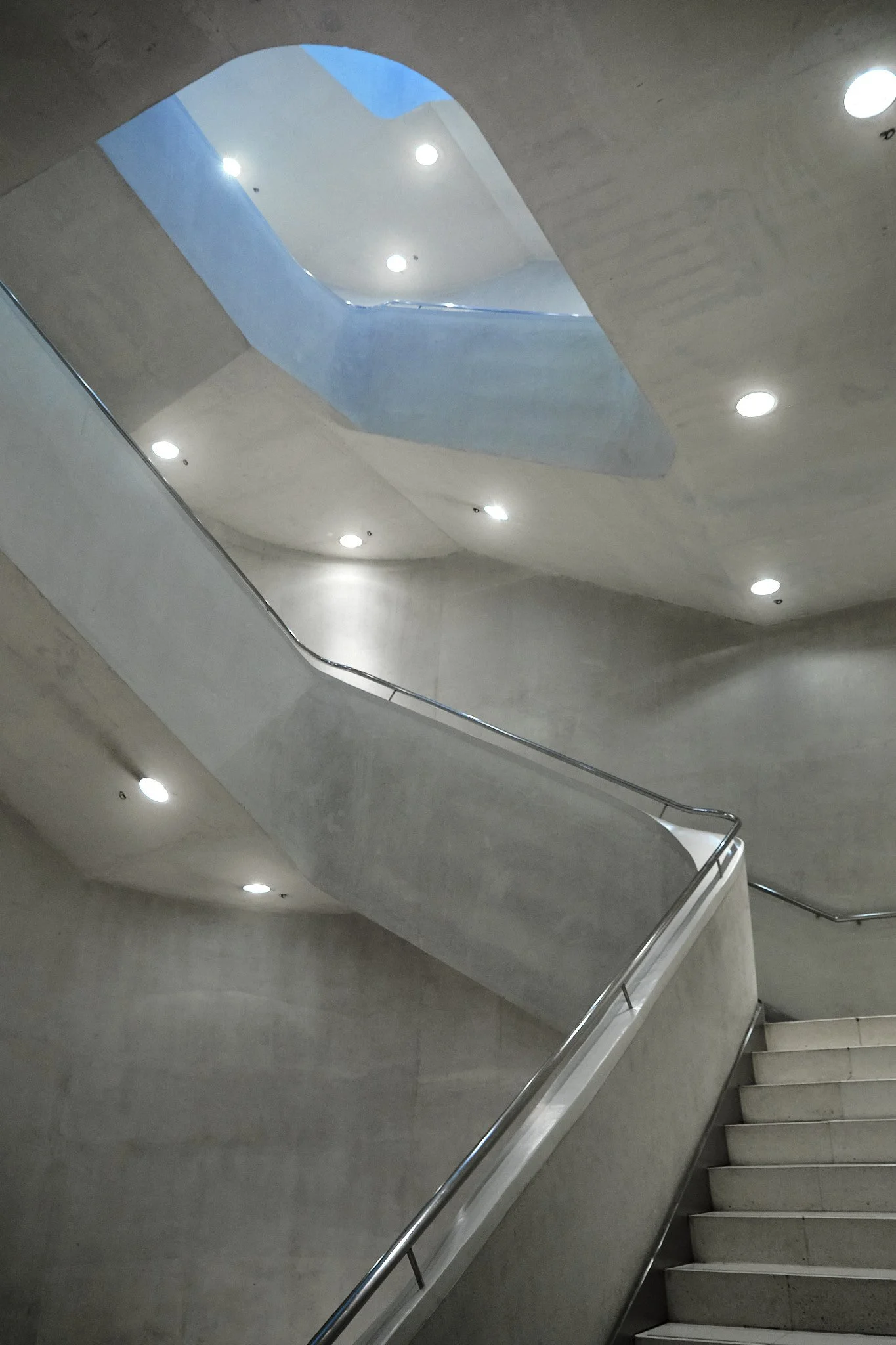
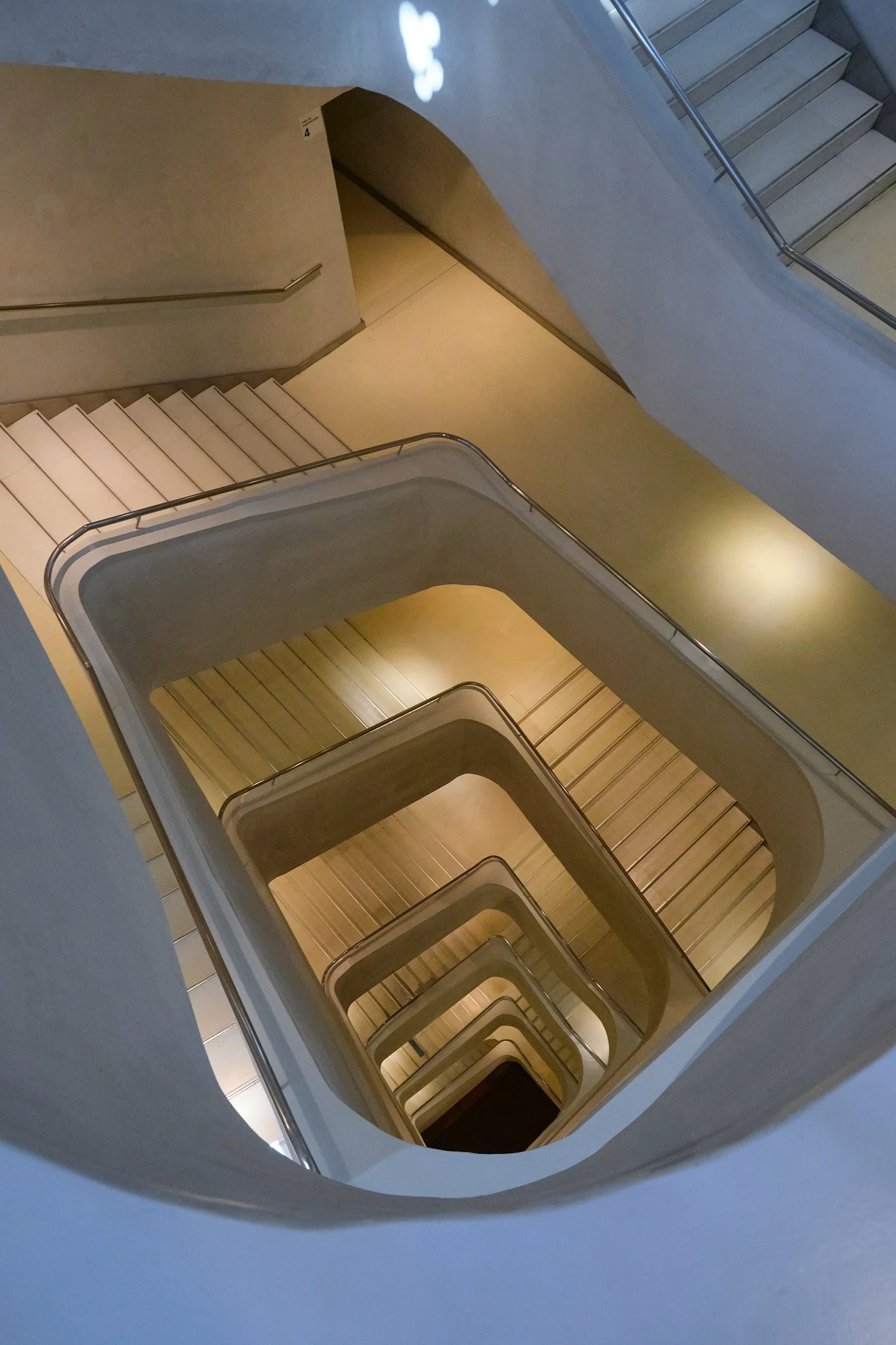
The metallic spiral staircase, photographed from directly above, collapses depth into pure geometry.
The wooden staircase in warm tones offers a completely different register: softer, more measured, more intimate.
The curved ramp with the overhead skylight introduces natural light as a spatial element, not just as illumination.
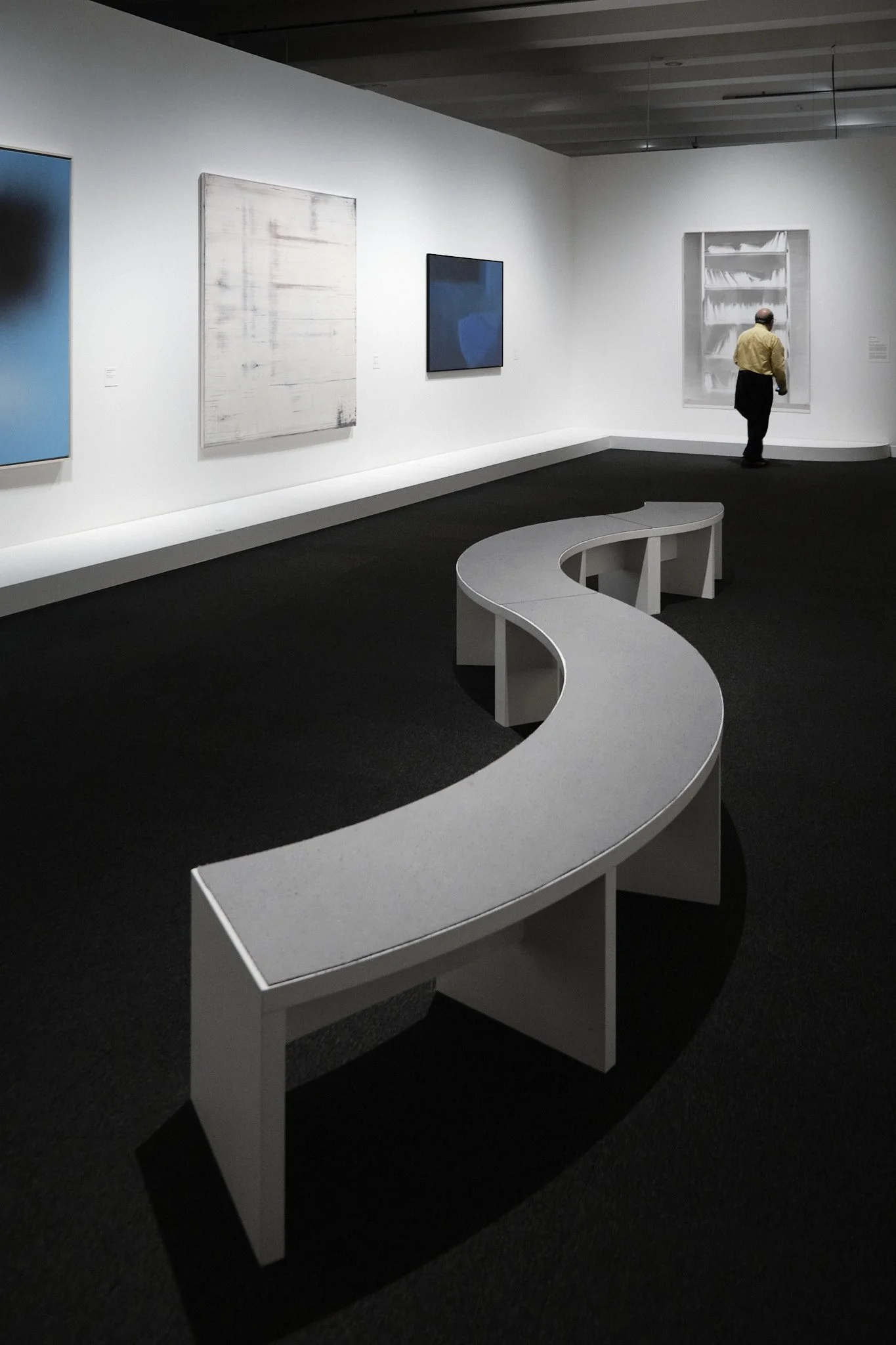
The gallery space with the curved reception desk and the standing figure anchors the sequence: after the rawness of the exterior and the drama of the void below, the interior settles into controlled calm.
Final Thoughts
CaixaForum is a building that rewards attention.
It is generous with visual material, but it doesn't give its best readings easily.
You have to move through it, stop in the wrong places, reconsider, and come back.
That process is, for me, what architectural photography is about: accumulated reading.
If you are evaluating photographers for your next project, this guide covers what actually separates strong architectural photography from standard documentation.
Project Credits
Design: Herzog & de Meuron
Vertical Garden: Herzog & de Meuron in collaboration with Patrick Blanc
Location: Paseo del Prado 36, Madrid, Spain
Client: Obra Social Fundación "la Caixa"
Project: 2001-2003, Realization: 2003-2008
Opening: 2008
Category: Cultural Institution / Adaptive Reuse
Photography: Pedro Ferr
Looking for architectural photography for your next project?
Explore my architectural and interior photography portfolio or visit my photography services page to discuss how I can document your work.
FAQ: CaixaForum Madrid
Who designed CaixaForum Madrid? CaixaForum Madrid was designed by Herzog & de Meuron, the Swiss architecture firm founded by Jacques Herzog and Pierre de Meuron. The project transformed a former power station called Central del Mediodía, built in the early 1900s, into a contemporary cultural center. Construction ran from 2003 to 2008.
What was CaixaForum Madrid before it became a museum? The building was originally the Central del Mediodía, an early 20th-century electrical power station. Herzog & de Meuron preserved the historic brick shell and stripped everything else, inserting a completely new program inside while adding a new metallic volume on top. The gas station that previously occupied the adjacent plot was demolished to create the current plaza.
Why does CaixaForum Madrid appear to float above the ground? Herzog & de Meuron removed the original base of the power station, lifting the entire brick shell off the street level. The result is a covered public space underneath the building where the ground floor used to be. The building's mass appears suspended, which was both a spatial and urbanistic gesture: it created a shaded public threshold between the Paseo del Prado and the entrance, solving the problem of the site's narrow surrounding streets in a single move.
What is the vertical garden at CaixaForum Madrid? The vertical garden covering the adjacent wall was developed by Herzog & de Meuron in collaboration with Patrick Blanc, a French botanist and artist known for pioneering living wall systems. It stands in direct visual contrast with the rust-toned metallic facade of the new volume, and serves as a reference to the nearby Botanical Garden on the Paseo del Prado.
Is CaixaForum Madrid worth visiting for architecture? For anyone interested in architecture and urban design, it is one of the most precise examples of adaptive reuse in Europe. The building operates on several scales simultaneously: as a fragment of Madrid's industrial history, as an urban intervention that reshapes the public space around it, and as a sequence of interior spaces with distinct spatial qualities. It rewards slow, attentive movement through it.