Photographing the Basilica Papale di San Paolo Fuori le Mura, Rome
Interior and architectural photography at one of Rome's four Papal Basilicas.
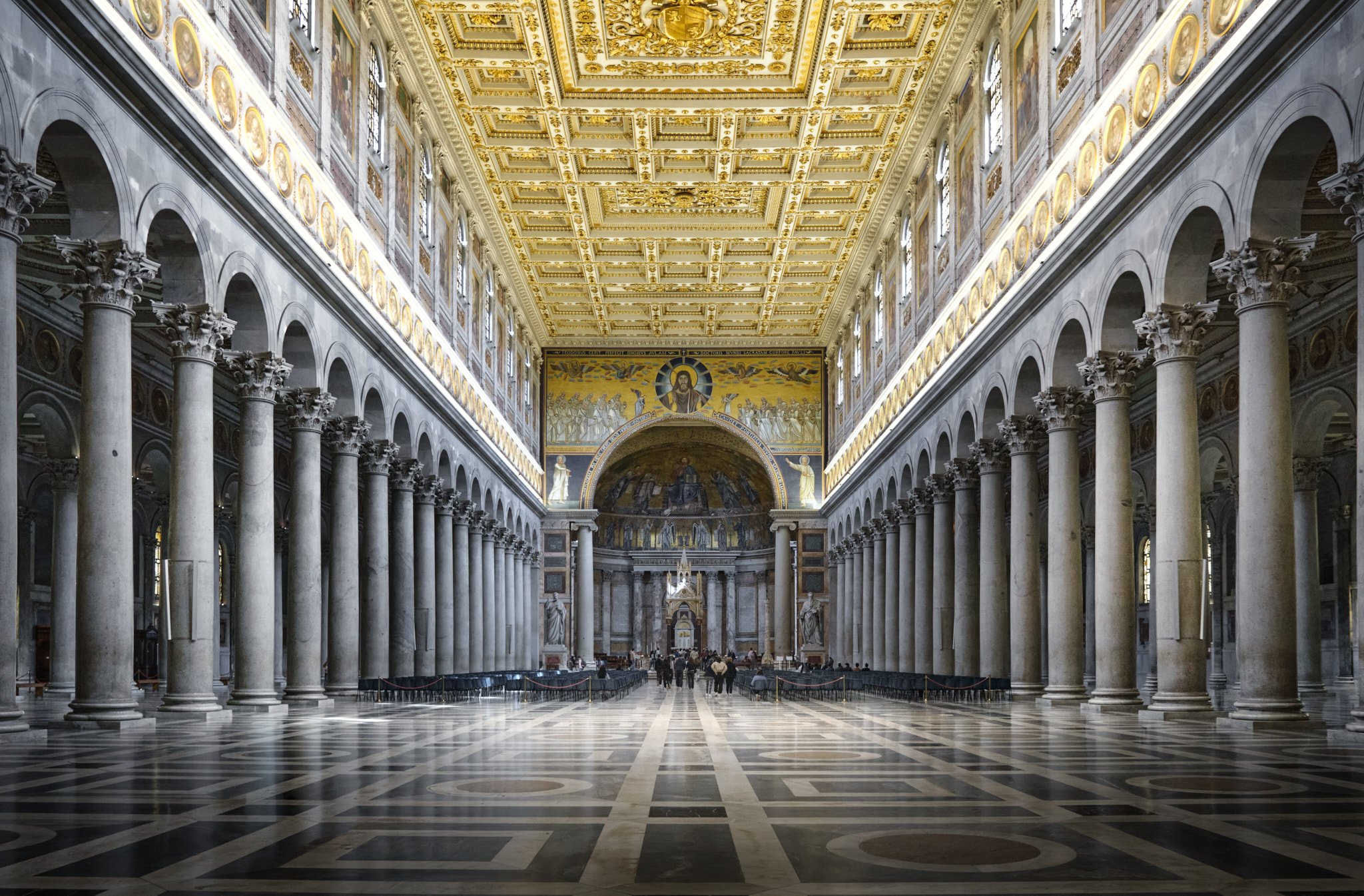
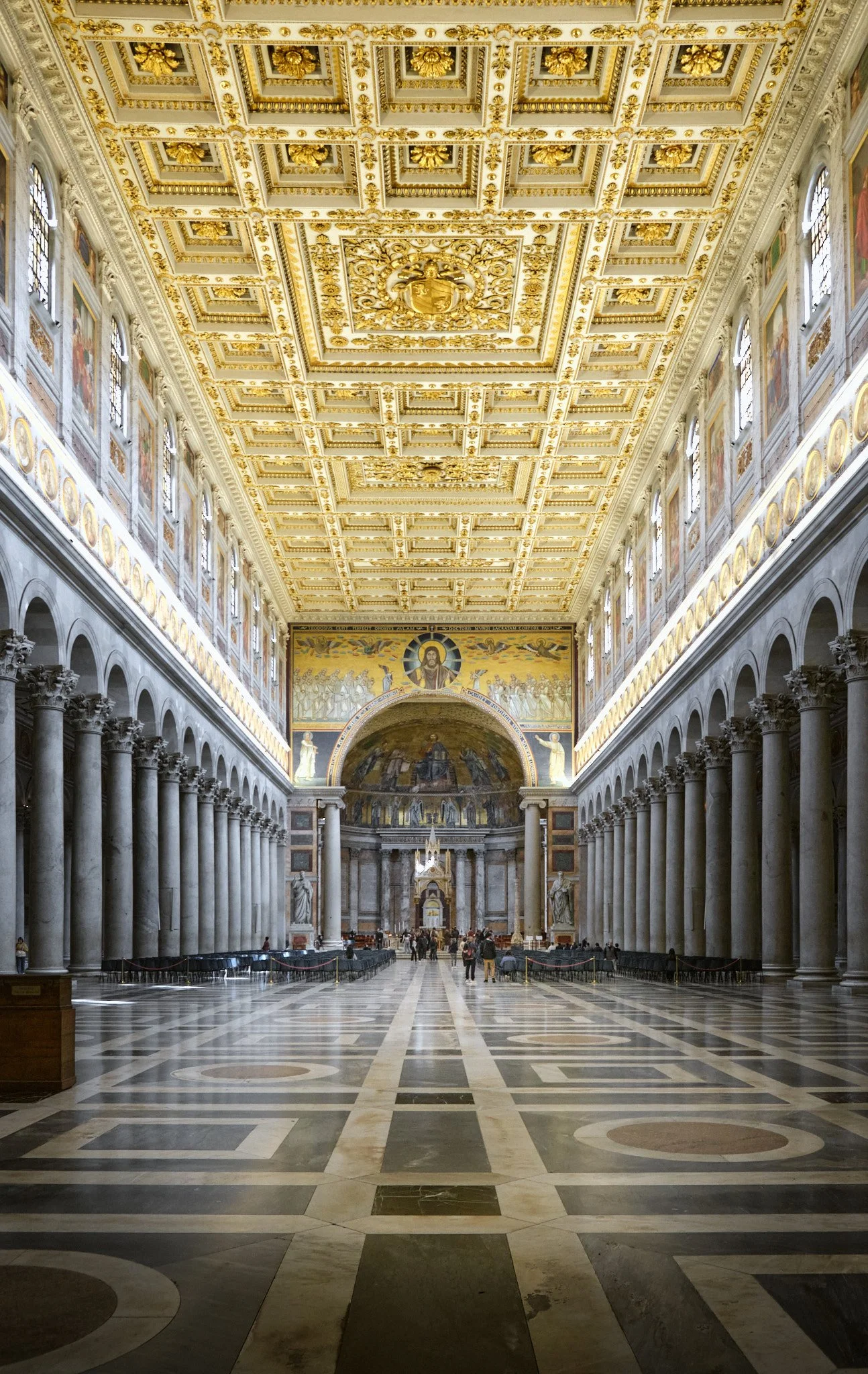
The Basilica di San Paolo Fuori le Mura is one of the largest churches in the world: a five-aisle interior 131 metres long, divided by 80 granite columns, covered by a coffered ceiling layered in gold.
It is also, from a photographic standpoint, one of the most demanding interiors I have worked in.
The same challenge appears at MAXXI.
The challenges here are the same ones that define high-complexity interior photography anywhere: scale, light and a material palette.
The Exterior: Approach and Compression
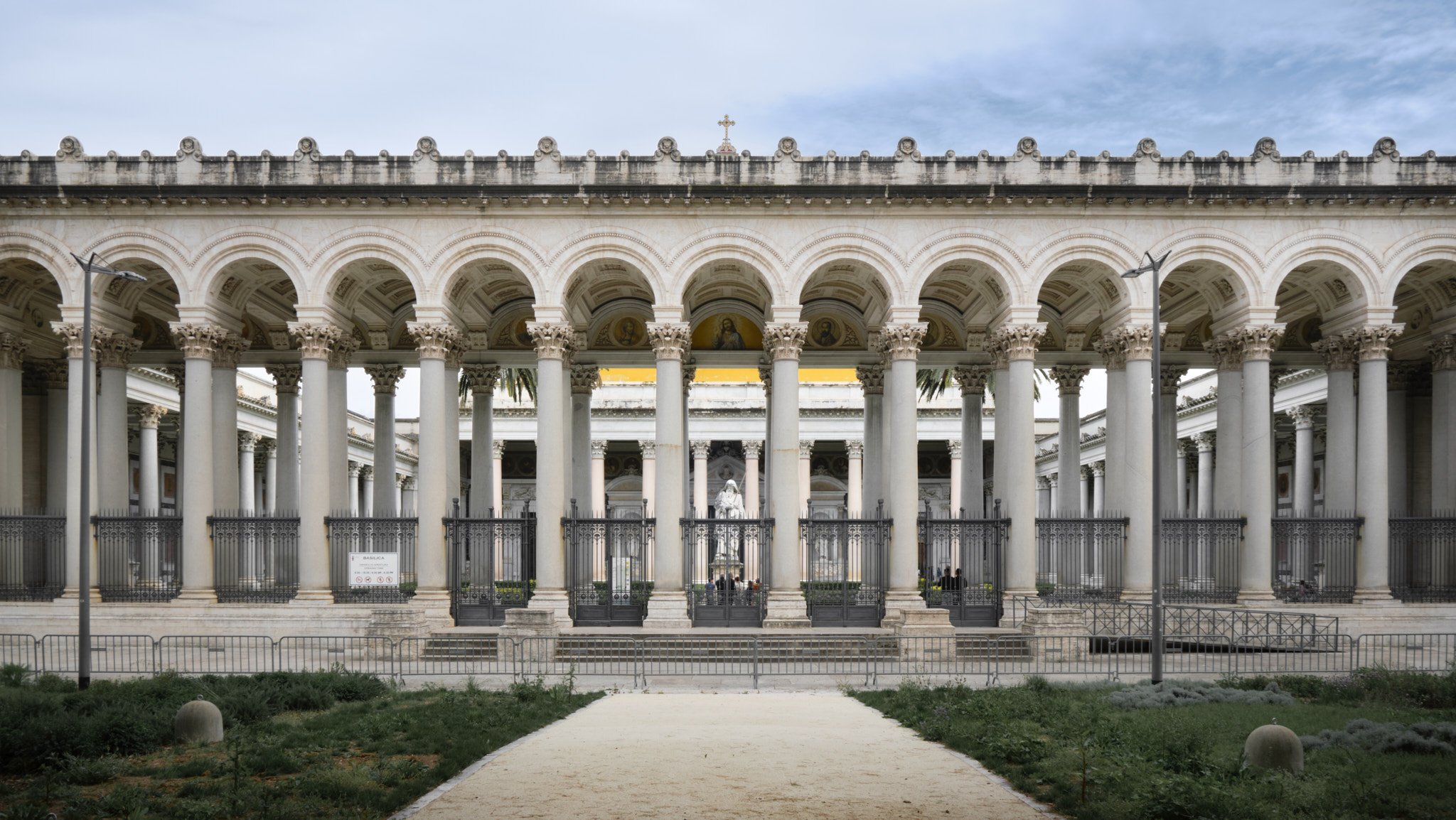
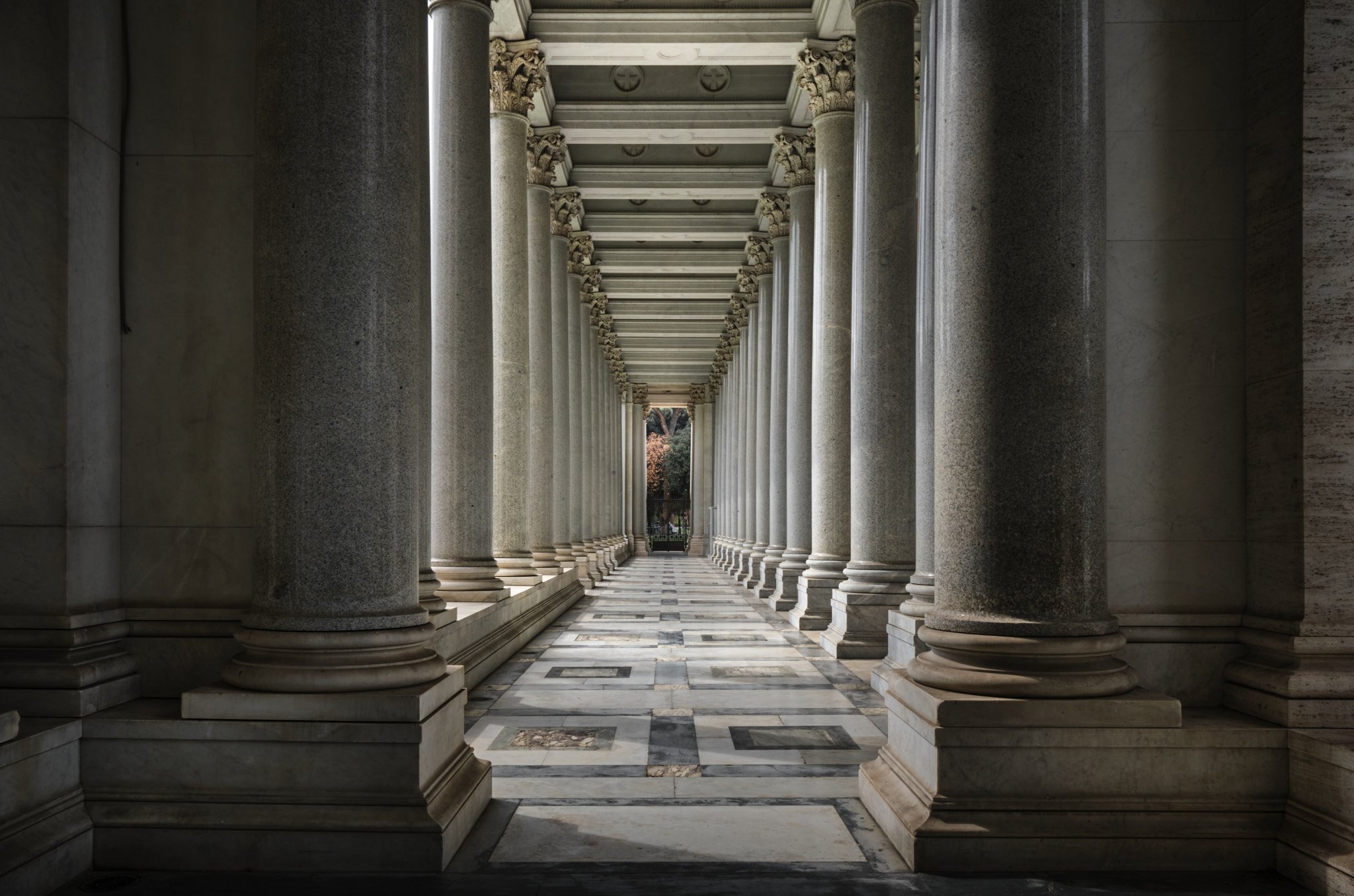
The approach through the quadriporticus sets the conditions for everything that follows.
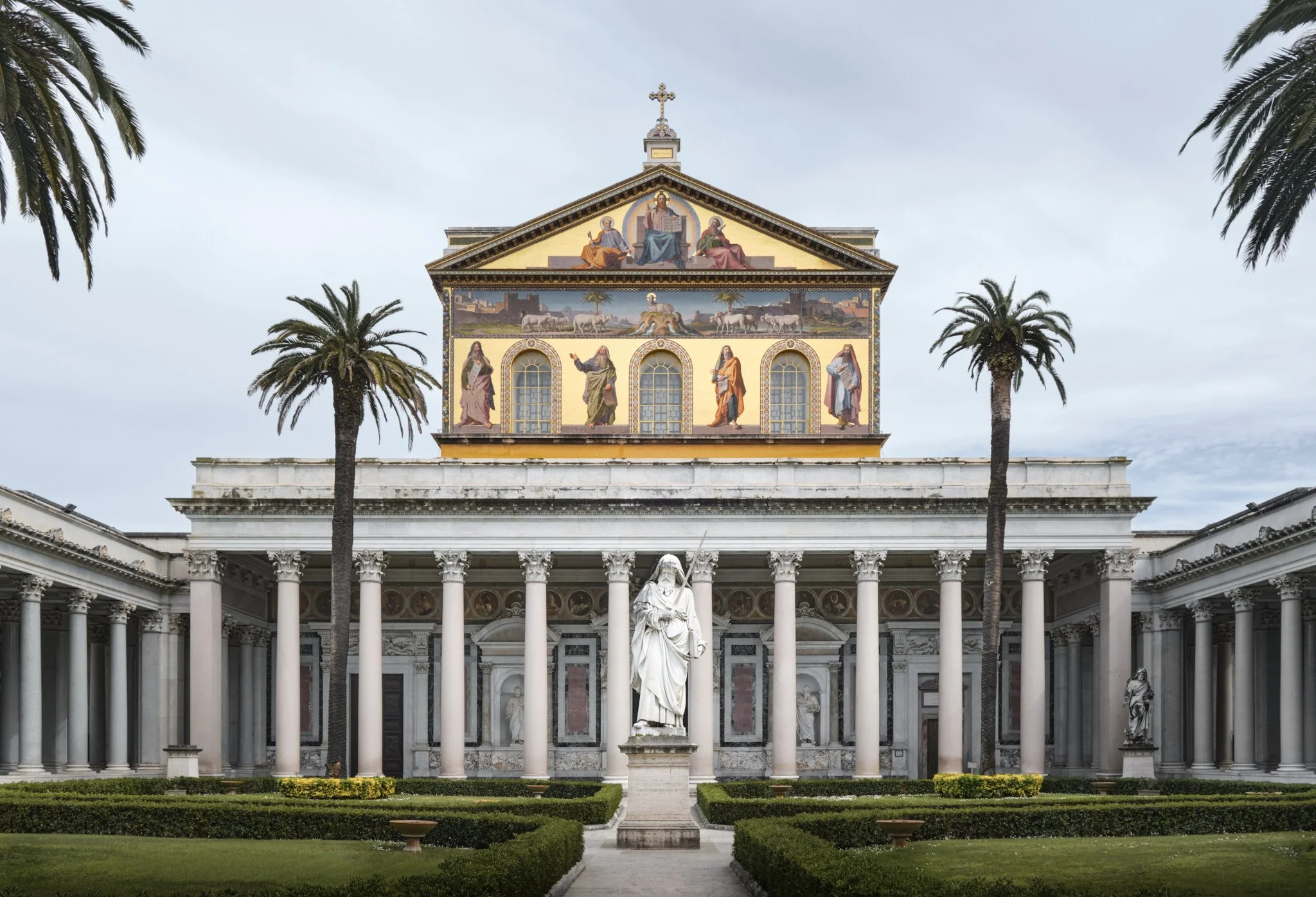
The full facade (palm trees, golden mosaic frieze, the figure of Saint Paul presiding over the forecourt) is the establishing image.
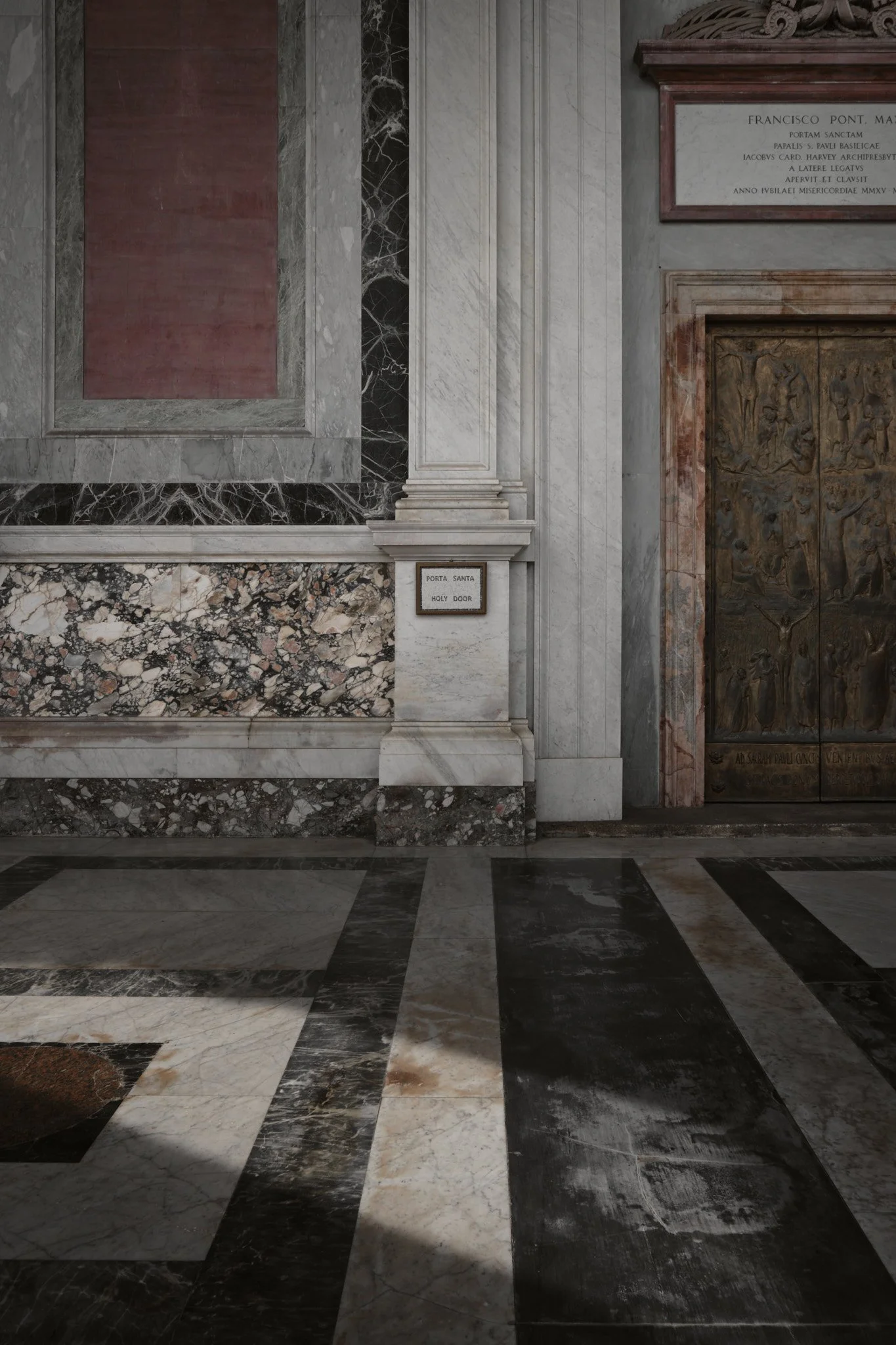
The detail work starts at the doors.
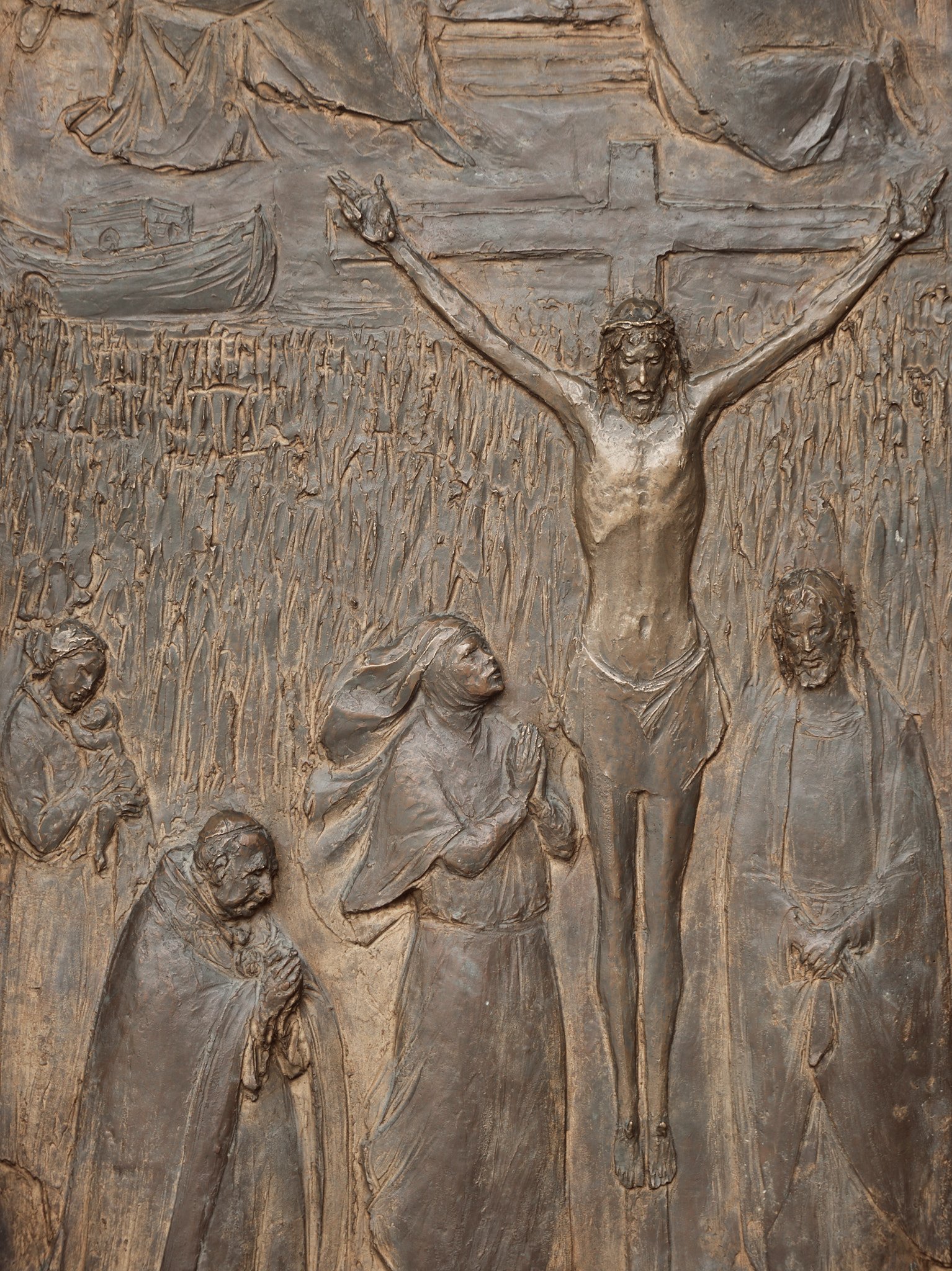
The entrance panels reward a decision to accept the available darkness rather than compensate for it.
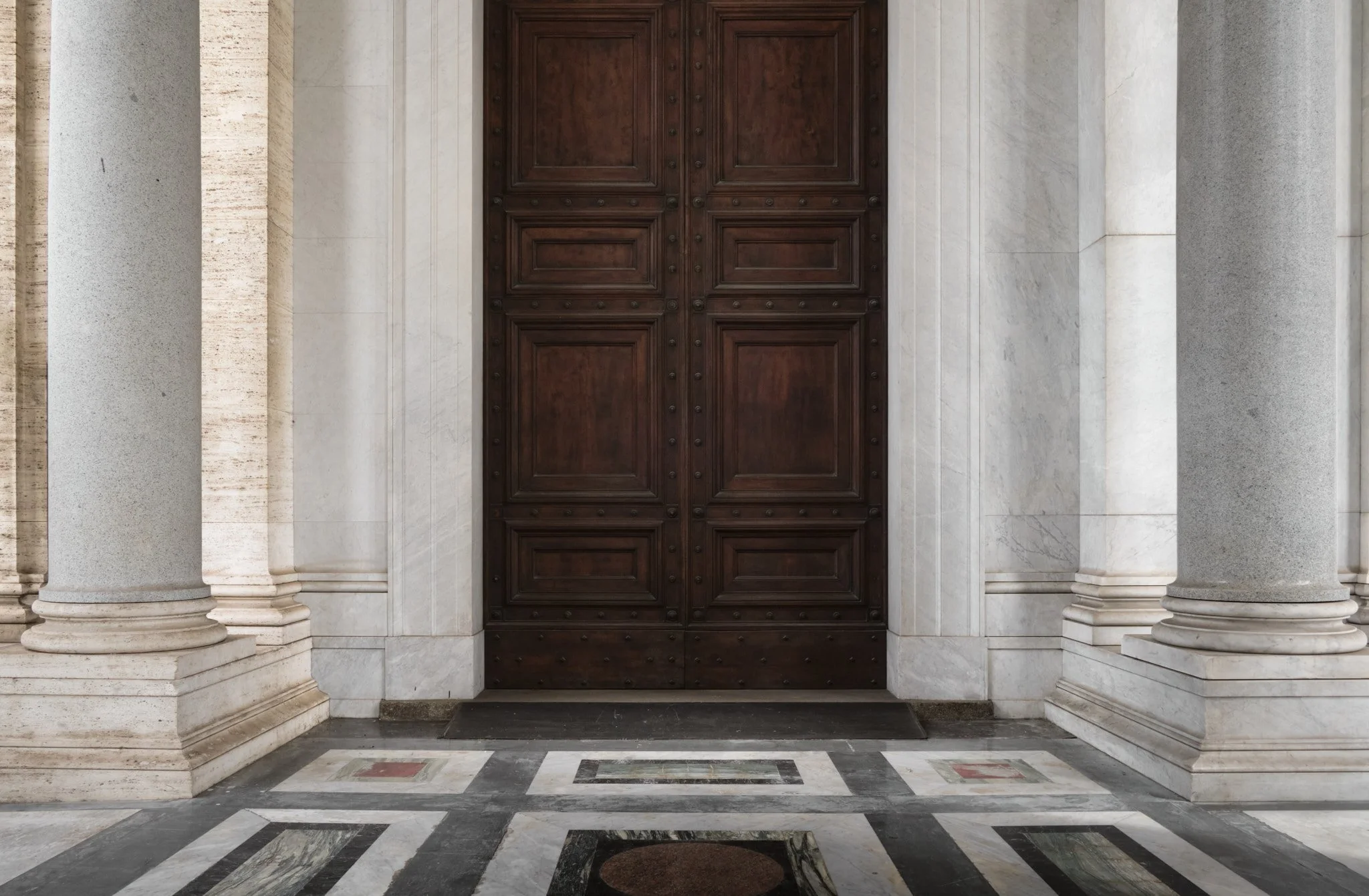
The tone in the image below is the material condition of the object.
The Interior: Scale, Light, and the 80-Column Nave
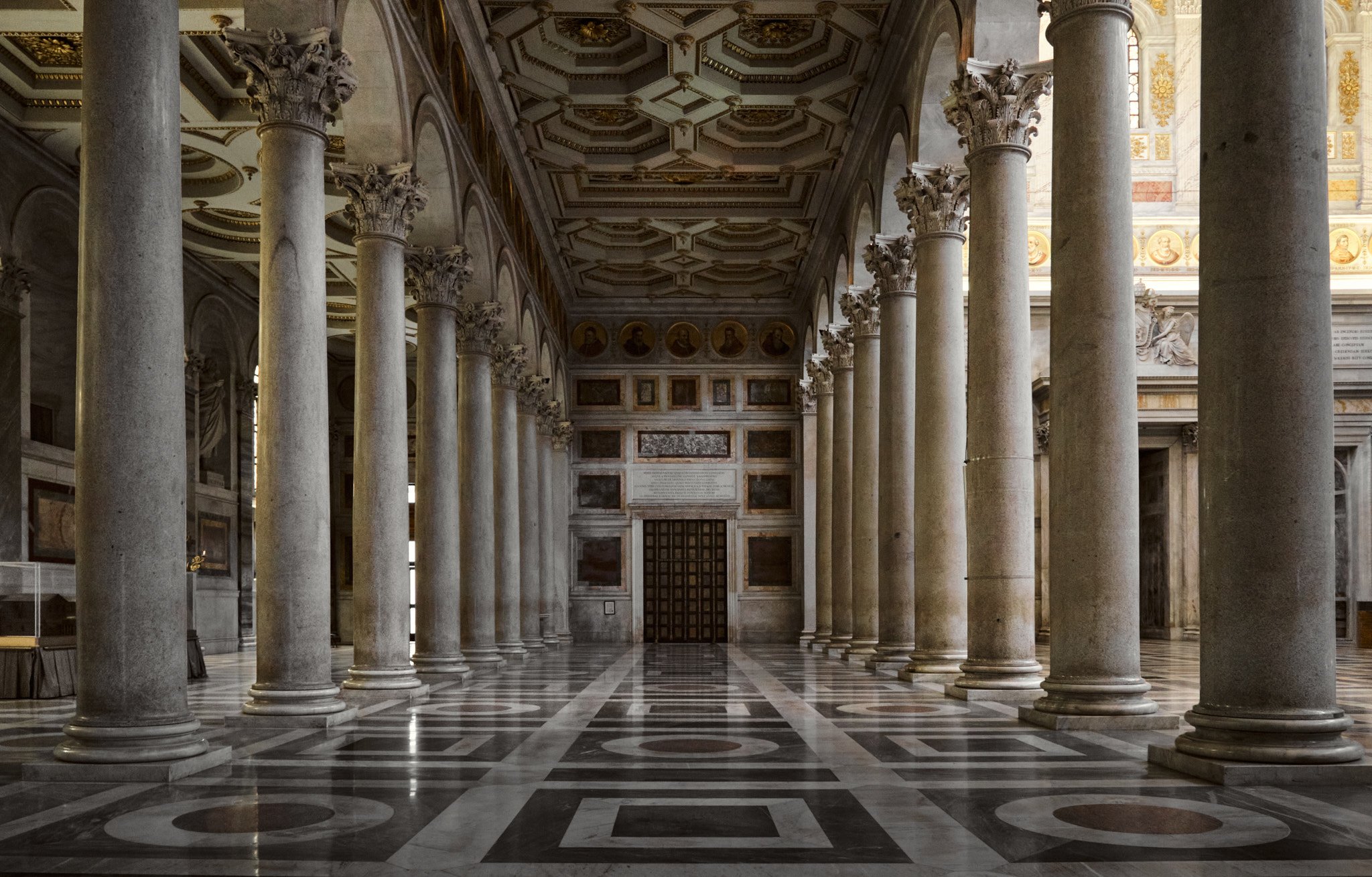
The nave is the defining photographic problem.
At 131 metres, no single frame resolves it – and the instinct to find one is worth resisting.
The image that works is the one that makes the spatial logic legible: the columns, the floor, and the apse as the vanishing point the eye needs to understand the scale.
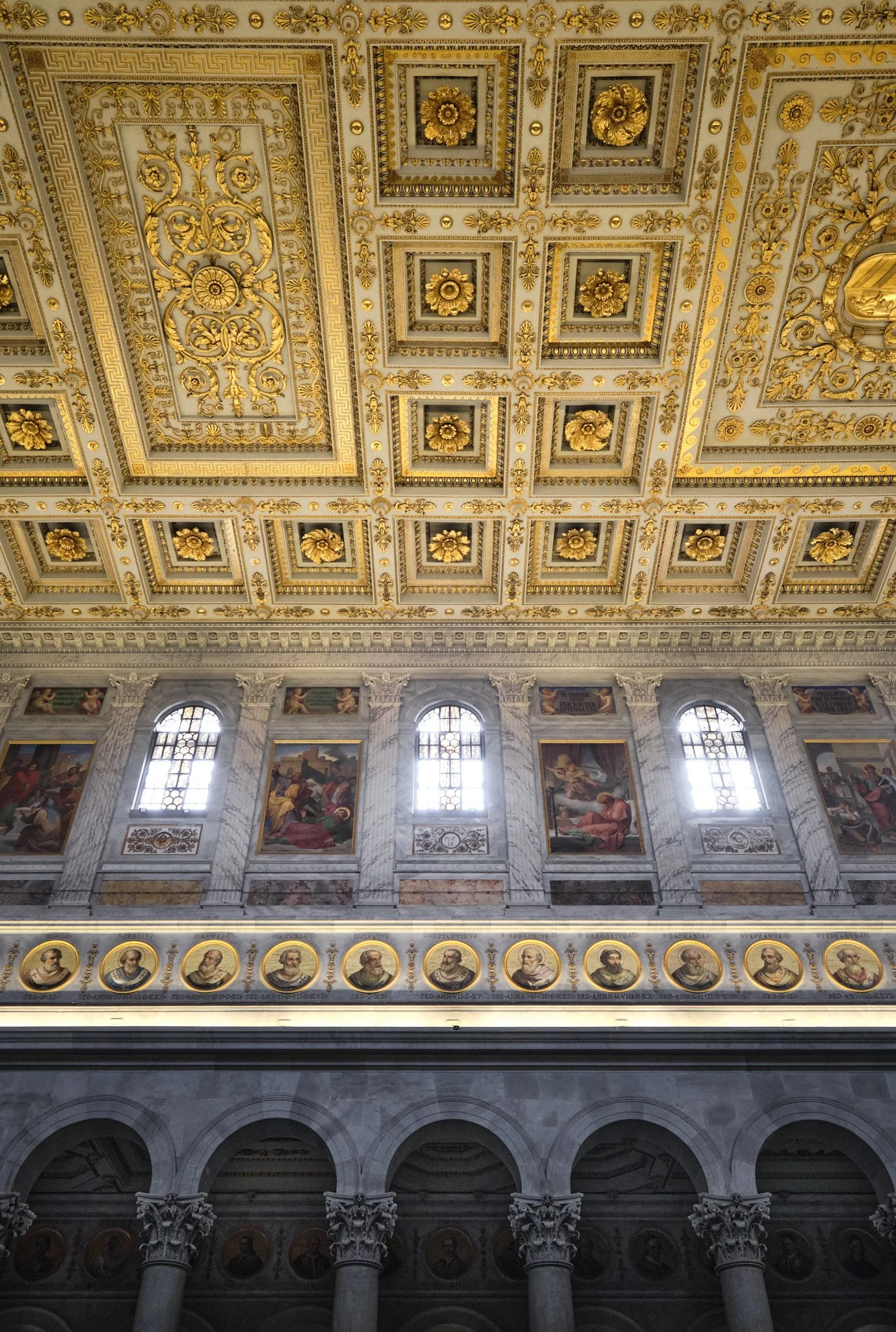
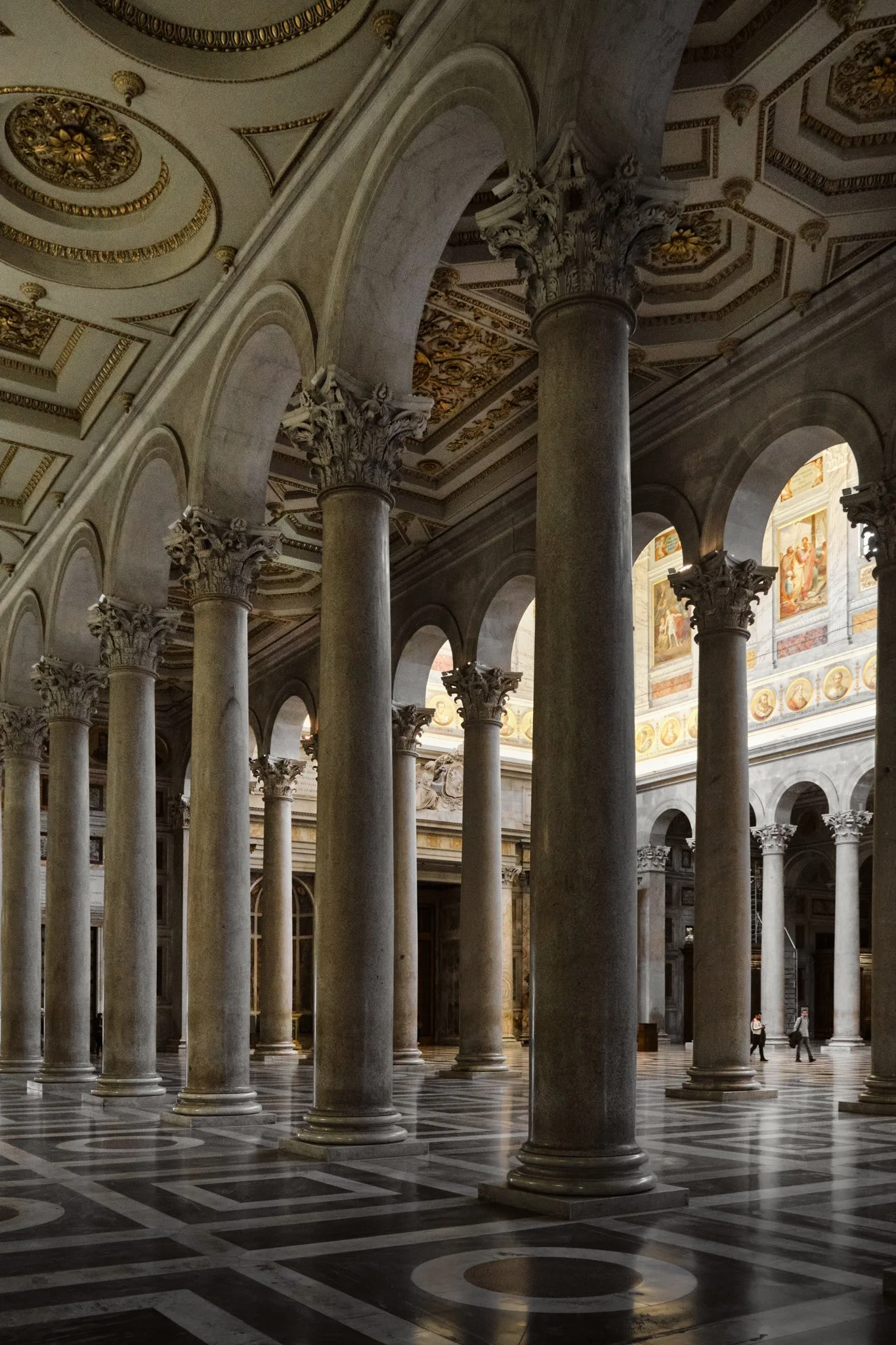
The clerestory windows are the primary light source — narrow apertures positioned 20 metres above the floor.
They produce distinct bands of light that cross the nave at regular intervals, separated by shadow.
Deciding where in the frame a light band should fall and how much of the shadow areas to allow to close is the central exposure decision in this interior.
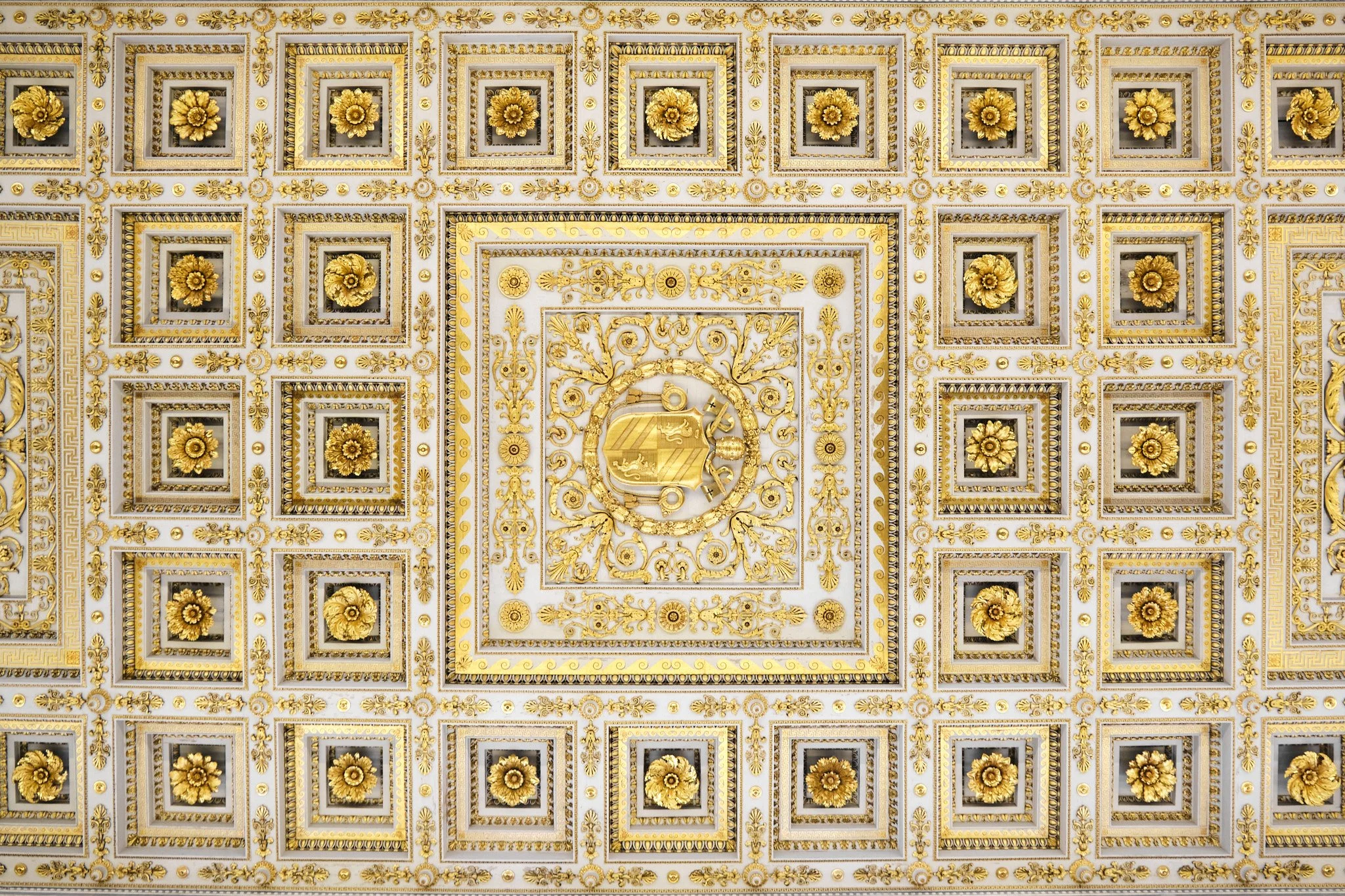
The coffered ceiling – gold leaf on a deeply recessed geometric grid – reflects the available light and redistributes it downward.
Photographed in relation to the columns, it provides the scale reference that makes the height of the nave legible.
In isolation, it reads as pure pattern.
Detail Work: Material Reading at Close Range
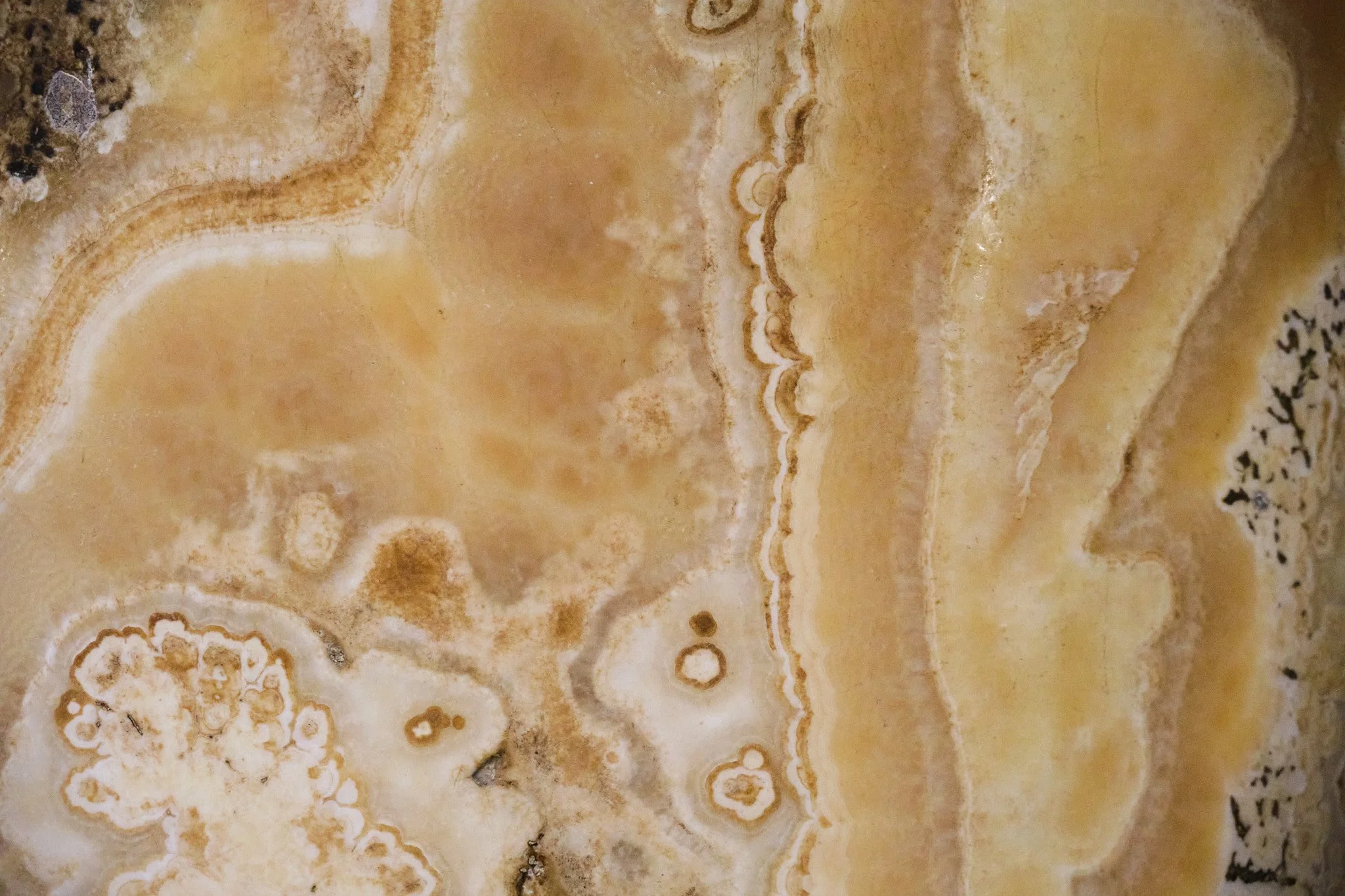
The coloured marbles throughout the basilica — onyx, verde antico, giallo antico — read differently at close range than they do from any distance that makes the interior as a whole legible.
At a few centimetres, the translucency of the onyx becomes visible.
The material is a light condition.
Working Notes
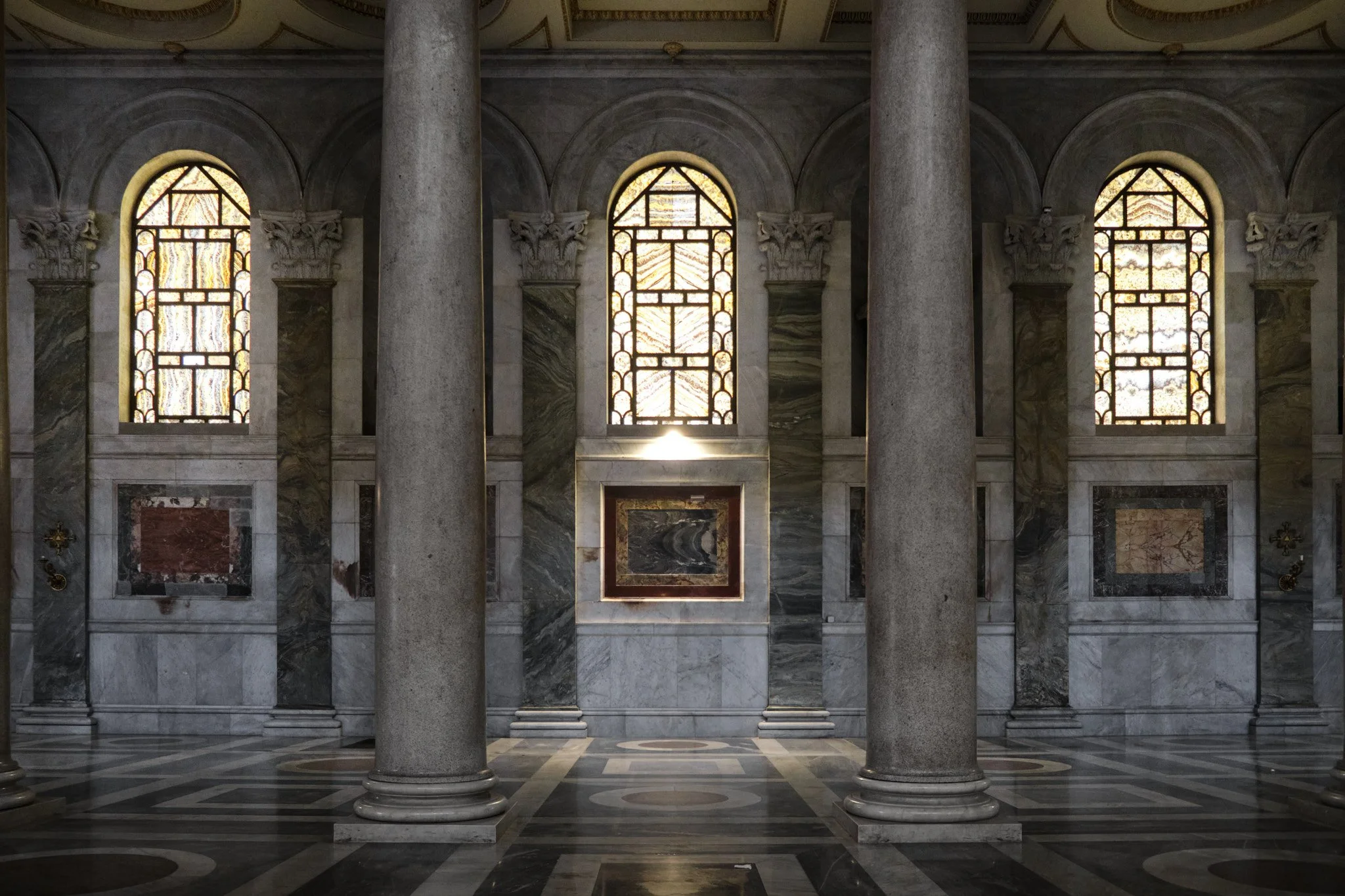
Buildings like San Paolo Fuori le Mura do not offer obvious images.
The scale is too large and the light too sparse.
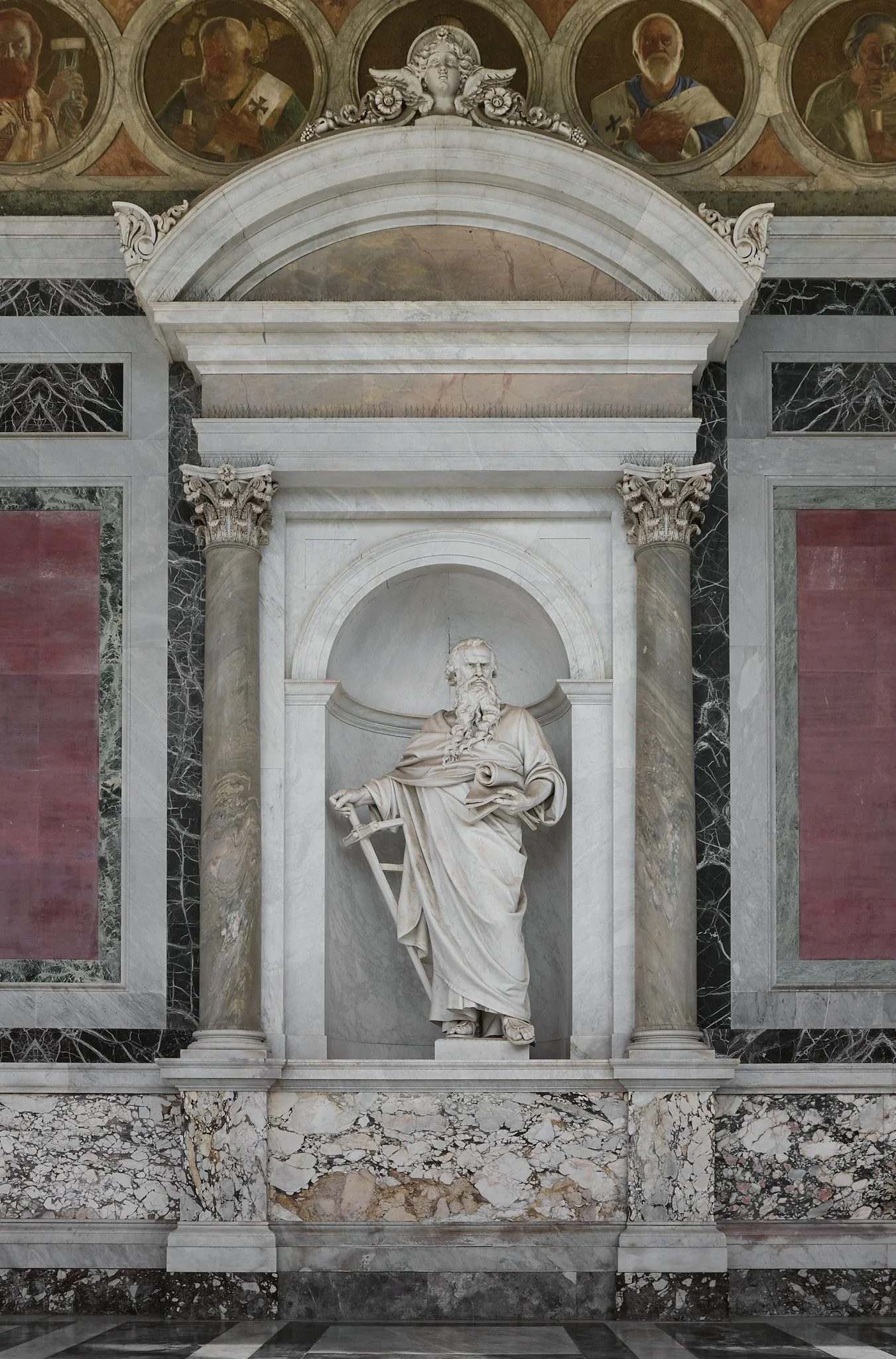
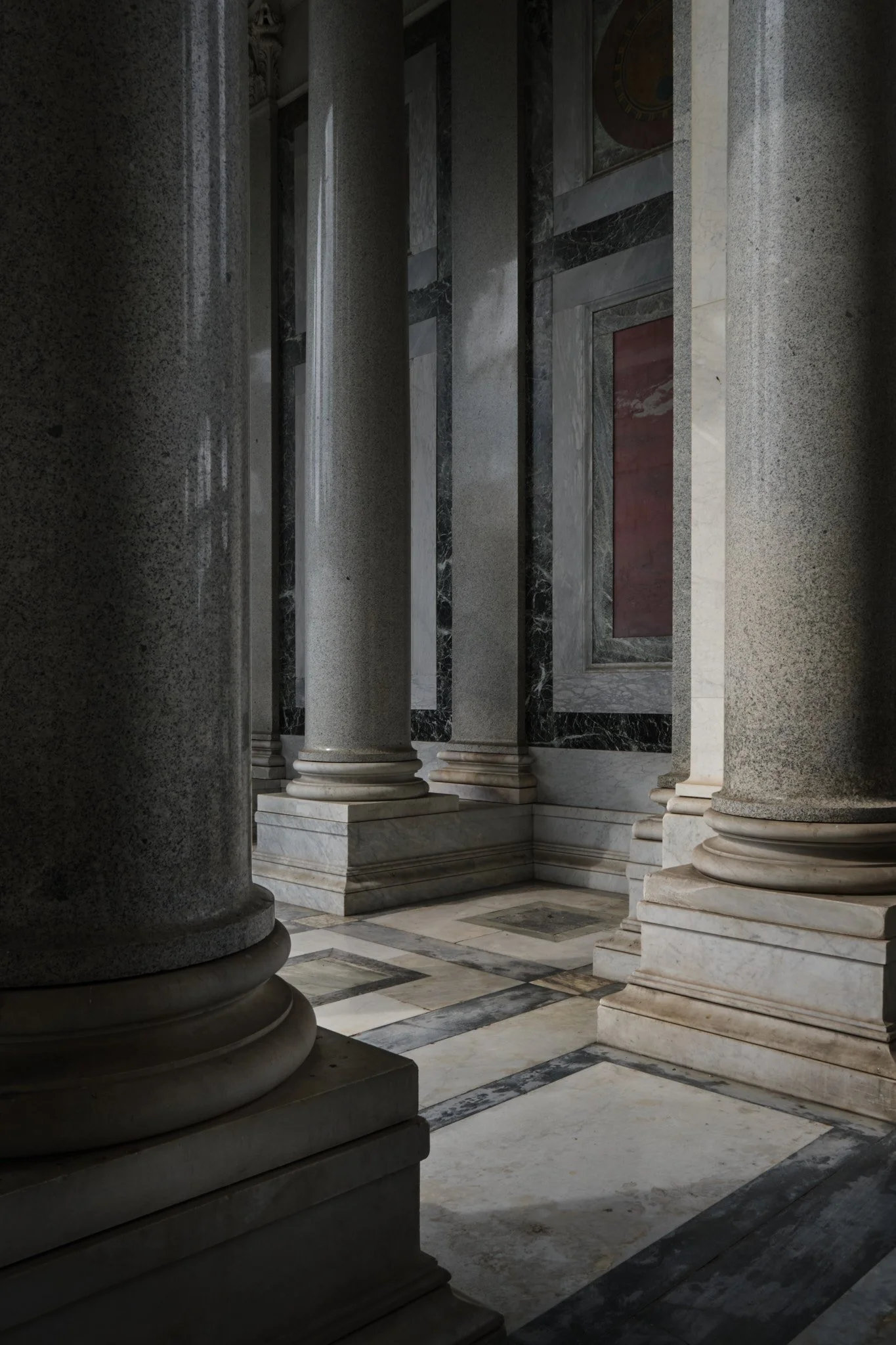
Decisions are the same ones that determine whether architectural and interior photography is useful to a client — or only impressive to look at.
FAQ
What is the Basilica Papale di San Paolo Fuori le Mura?
San Paolo Fuori le Mura is one of Rome's four Papal Basilicas and one of the largest churches in the world. Built over the burial site of Saint Paul, it was originally commissioned by Emperor Constantine I in 324 AD, largely destroyed by fire in 1823, and rebuilt throughout the 19th century. The current interior preserves the scale and proportional logic of the original 4th-century structure.
What does "Fuori le Mura" mean?
"Outside the Walls" — the basilica stands beyond the Aurelian Walls on the Via Ostiensis, because the tomb of Saint Paul, like all early Christian burial sites, was located outside the ancient city limits.
Is San Paolo Fuori le Mura a UNESCO World Heritage Site?
Yes, as part of the Early Christian Monuments of Rome, listed alongside the other Papal Basilicas and the catacombs.
How many columns are inside San Paolo Fuori le Mura?
80 monolithic columns of Montorfano granite divide the nave and aisles into five spaces. They were installed during the 19th-century reconstruction and reproduce, at larger scale, the arrangement of the original basilica.
Can you photograph inside San Paolo Fuori le Mura?
Photography is permitted during visiting hours, with restrictions on flash and tripods. The interior is challenging: clerestory windows positioned 20 metres above the floor are the primary light source, and the dynamic range between the illuminated ceiling and the shadowed aisles is significant. Available-light photography, accepting the tonal conditions of the space, produces results more honest to the experience of the building.
What types of projects does Pedro Ferr photograph?
Pedro Ferr is a commercial architectural and interior photographer based in Doha, Qatar, working across architecture, interiors, and cultural institutions in the Gulf region and internationally. Clients include interior design studios, real estate developers, hospitality brands, and cultural institutions. More about working together.