MAXXI, Rome: A Photographer's Reading of Zaha Hadid's Spatial Language
Architectural photography at the MAXXI, Zaha Hadid's National Museum of 21st Century Arts in Rome.
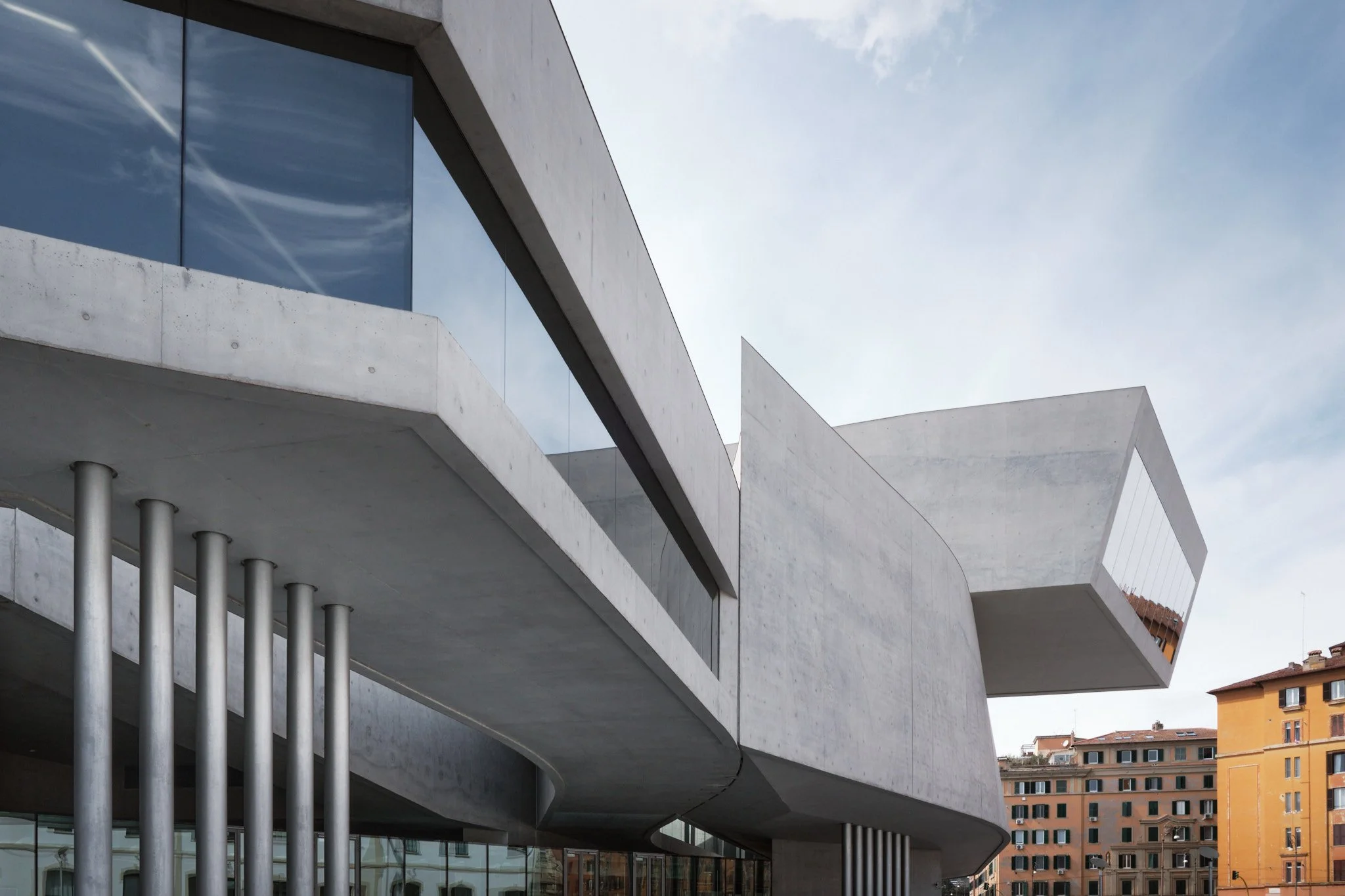
MAXXI opened in 2010, in the Flaminio district of Rome.
Designed by Zaha Hadid Architects, the building won the Stirling Prize that same year.
It is one of the few large-scale built works that fully delivers on what Hadid's practice had long proposed: architecture as continuous spatial flow, organized not around static rooms but around the act of moving through space.
To photograph it is to confront a building that was never designed to produce a single privileged image.
1. The Exterior: Columns, Curves, and Concrete at Street Level
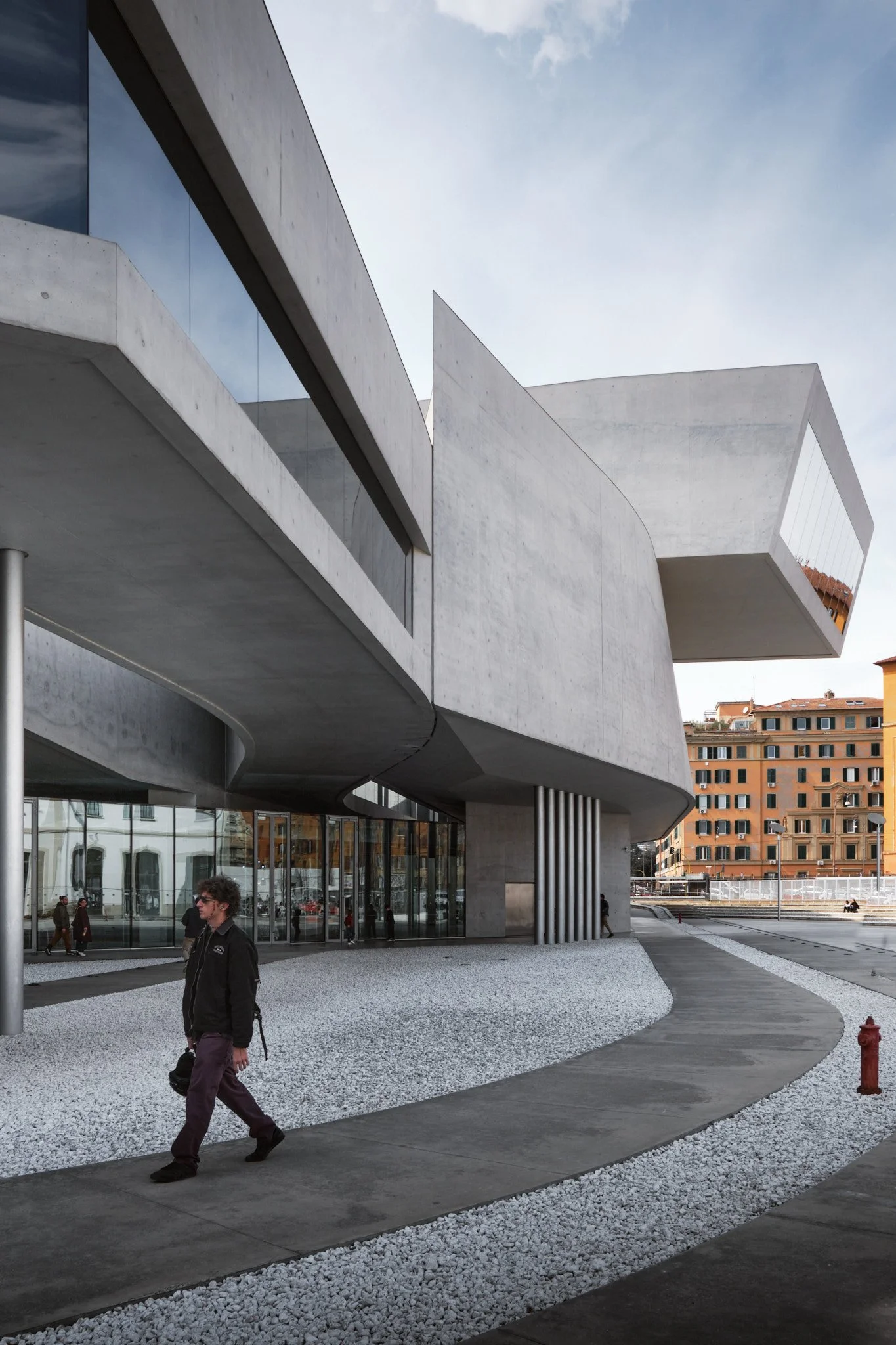
The exterior of MAXXI does not announce itself with a monumental facade.
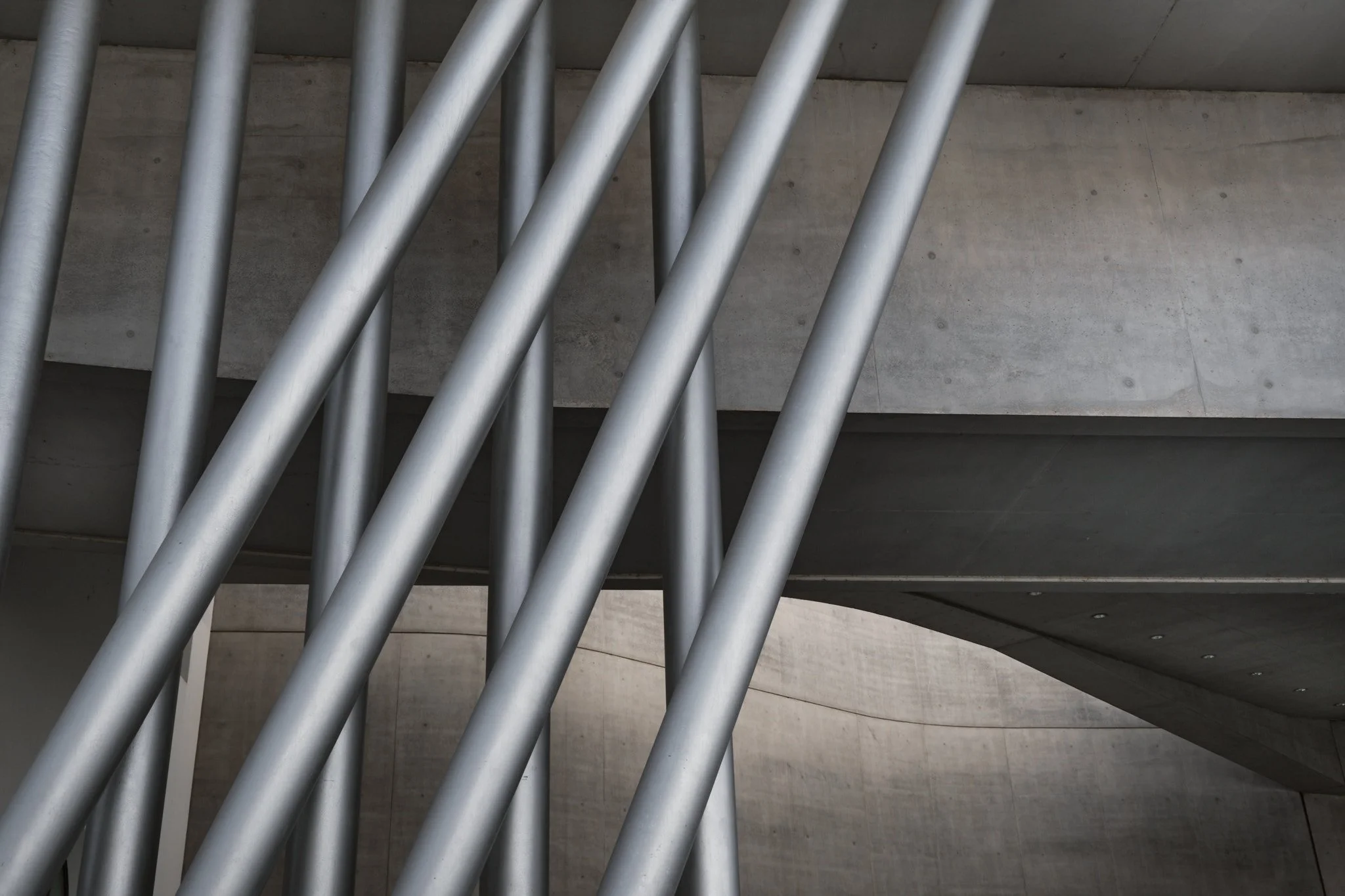
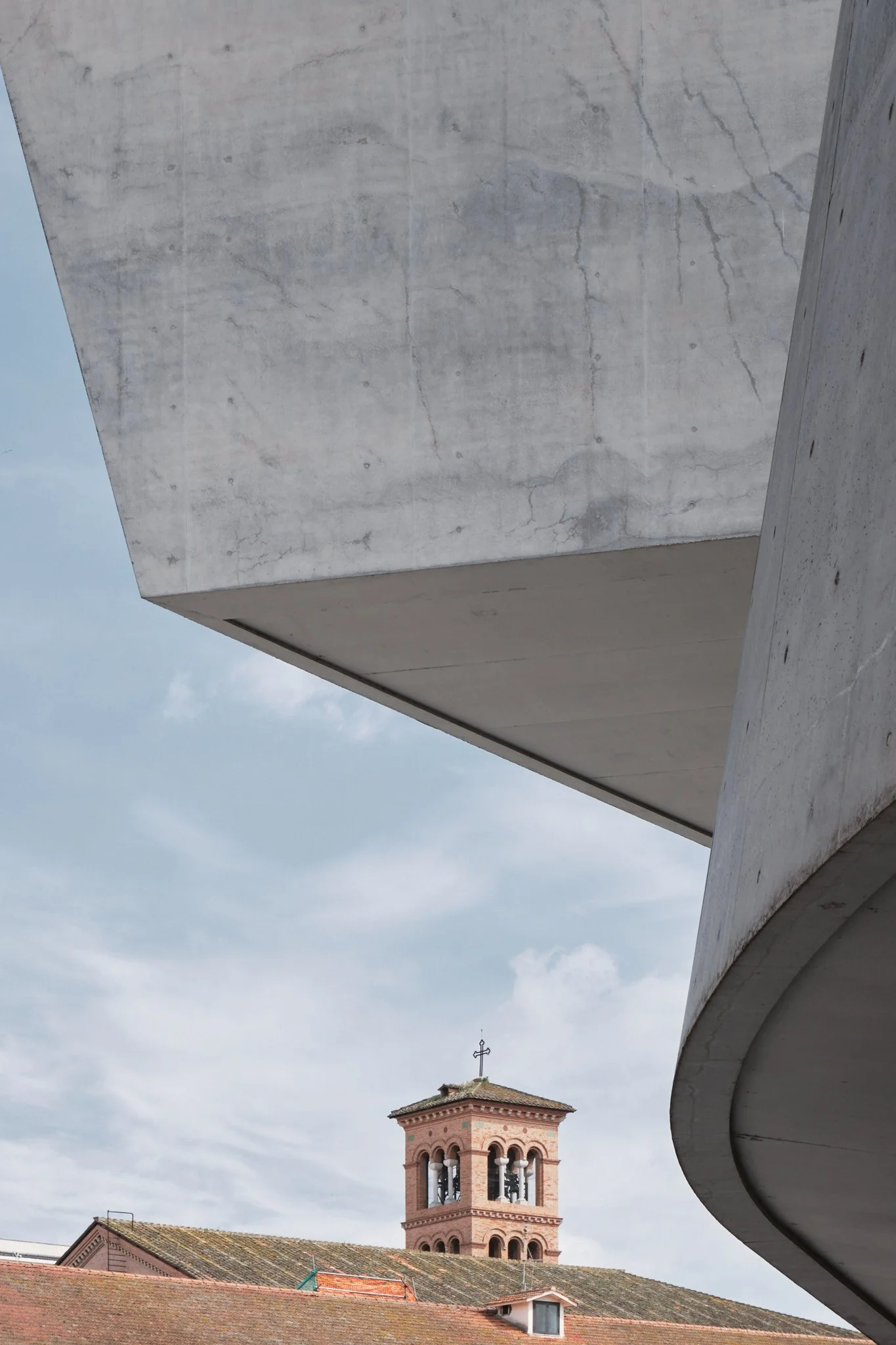
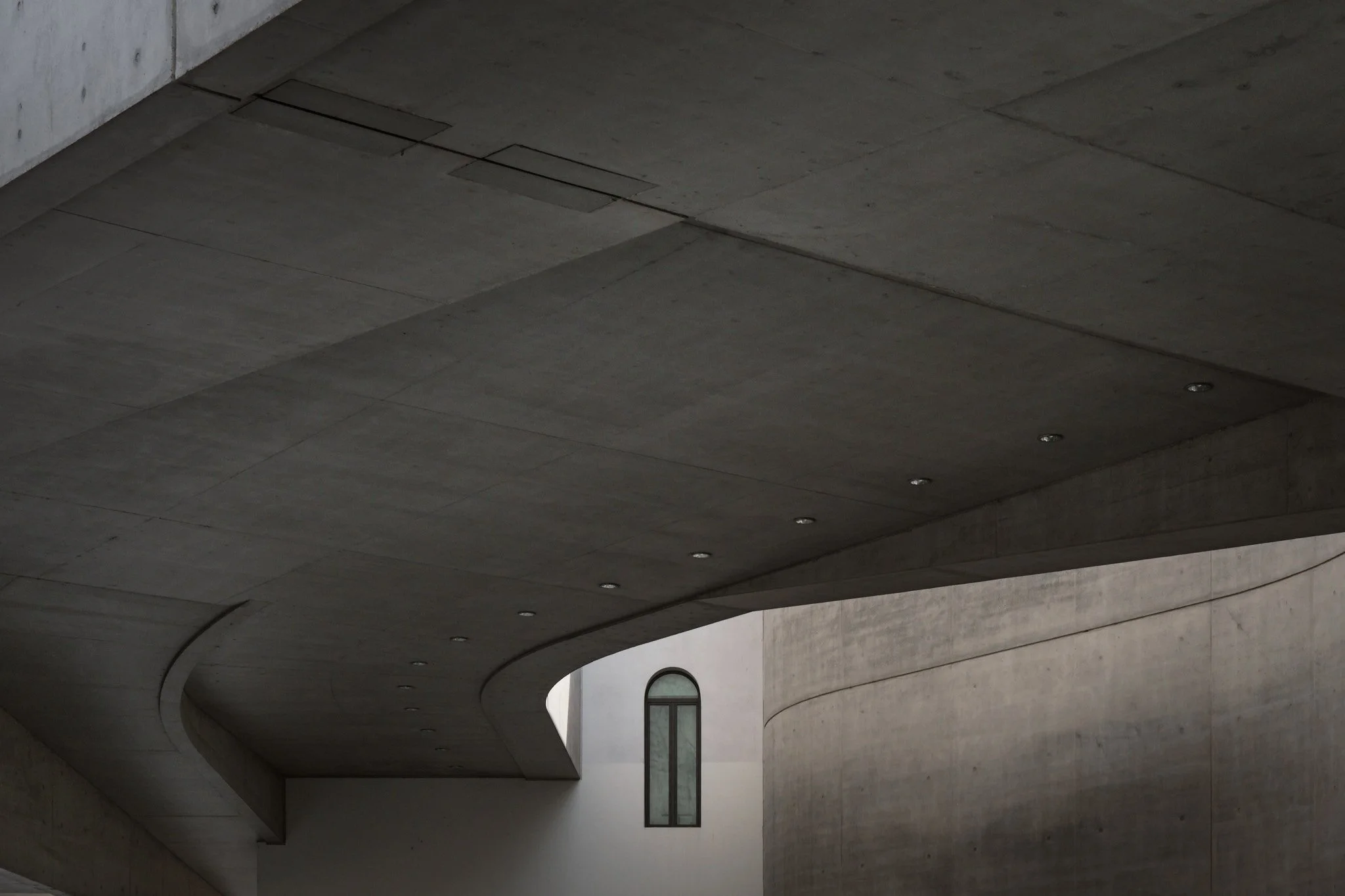
It arrives through fragments: the compression of structural fins pressed close together, the sharp edge of an overhang casting shadow onto the pavement below, the curve of a concrete wall that turns and disappears before you can read it whole.
Moving along the perimeter, the building keeps shifting.
What you see from one position has almost no relation to what you find thirty meters further along.
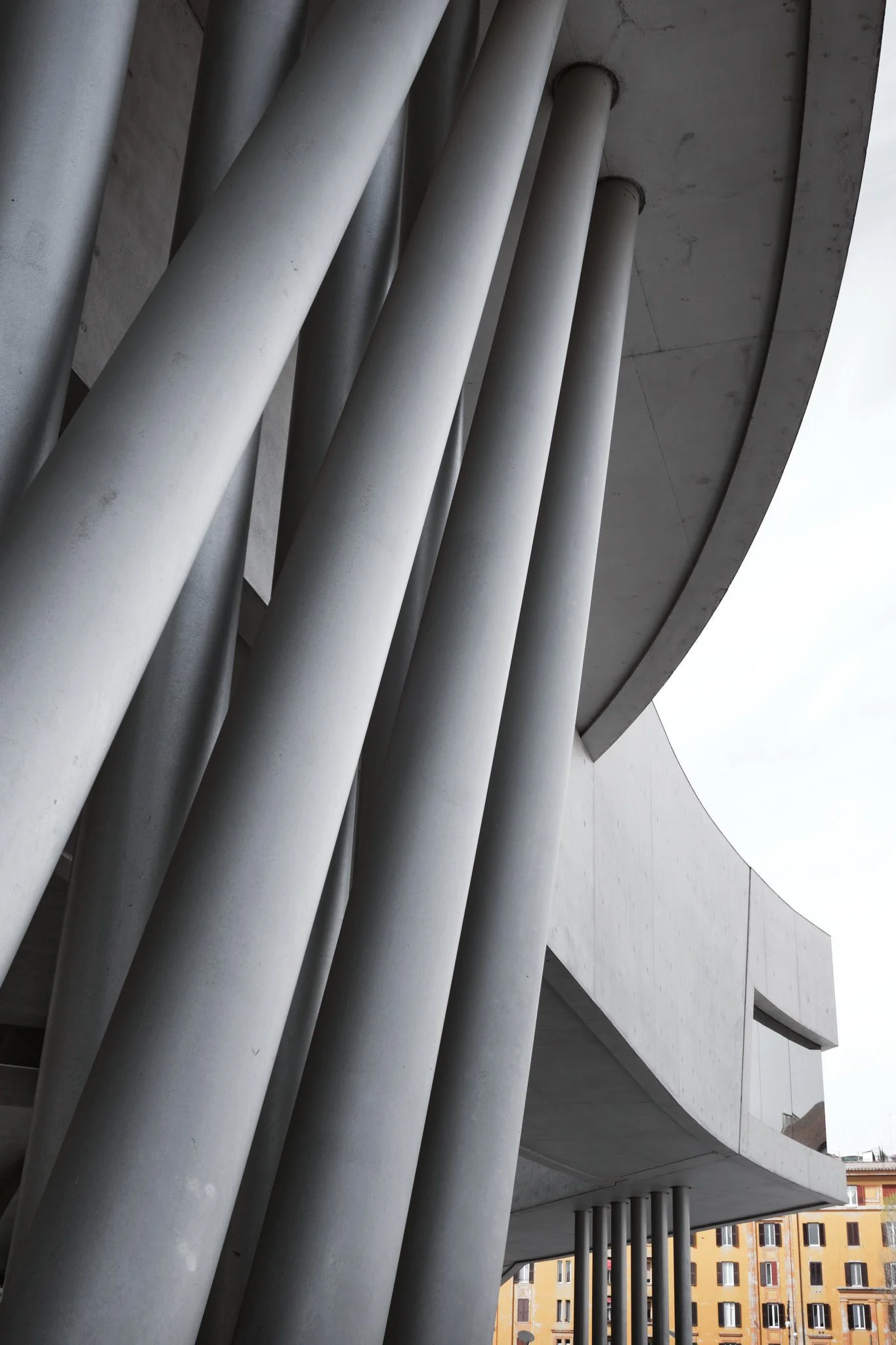
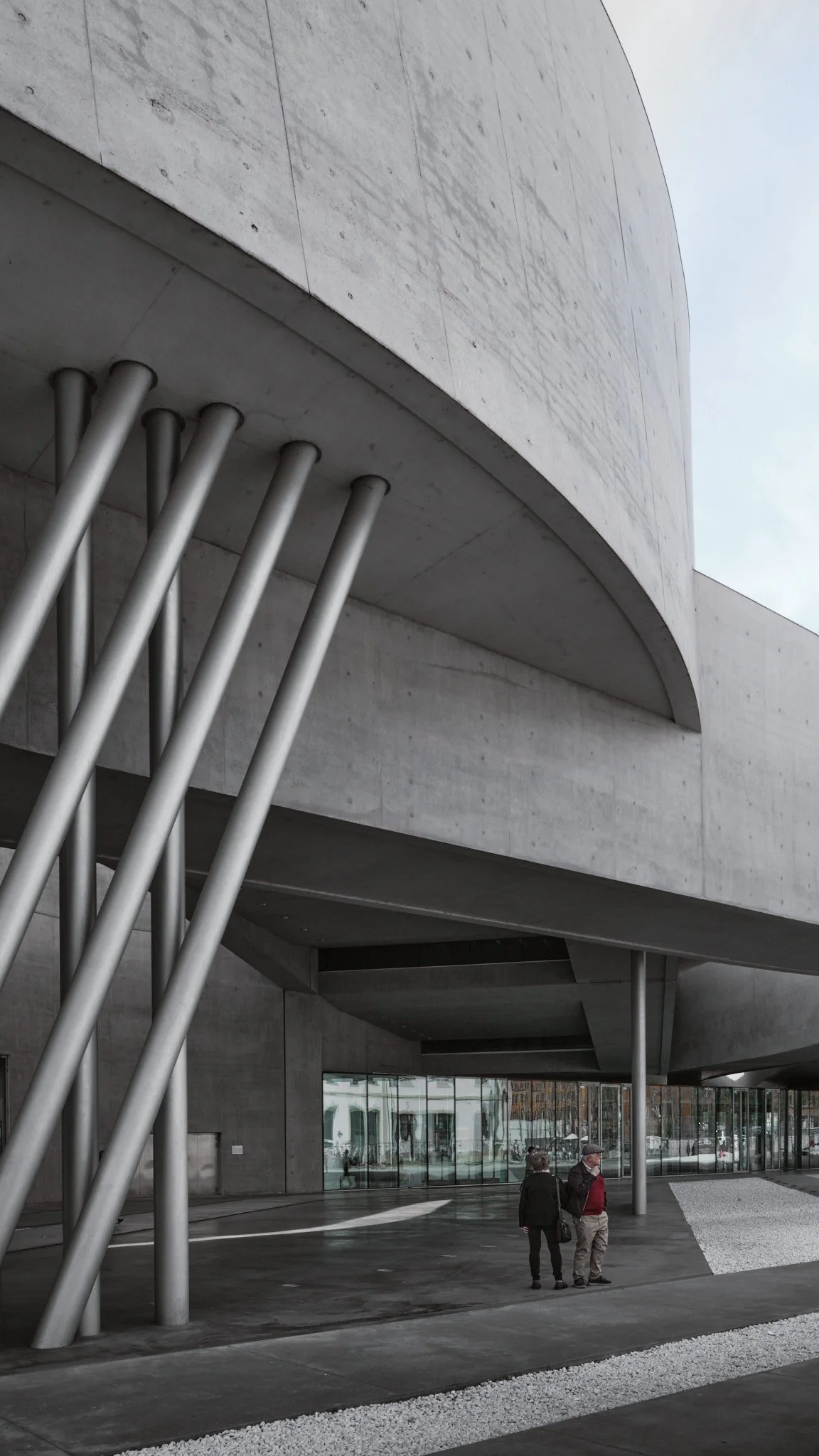
For photography, this means accepting the building's fragmentary nature rather than fighting it.
I was less interested in finding a definitive exterior view than in isolating specific moments: the graphic compression of the fins against the sky, the single figure walking under the overhang providing the scale reference that makes the structural weight legible and the curve of a wall where the only context is concrete and light.
The images made in black and white respond directly to this.
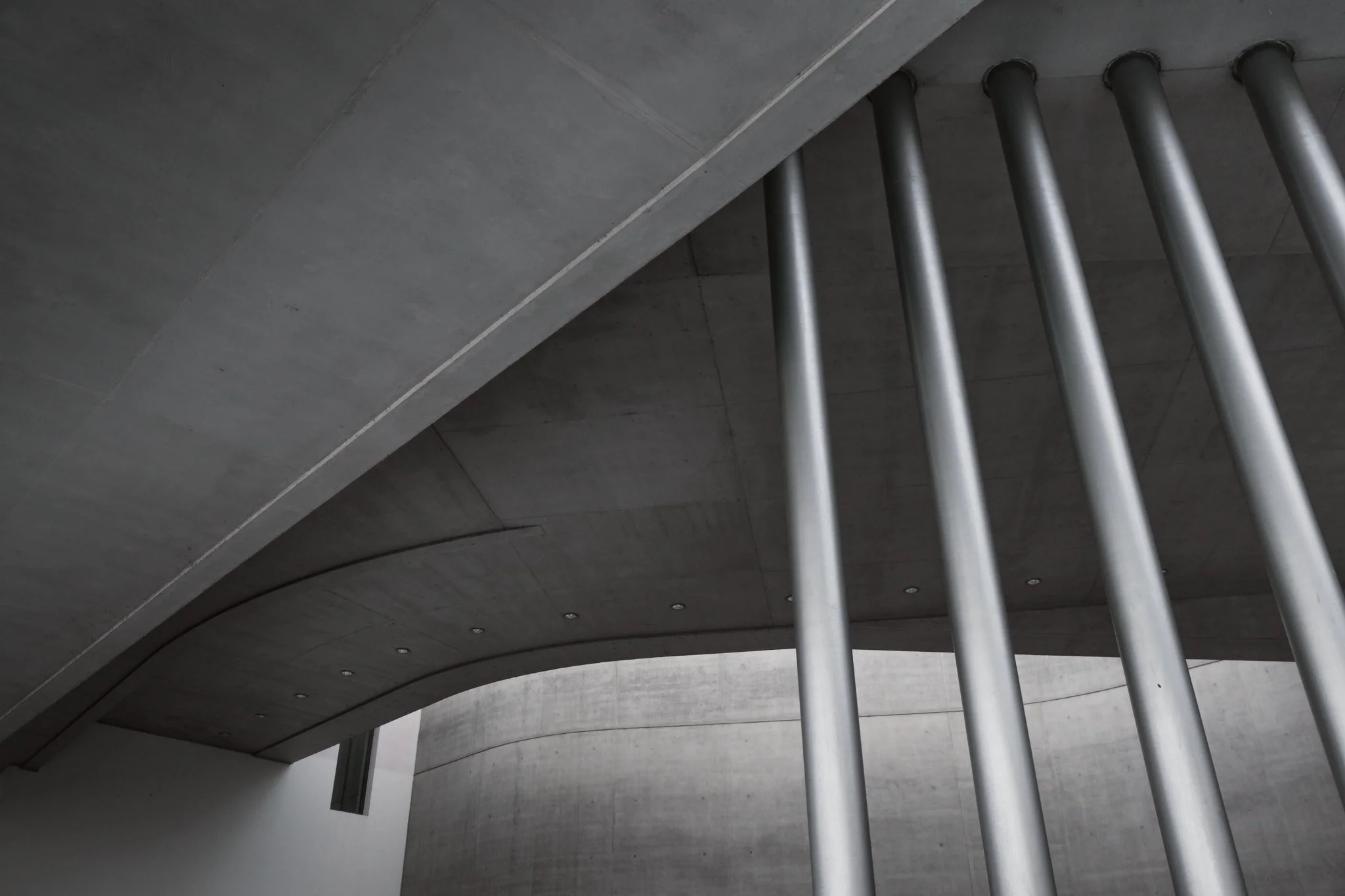
Removing color concentrates attention on form and on the behavior of light against the concrete surface.
2. Compression and Release: The Covered Galleries
Before entering the building, MAXXI already stages a spatial sequence.
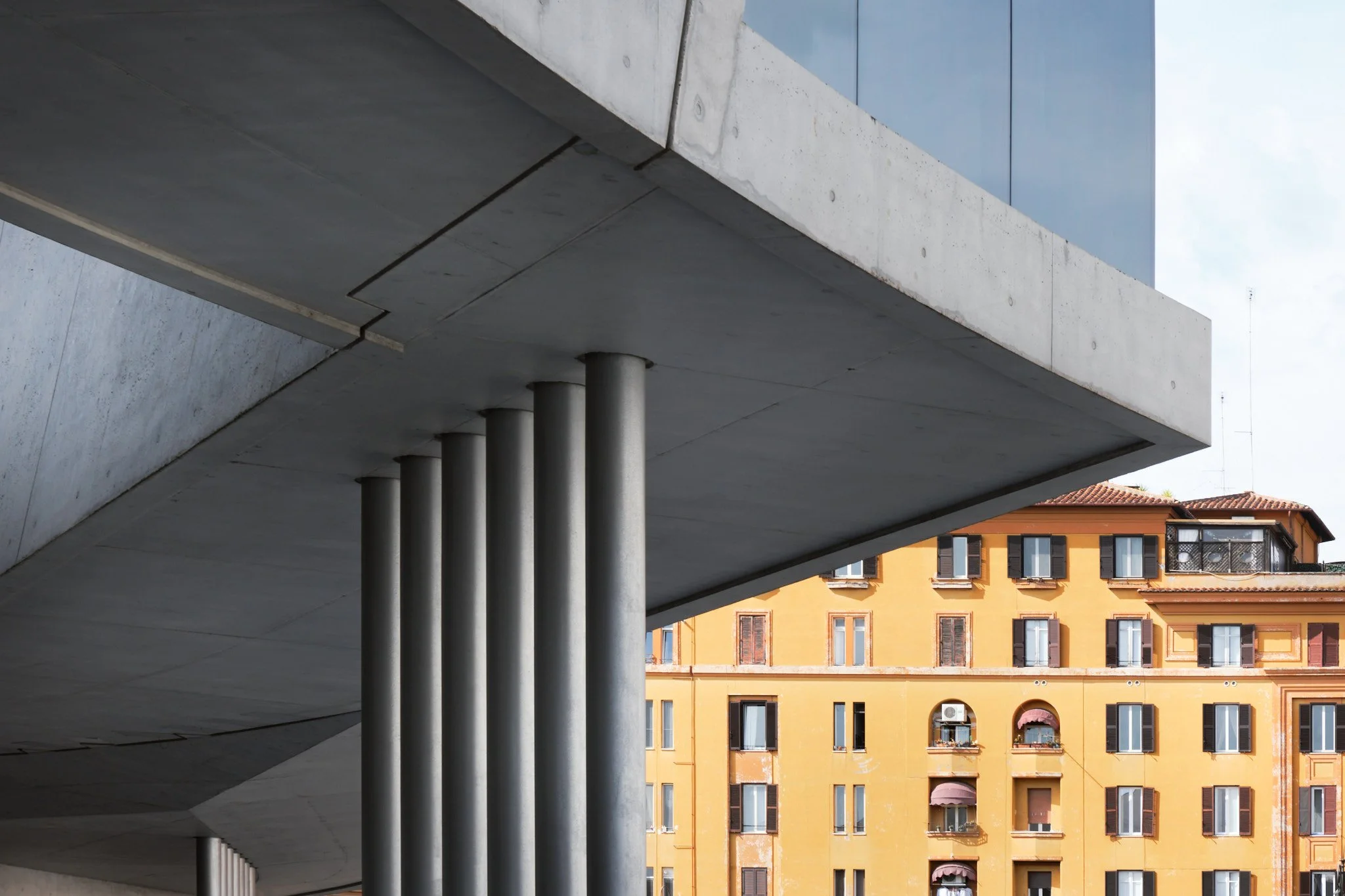
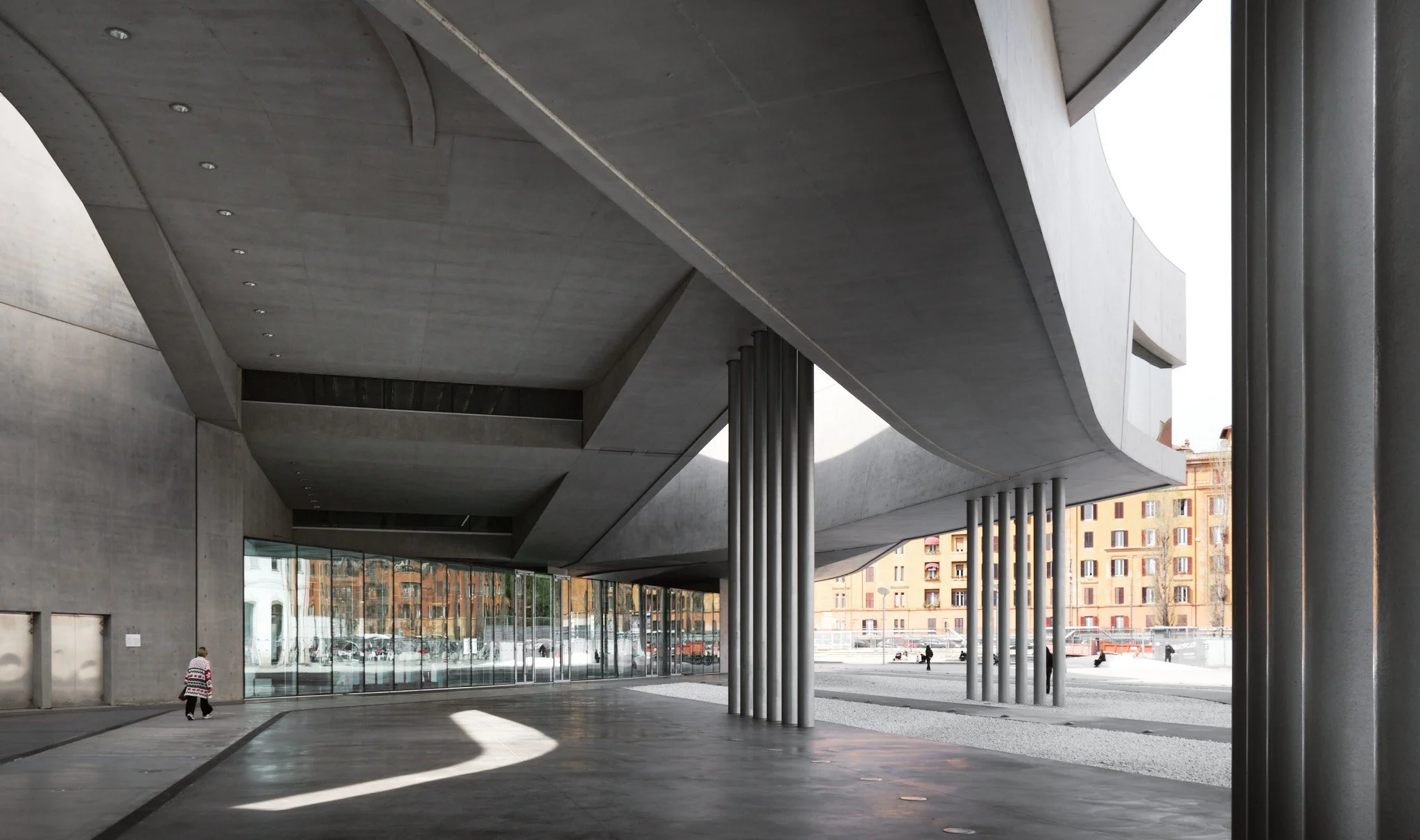
The covered exterior passages that run along the perimeter are not neutral corridors.
The rhythm of the columns, the way shadow accumulates between them, the controlled view of the city through the openings: all of this is designed with the same intention as the interior spaces.
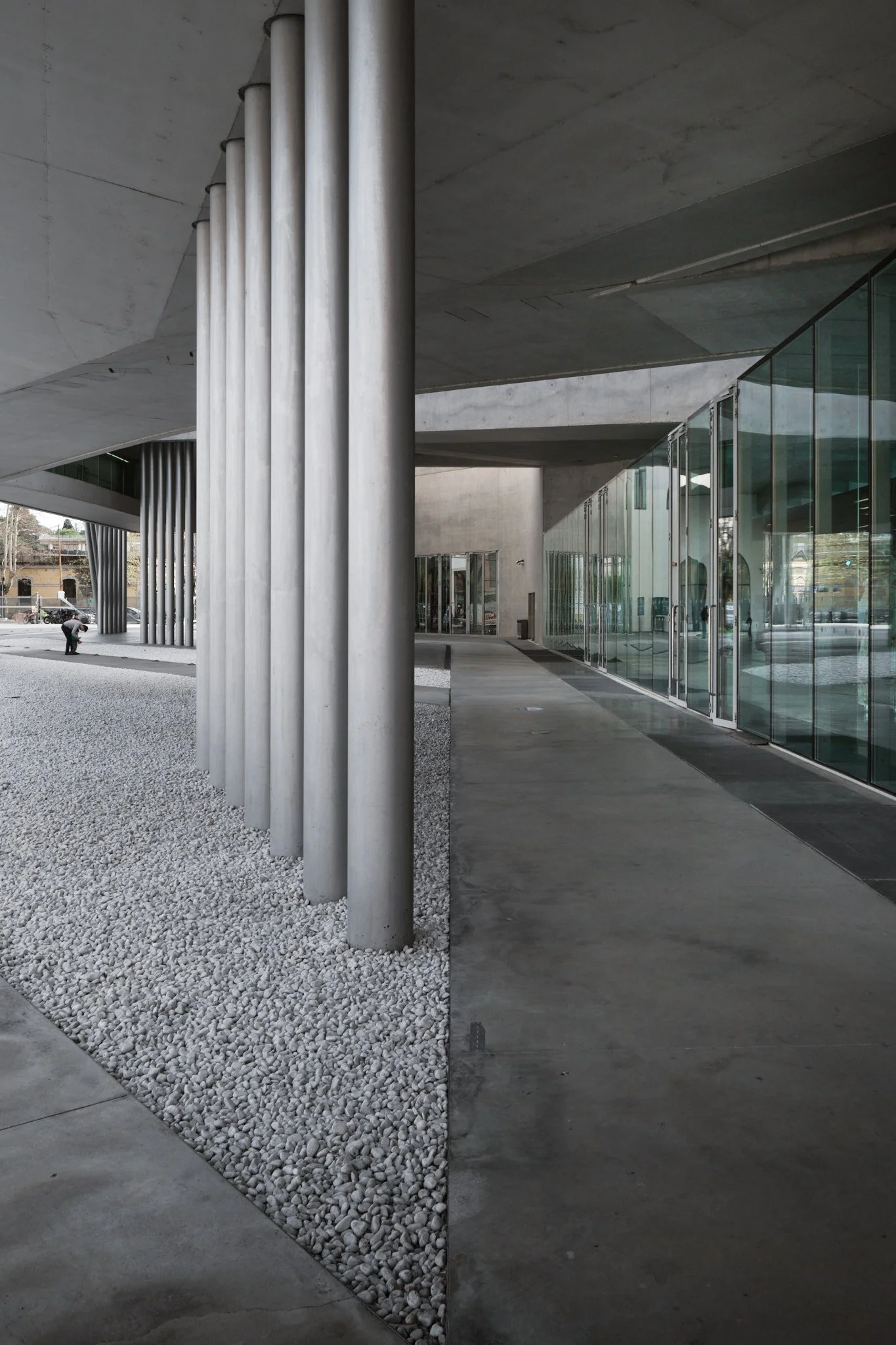
Photographically, these passages are some of the strongest locations in the building.
The light enters laterally and creates hard contrasts on the concrete floor.
The figure of a single person, seen at the far end of the passage, becomes the reference that pulls the space into legible proportion.
3. Light Against Concrete
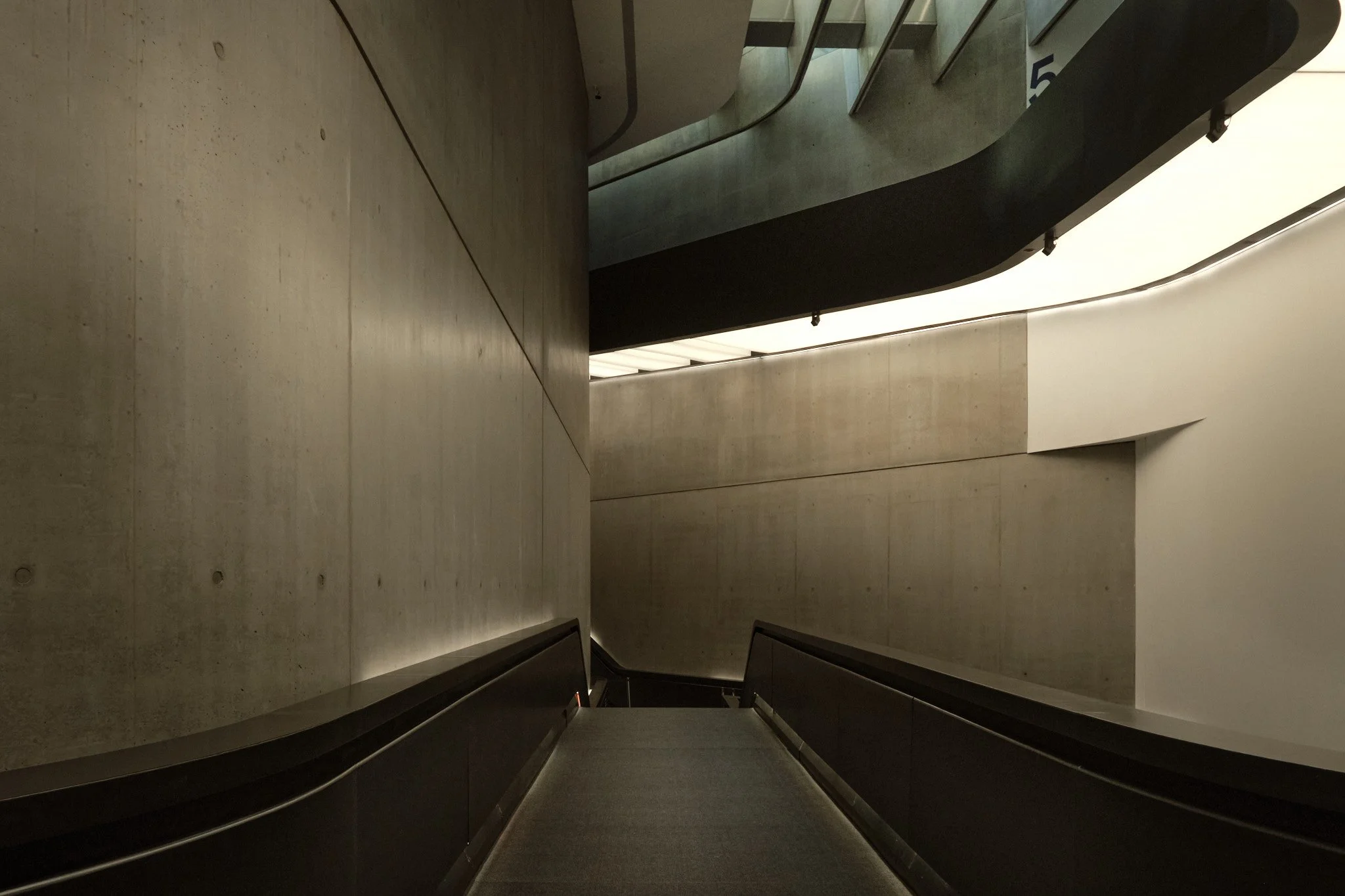
Concrete and light have a specific relationship at MAXXI.
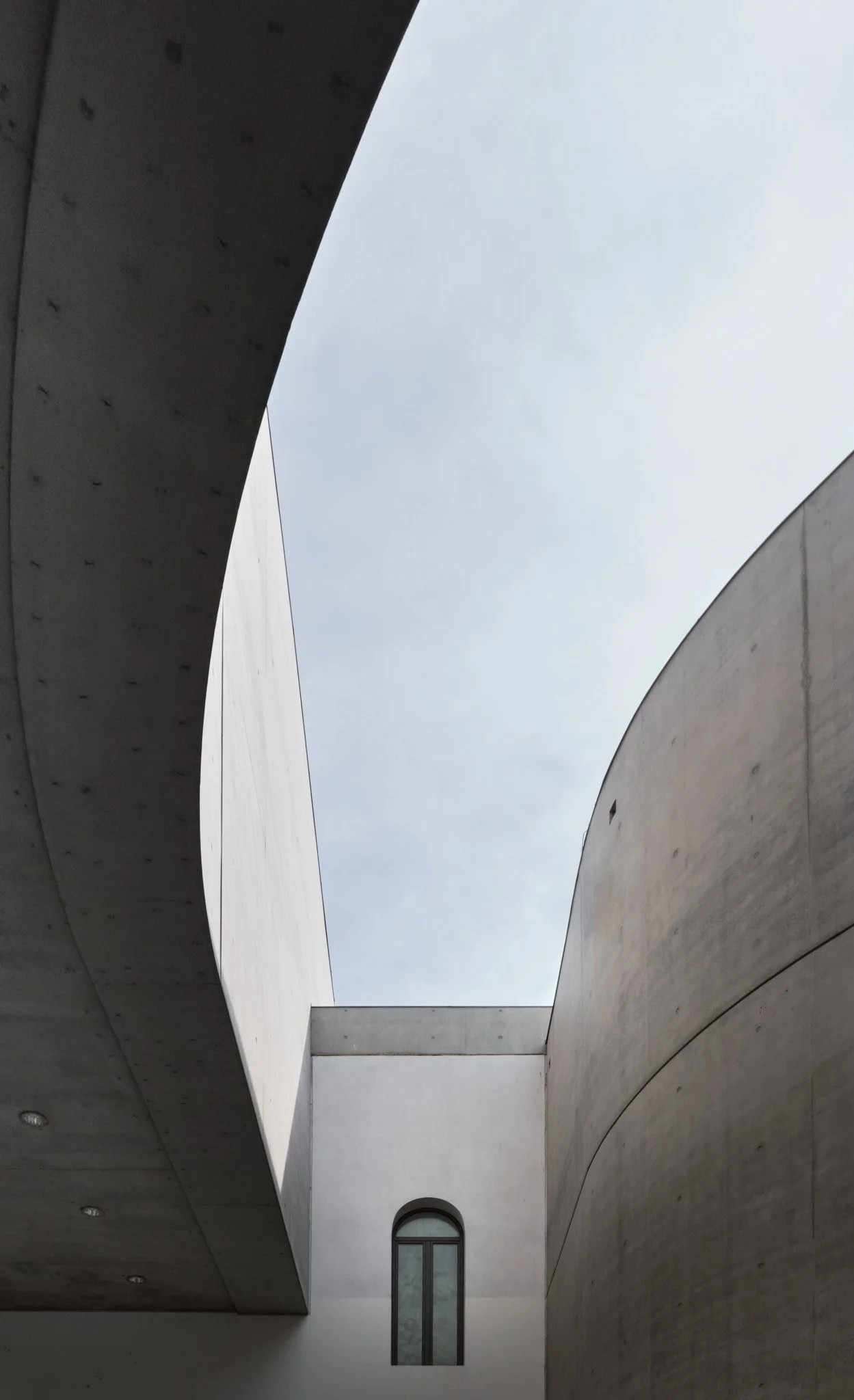
Outside, the concrete reads differently depending on the hour.
At certain moments the surface is nearly flat, absorbing everything.
At others, every texture becomes active: the grain of the formwork, the variation in tone between pours.
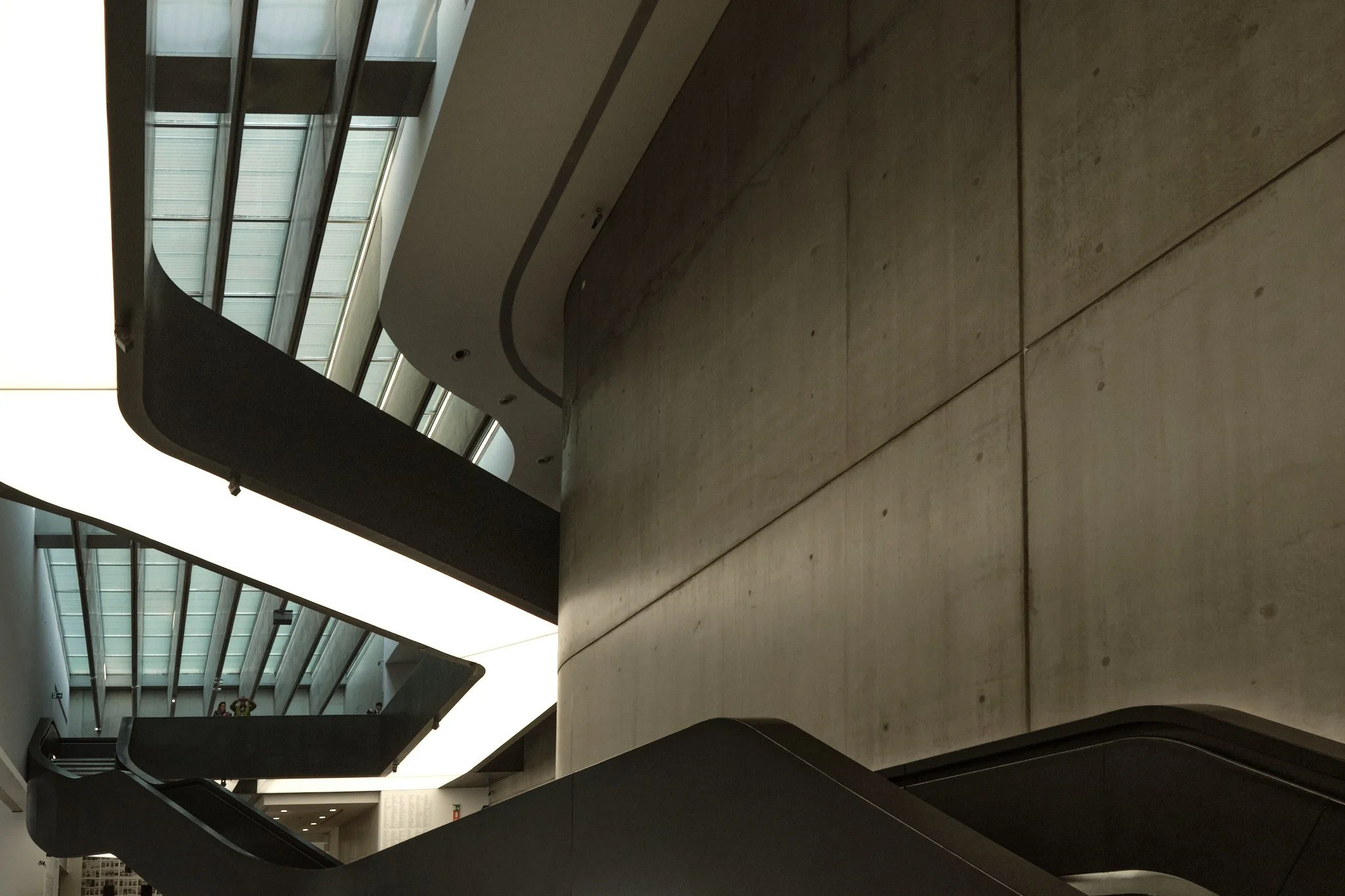
Inside, the building introduces natural light in controlled bands through skylights and clerestory apertures.
The light accumulates where the apertures direct it.
The surrounding surfaces absorb what remains.
The restraint of the material palette concentrates attention on exactly this.
There is very little color to read at MAXXI.
What is left is form, surface and the behavior of light.
4. The Interior as Sequence: Staircases and Layered Circulation
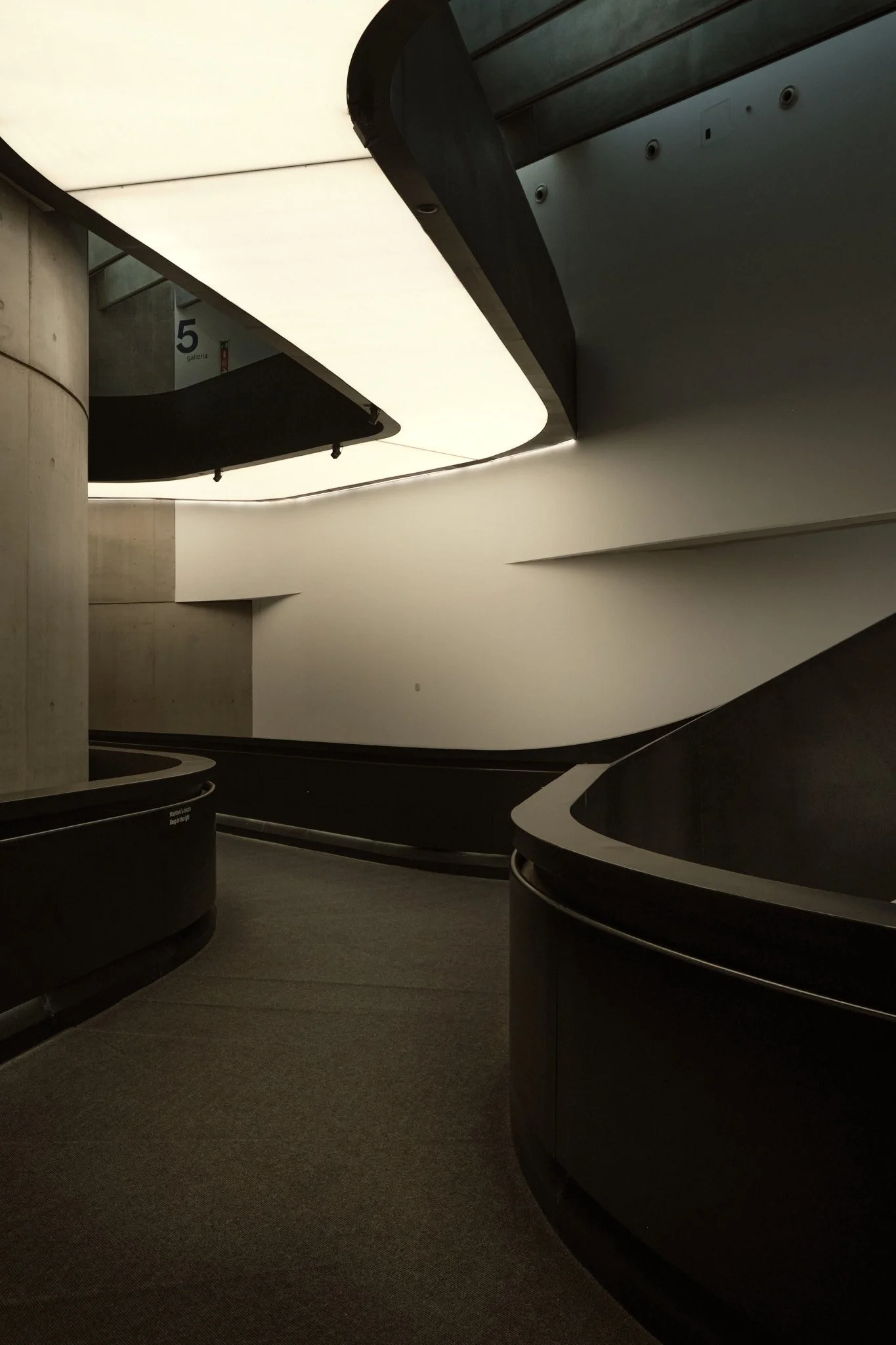
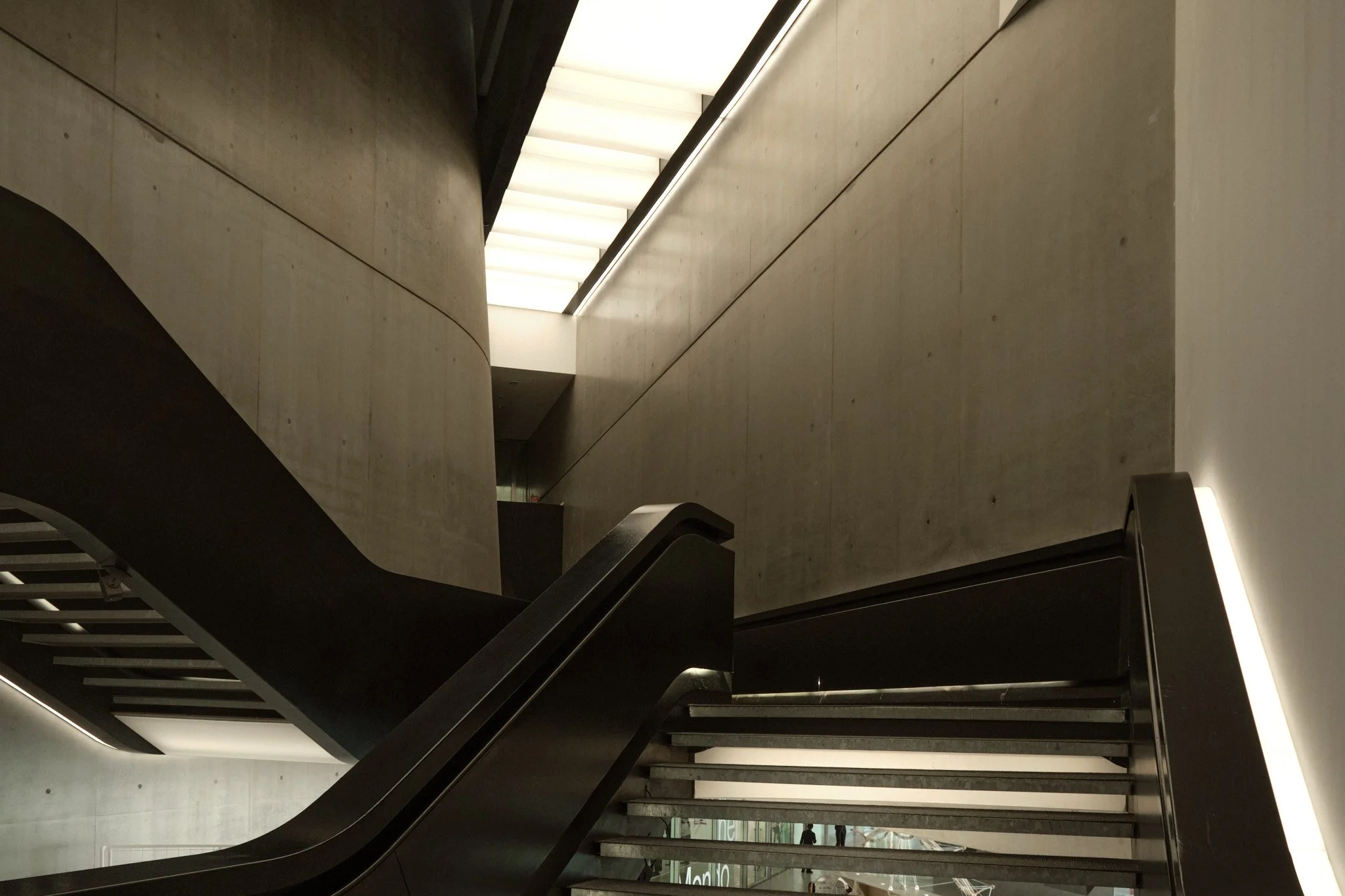
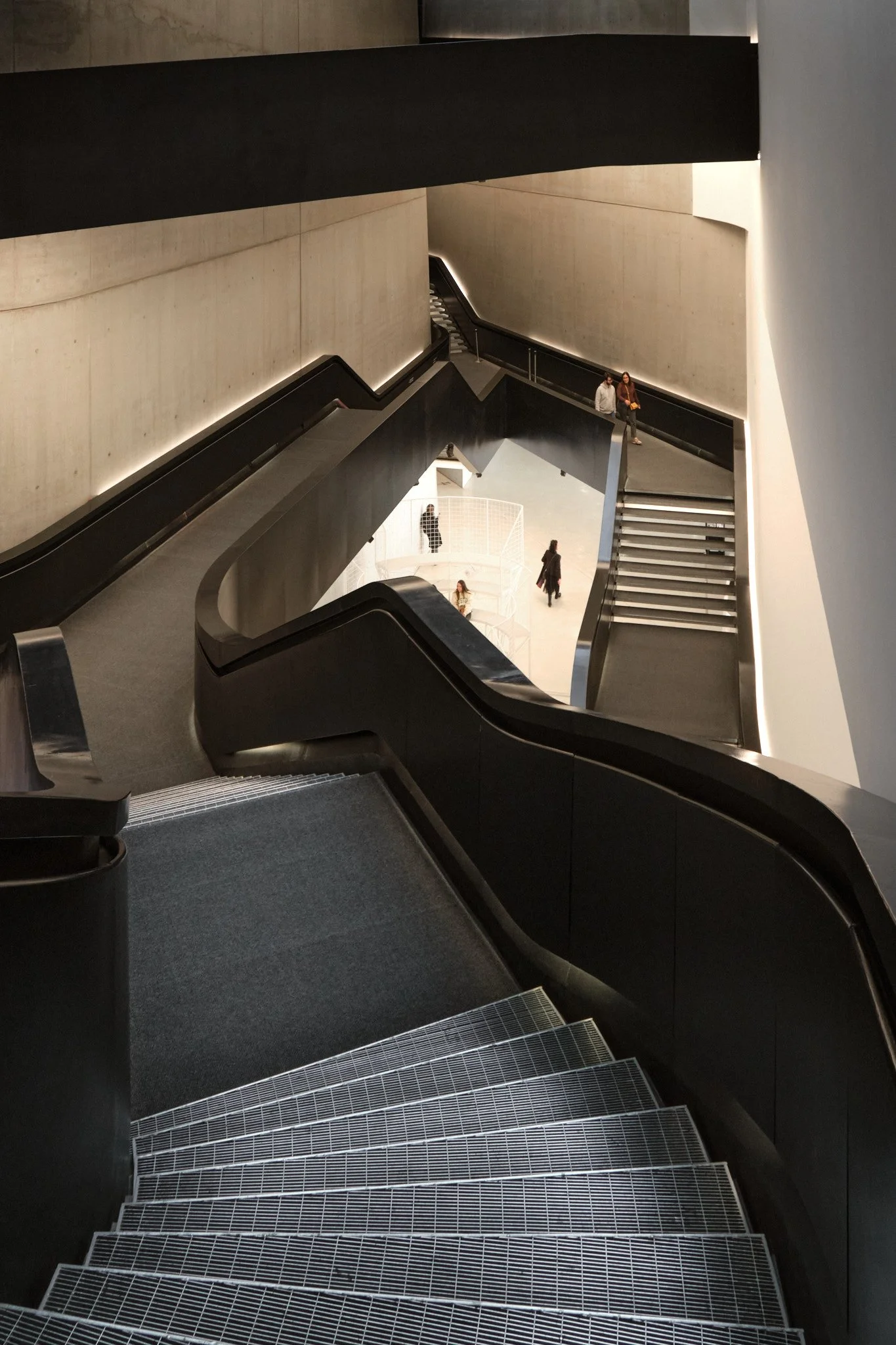
If there is a single element that defines the interior experience of MAXXI photographically, it is the staircases.
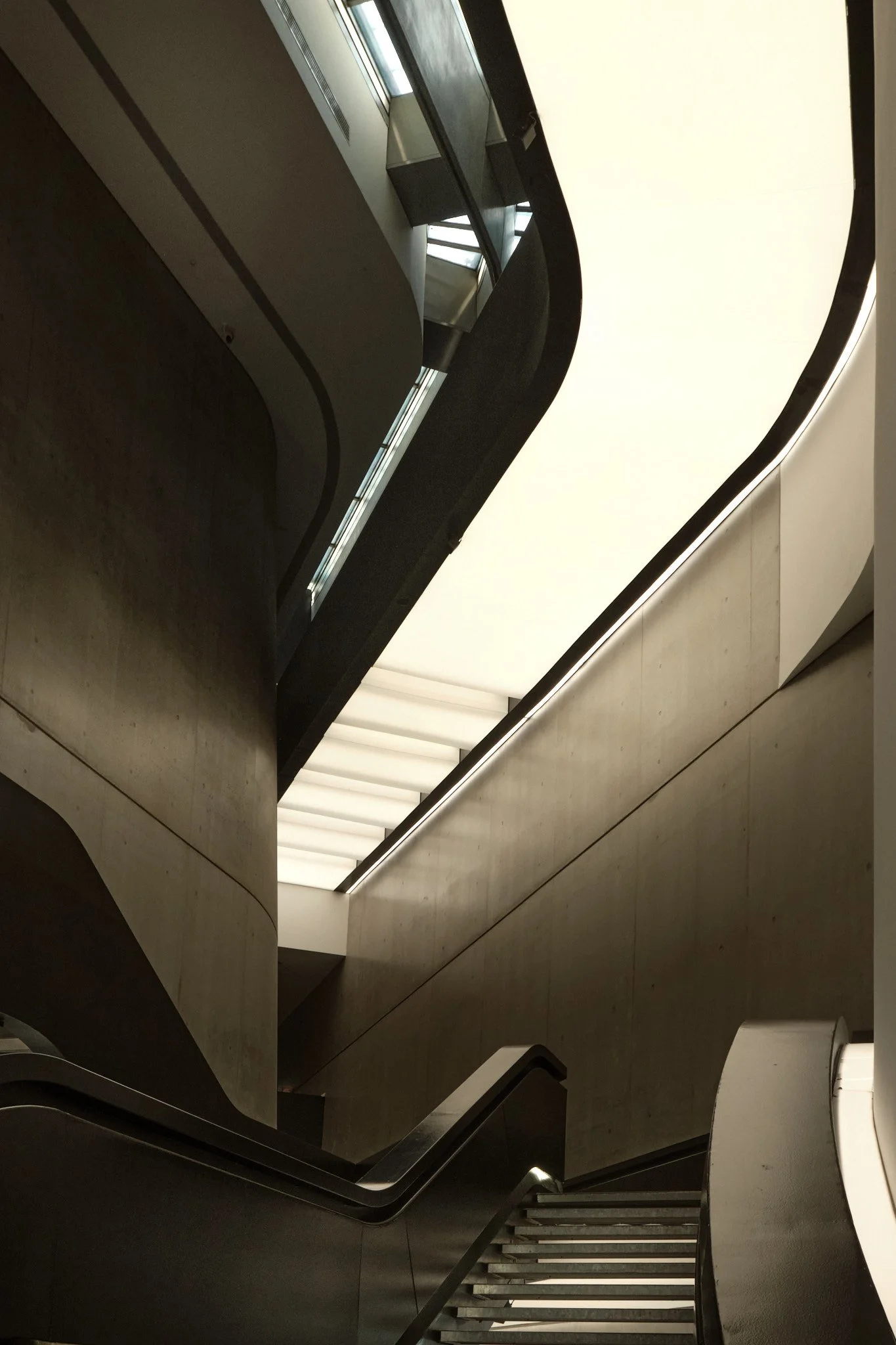
Zaha Hadid's design treats circulation as architecture.
The ramps, bridges, and staircases are not connectors between galleries.
They are the spatial argument of the building, made continuous and visible.
Photographed from below, from the side, or from a mezzanine above, they produce a layering of planes, curves, and shadows that reads clearly even without the wider spatial context.
The curve of a handrail against a concrete wall.
The staircase seen from directly above, collapsing depth into pure geometry.
This approach to photographing spaces organized around sequence is central to how I work across very different contexts: from the controlled interior rhythms of a project like the White & Case office at Tornado Tower, to a cultural institution like CaixaForum Madrid or the Basilica Papale di San Paolo Fuori le Mura, also photographed in Rome.
The question is always the same: how does this space work, and what does the camera need to do to make that legible?
Final Thoughts
MAXXI is not a building that flatters the photographer who arrives with a fixed idea of what the images should look like.
It produces its best readings under accumulated attention: multiple passes, different positions, different hours.
The exterior demands a fragmentary approach.
The interior demands an understanding of spatial sequence.
That process is, for me, what architectural photography is about.
Project Credits
Design: Zaha Hadid Architects
Location: Via Guido Reni 4A, Flaminio, Rome, Italy
Stirling Prize: 2010
Opening: May 2010
Category: Cultural Institution / Museum
Photography: Pedro Ferr
Looking for architectural photography for your next project?
Explore my architectural and interior photography portfolio or visit my photography services page to discuss how I can document your work.
FAQ
Who designed MAXXI in Rome?
MAXXI was designed by Zaha Hadid Architects. The project developed over more than a decade and the museum opened in May 2010, winning the Stirling Prize that same year. It is one of the most significant institutional buildings completed in Europe in the 21st century.
What does MAXXI stand for?
MAXXI is an acronym for Museo Nazionale delle Arti del XXI Secolo, the National Museum of 21st Century Arts. It is the first national museum in Italy dedicated entirely to contemporary art and architecture.
What is the main architectural concept behind MAXXI?
Zaha Hadid's design is organized around the idea of continuous spatial flow. Rather than discrete rooms, the building uses overlapping paths, ramps, bridges, and branching corridors to create an environment where circulation is itself the architectural experience. There is no single privileged vantage point or frontal facade.
When did MAXXI open to the public?
MAXXI opened in May 2010, following more than a decade of design and construction under the direction of Zaha Hadid Architects.
Is MAXXI worth visiting for architecture?
For anyone with a serious interest in contemporary architecture, MAXXI is an essential building to see in person. The exterior structural language, the interior circulation system, and the relationship between concrete surfaces and natural light all reward sustained attention. It is one of the few large-scale built works that delivers fully on the spatial propositions of Hadid's practice.