Architectural Photography in Doha: A Photographer's Guide to the City
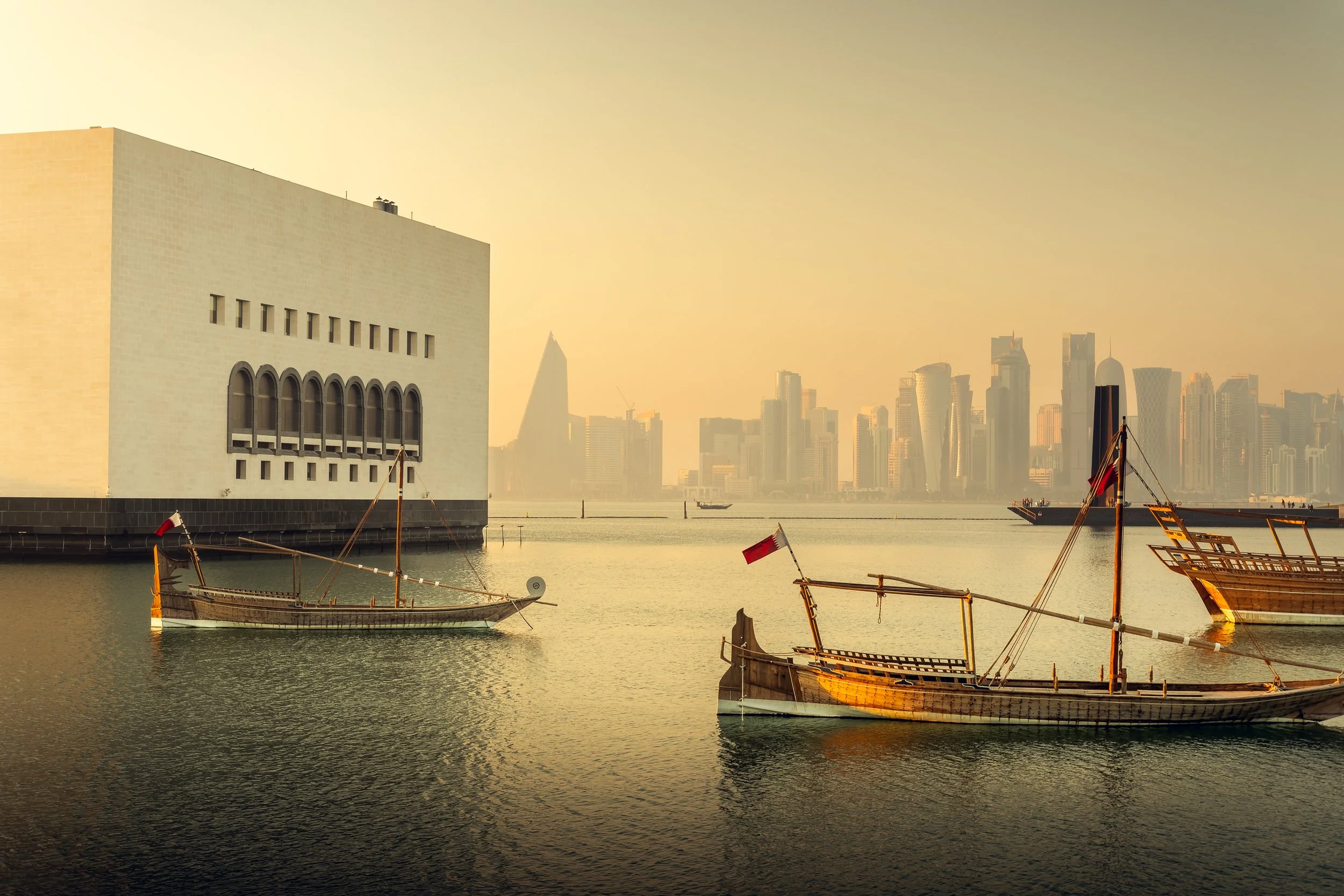
Doha's built environment spans roughly five decades of compressed development. In the same city you find a museum by I.M. Pei conceived as a distillation of Islamic geometric principles, a national museum by Jean Nouvel shaped after interlocking desert rose crystals, a library by Rem Koolhaas that inverts the typical relationship between building and landscape, and a downtown district rebuilt from scratch as an urban argument about Gulf identity and climate. Against all of that sits a heritage waterfront, traditional courtyard buildings, and mosaic-tiled mosques.
Photographing Doha for architects, designers, and brands is not a matter of showing up at the right time. It requires understanding what each project was designed to do: how it reads spatially, how it responds to the Gulf light, and what aspects of it the design team would want documented.
This is a guide to Doha's main architectural typologies, written by a photographer based in the city.
Cultural Institutions
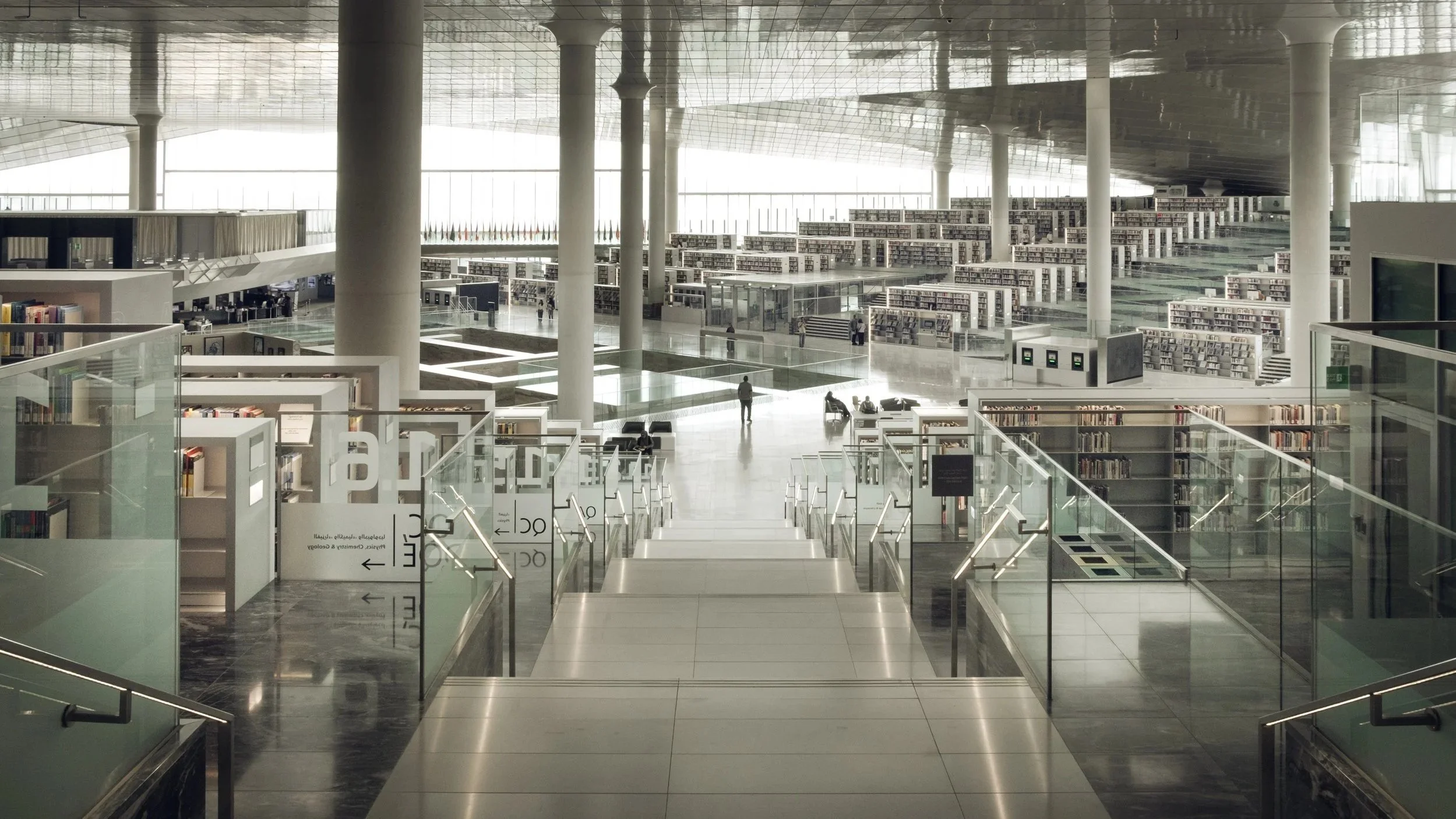
Doha's cultural institutions are the most architecturally ambitious buildings in the city and the most demanding to photograph well.
The Museum of Islamic Art, designed by I.M. Pei, is built on a reclaimed island off the Corniche. The building generates its own light conditions: the central atrium creates a vertical shaft of controlled daylight that shifts through the day, and the relationship between the geometric stone exterior and the surrounding water changes entirely from morning to evening to night. Read the MIA case study.
The National Museum of Qatar by Jean Nouvel is structured around interlocking disc forms derived from the desert rose crystal. The building resists conventional framing: there is no single facade that reads as a front elevation. The photography challenge is finding sequences that communicate how the discs overlap and create movement, while also conveying the scale.
Qatar National Library, by OMA/Rem Koolhaas, folds the landscape into the building. The reading hall is a continuous surface that slopes from exterior to interior, and the spatial logic only becomes clear when you understand that the building has no conventional threshold between inside and outside. Read the Qatar National Library case study.
Msheireb Downtown Doha
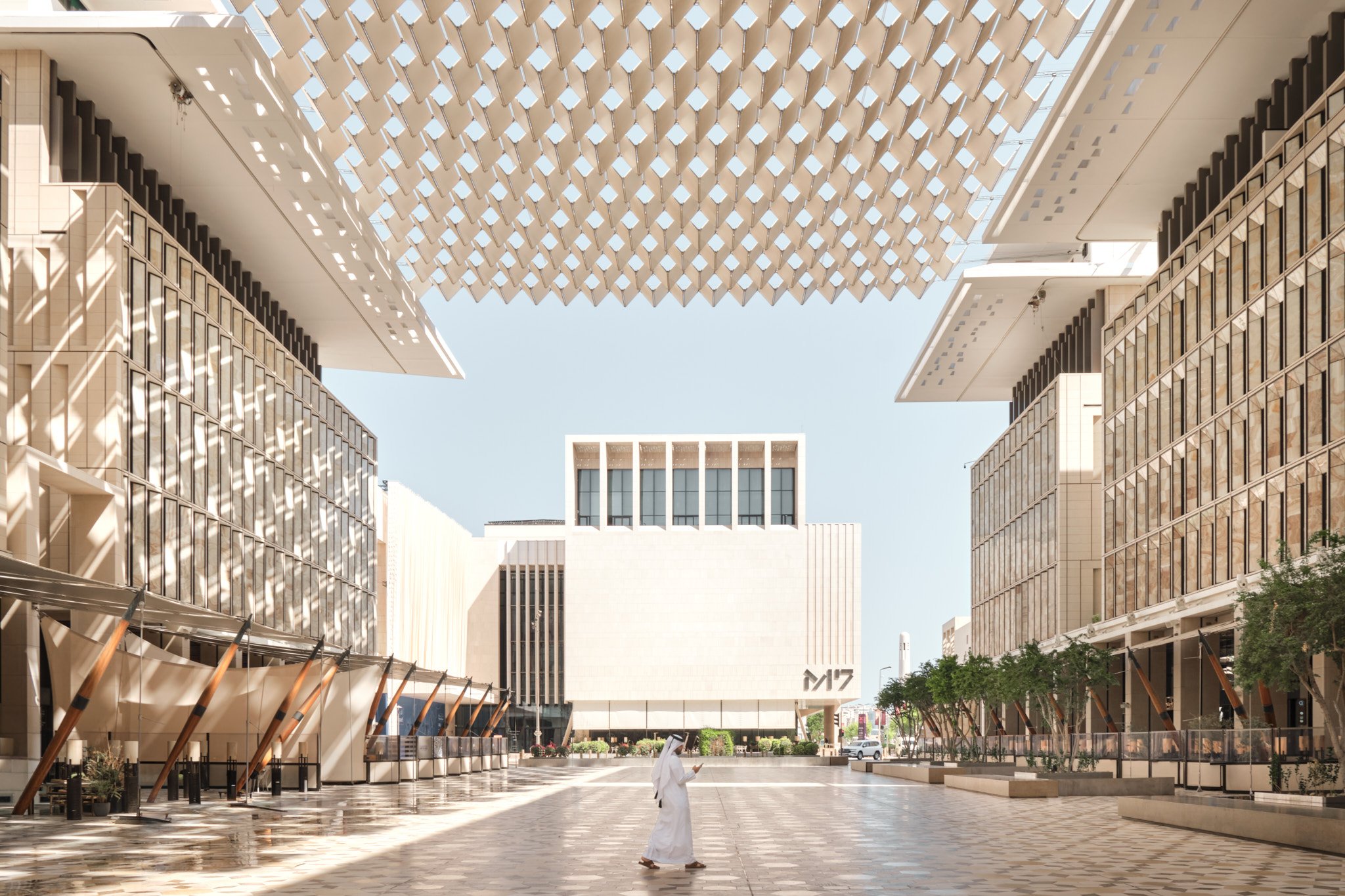
Msheireb is the most complex urban photography assignment in the city. It is not a single building but a dense district developed according to a design code derived from traditional Qatari urban patterns: compressed streets, courtyard typologies, shaded pedestrian routes, and a restrained material palette of local stone and deep shadow.
Photographing Msheireb requires understanding it as an urban sequence, not a collection of facades. The quality of the light changes as you move through the compressed streets, and the relationship between ground level and upper floors reads differently from inside a courtyard versus from a street approach. Read the Msheireb Downtown case study.
Heritage Districts and Traditional Architecture
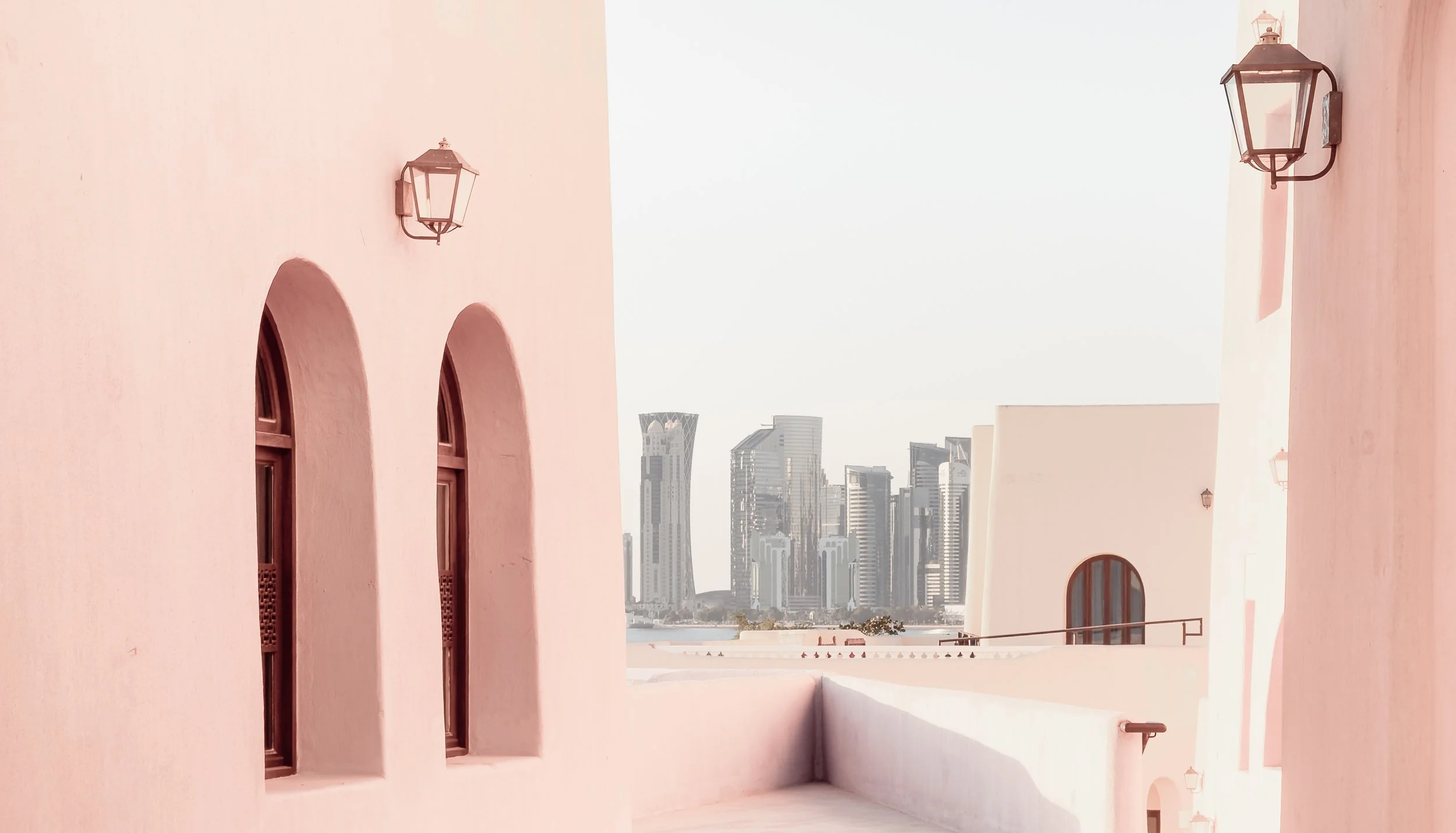
Mina District (the Old Doha Port redevelopment) is Doha's most photogenic heritage precinct. The project preserved and restored a block of traditional buildings along the waterfront, painted in soft pastels that contrast with the West Bay skyline visible in the background. The light in the late afternoon is warm and raking, and the shadows from pergolas and arches create strong geometric patterns on the painted walls.
Katara Cultural Village combines restored heritage buildings with newer institutional construction and a large mosque whose blue mosaic facade functions as a landmark in its own right. The carved wooden balconies, mashrabiya screens, and traditional proportions give the area a texture that rewards close attention. Read the Katara case study.
Commercial Interiors
Doha's hospitality and corporate interior market has produced a number of significant commissions in recent years. Interior photography here differs from equivalent markets in one consistent way: projects often involve multiple design firms (architect, interior designer, lighting designer, and sometimes a separate landscape or fit-out contractor) who all need the images for their own portfolios and award submissions. This multi-party licensing situation is common and worth clarifying before any commercial shoot begins.
See the White and Case office interior project at Tornado Tower.
What Doha Demands from a Photographer
Light in Doha is extreme in both directions. In summer, the sun is nearly overhead for most of the day, creating flat midday conditions and sharp shadows only near sunrise and sunset. The humid haze off the Gulf softens the light differently than in drier Gulf cities, and the quality changes significantly between seasons. The most useful exterior shoots happen in the cooler months, roughly October through March, when the sun angle is lower and the air is clear.
Heat affects access decisions. Many outdoor shoots in summer are only viable at dawn or in the hour before sunset. Air conditioning in commercial interiors means interior work is feasible year-round, but moving between a conditioned space and an unconditioned exterior requires managing lens condensation.
Access to Doha's cultural institutions typically requires advance coordination with their communications or facilities teams. Museum shoots involving tripod use require formal permission. Projects in active construction zones may require additional security clearance through the developer or project manager.
Working with an Architectural Photographer in Doha
Pedro Ferr is a commercial photographer based in Doha, Qatar. His focus is architectural and interior photography, working with architects, designers, and brands across the Gulf region.
Projects are structured around three phases: pre-production alignment, controlled on-site capture with real-time review, and restrained post-production focused on clarity. Images are delivered publication-ready for editorial use, award submissions, client presentations, and marketing materials.
Not sure whether you need an architectural photographer or a real estate photographer? Here is a full comparison of the two.
View the portfolio | Explore photography services in Doha | Get in touch